

Lockert Library of Poetry in Translation: Princeton University Press, 2021. A complete bilingual, Arabic-English facing page translation and edition of Ibn `Arabi's Tarjumān al-Ashwāq; with introduction, notes, appendixes on the manuscripts and printed editions consulted in creating the Arabic edited text, full translations of Ibn ʿArabi’s romantic prefaces and apologia, translator’s commentary on each poem, and glossaries on the personal names, place names, core vocabulary, ritual terms, and the history of translations of the Tarjumān.
Tradition and the Individual Talent
Poems, readings, poetry news and the entire 110-year archive of POETRY magazine.

Remote Origins: Translation, Genealogy, and Alterity in Medieval Castile (1252-circa 1390)
This dissertation analyzes selected examples of thirteenth- and fourteenth-century written culture to show their engagement with the religious alterity of Islam as an integral part of the origins of the kingdom of Castile. Following an interdisciplinary methodology, it addresses how medieval ideas about astrology, geography, history, medicine, race, and religion participated in creating discourses about origins that recognized the intellectual and political authority of al-Andalus. It argues that early Castilian vernacular texts conceptualized the translation of Arabic sources as an instrument for creating, transforming, and superseding the alterity of Islam while recognizing the cultural and political authority of Andalusi traditions. The first chapter serves as an introduction explaining the historical and theoretical framework of the dissertation. To do so, it provides an overview of Castilian ideas about genealogy, historiography, authority, and translatio, and translation. Then, through close reading and ample historicization, chapters two, three, and four analyze the impact of Andalusi textual traditions, cultural practices, and human population in three interrelated fields of medieval science, literature, and history. Chapter 2 explores the political implications of King Alfonso X’s (r. 1252-1284) dedication to the translation of Arabic sciences by focusing on the translation of a treatise of astrology titled Libro de las cruzes (1259). The chapter traces the cultural and political context that accompanied the transmission of the book in al-Andalus alongside the content of its Arabic and Castilian prologues. In light of ideas about the transference of knowledge (translatio studii) shared by Christian and Muslim scholars, I conclude that deployment of a twofold origin in the Libro de las cruzes illustrates the strategies and motivations of Alfonso X’s broader engagement with Arabic sources. The third chapter turns to the early fourteenth-century romance Libro del caballero Zifar with a double focus on its forged origin as a translation from caldeo (Chaldean) and the prominence of cursed lineages. Regarding lineage, the chapter explores the representation of exemplary virtues by the protagonists of the romance as enacting ideas about the transformable character of lineage and the capabilities of the individual to unmake inherited negative traits. Likewise, the textual strategy of the forged translation enables the inclusion of Arabic and Asian referents at the origin of a profoundly Christian text. In chapter 4, literature meets historiography in the analysis of the Crónica de Flores y Blancaflor. Being the result of intertwining a Castilian chronicle—Alfonso X’s Estoria de Espanna—and a French romance, this text narrates the love story between an Andalusi Muslim prince and the daughter of a captive Christian noble. The chapter focuses on Berta, the captive woman, to show the implications of her decision to nurture Flores and Blancaflor with her milk. Considering Christian and Muslim ideas about milk and wet nursing along with the tenets of Castilian historiography, the chapter shows the limits of dominant ideas about dynastic origins among the Christian elites of Castile while evidencing the existence of an alternative discourse that—coming from within Castilian historiography—incorporates maternal and non-Christian kinship as an essential part of the origins and possibilities of the kingdom. A short final chapter serves as a conclusion, suggesting paths for expanding the results of this dissertation within and the thirteenth and fourteenth centuries covered by its contents.
How ancient poetry can revitalise our erotic imaginations | Aeon Essays
Why the ancient erotic poems of Sappho and Wallada bint al-Mustakfi are far more stimulating than modern pornography

Neither Corpus Nor Edition: Building a Pipeline to Make Data Analysis Possible on Medieval Arabic Commentary Traditions
We have built a suite of tools in Python to proficiently analyze text reuse and intertextuality for a specific kind of set of medieval Arabic texts (commentaries) available in print. We take these printed editions, scan them, pre-process the images, give it to an OCR engine, clean the results, and store it in a data structure that mimics the explicit intertextual relation the texts have, and continue to perform data analysis on it. Digital approaches to medieval Arabic texts have either been at the micro-level in what has become known as a ‘digital edition’, i.e. the digital representation of one text, densely annotated, most commonly in TEI-XML, or it has been done at the macro-level in what is called a ‘digital corpus’, consisting of thousands of loosely encoded and sparsely annotated plain text files, accompanied by an entire infrastructure and high-performing software to perform broadly scoped queries. The micro-level generally is at the level of tens of thousands of words while the macro-level can be at the level of over a billion words. The micro-level is explicitly designed to be human readable first, while the macro-level is built to be machine readable first. At the micro-level, every little detail needs to be correct and in order, while at the macro-level a fairly large margin of error is still negligible as a mere rounding error. Amidst these levels we have been seeking a meso-level of digital analysis: neither edition nor corpus, but rather a group of texts at the level of hundreds of thousands to millions of words, with a small but perceptible margin of error, and a light but noticeable level of annotations, principally geared towards machine readability, but with ample opportunity for visual inspection and manual correction. In this paper we explain the rationale for our approach, the technical achievements it has led us to, and the results we so far obtained.

“If you want to pray to Mercury, wear the garments of a scribe:” <i>kuttāb</i> , <i>udabāʾ,</i> and readers of the <i>Ghāyat al-Ḥakīm</i> in the court of ʿAbd al-Raḥmān III
This work addresses the question of the intended audience of the Ghāyat al-Ḥakīm, the famous Andalusi treatise on magic, better known by its Latin moniker, Picatrix. I propose that a substantial po...

Guhit Dalisay 🏕️ 구힡 달리새
The Wayfarer's Frozen Codex. A journal of wandering thoughts across cultures and languages.
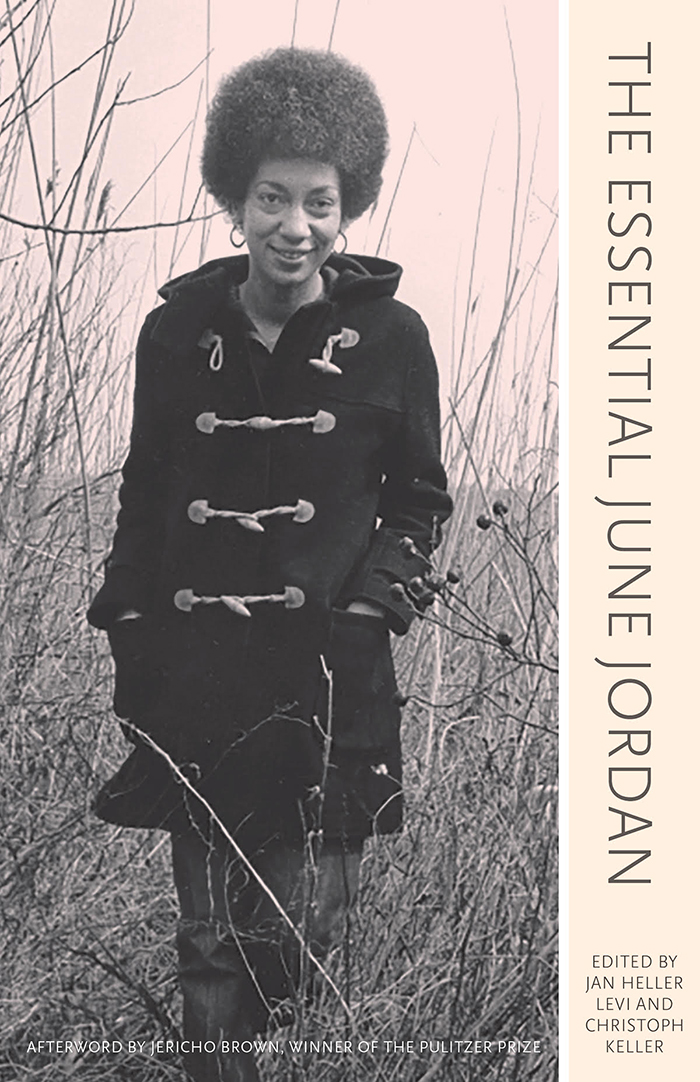
The Essential June Jordan, Jan Heller Levi, Christoph Keller, eds. - Copper Canyon Press
The Essential June Jordan honors the enduring legacy of a poet fiercely dedicated to building a better world. In this definitive volume, featuring an afterword by Pulitzer Prize-winner Jericho Brown, June Jordan’s generous body of poetry is distilled and curated to represent the very best of her works. Written over the span of several decades―from Some Changes in 1971 to Last Poems in 2001―Jordan’s poems are at once of their era and tragically current, with subject matter including racist police brutality, violence against women, and the opportunity for global solidarity amongst people who are marginalized or outside of the norm. In these poems of great immediacy and radical kindness, humor and embodied candor, readers will (re)discover a voice that has inspired generations of contemporary poets to write their truths. June Jordan is a powerful voice of the time-honored movement for justice, a poet for the ages.
Bridges, Not Barriers: Leveraging Hypertext Towards Making Commentaries More Accessible Translation Aids - ProQuest
Explore millions of resources from scholarly journals, books, newspapers, videos and more, on the ProQuest Platform.
Useful phrases in Lebanese Arabic
A collection of useful phrases in Lebanese Arabic, a variety of Arabic spoken mainly in Lebannon with recorded mp3 audio sound files for all of them.
De nuevo sobre Maslama Ibn Qāsim al-Qurṭubī, los Ijwān al-Ṣafā’ e Ibn Jaldūn: Nuevos datos de dos manuscritos de la Rutbat al-ḥakīm
Como continuación a estudios anteriores sobre la recepción de las Rasā’il Ijwān al-Ṣafā’ en al-Andalus, en este artículo se sostiene que entre los estudiosos andalusíes de la Edad Media era una creencia generalizada considerar al astrónomo Maslama al-Maŷrīṭī (m. 395/1004 o poco después) como el autor no solo de la Rutbat al-ḥakīm y la Gāyat al-ḥakīm – hoy ambas correctamente atribuidas a Maslama Ibn Qasīm al-Qurṭubī (m. 353/964) – sino también de todo el corpus enciclopédico de las Rasā’il. La primera parte del artículo trata de explicar a través de qué serie de sucesivas confusiones estas tres obras llegaron a ser identificadas como los tres escalones de una escalera filosófica y cómo esta trilogía acabó siendo después asignada al científico Maslama al-Maŷrīṭī. La otra parte se centra en dos anotaciones de carácter biográfico que aparecen en las portadas de dos manuscritos de la Rutbat al-ḥakīm, aún inédita. Además de proporcionarnos evidencias adicionales sobre la difusión de esta concepción entre los eruditos medievales, esos documentos también nos ofrecen información interesante y a veces sin igual sobre los dos Maslamas, sus respectivos escritos y seguidores, así como sobre la amplia circulación de las Rasā’il por toda la Península. La edición, traducción y comentario de estas dos anotaciones biográficas son ofrecidas aquí por primera vez.
The Alchemy Of Love by Rumi | PoetryVerse
Discover The Alchemy Of Love by Rumi. Explore this profound poem about love's transformative power. Read and reflect on Rumi's timeless wisdom.

Poetic Research Journal Club

Readings and Resources for the Poetic Research Journal Club
up

u.p. stands for $uglypoetry; this is a master list of miscellaneous poetry/writing resources/references/cool stuff!!
GlyphCollector
poetic web: unfolding spiral
School for Poetic Computation
Poetic Computation (by Pouria) — Semble

Hosting a WebSite on a Disposable Vape

National Cowboy Poetry Gathering
AI as the Catalyst of the New Paradigm of Science? | Cadmus Journal

Reinventing Discovery