A trip to Athens, five weeks before “the most human gathering for the more-than-human world”
The Secret of Our Success: How Culture Is Driving Human Evolution, Domesticating Our Species, and Making Us Smarter
How our collective intelligence has helped us to evolve and prosperHumans are a puzzling species. On the one hand, we struggle to survive on our own in the wild, often failing to overcome even basic challenges, like obtaining food, building shelters, or avoiding predators. On the other hand, human groups have produced ingenious technologies, sophisticated languages, and complex institutions that have permitted us to successfully expand into a vast range of diverse environments. What has enabled us to dominate the globe, more than any other species, while remaining virtually helpless as lone individuals? This book shows that the secret of our success lies not in our innate intelligence, but in our collective brains—on the ability of human groups to socially interconnect and learn from one another over generations.Drawing insights from lost European explorers, clever chimpanzees, mobile hunter-gatherers, neuroscientific findings, ancient bones, and the human genome, Joseph Henrich demonstrates how our collective brains have propelled our species' genetic evolution and shaped our biology. Our early capacities for learning from others produced many cultural innovations, such as fire, cooking, water containers, plant knowledge, and projectile weapons, which in turn drove the expansion of our brains and altered our physiology, anatomy, and psychology in crucial ways. Later on, some collective brains generated and recombined powerful concepts, such as the lever, wheel, screw, and writing, while also creating the institutions that continue to alter our motivations and perceptions. Henrich shows how our genetics and biology are inextricably interwoven with cultural evolution, and how culture-gene interactions launched our species on an extraordinary evolutionary trajectory.Tracking clues from our ancient past to the present, The Secret of Our Success explores how the evolution of both our cultural and social natures produce a collective intelligence that explains both our species' immense success and the origins of human uniqueness.
Anthropeum
A daily game that challenges our understanding of human cultures. Ten objects. 5,000 years of human history. Guess where and when each artifact was made. See how you rank.
I feel therefore I am: on holiday with my ape cousins | Aeon Essays
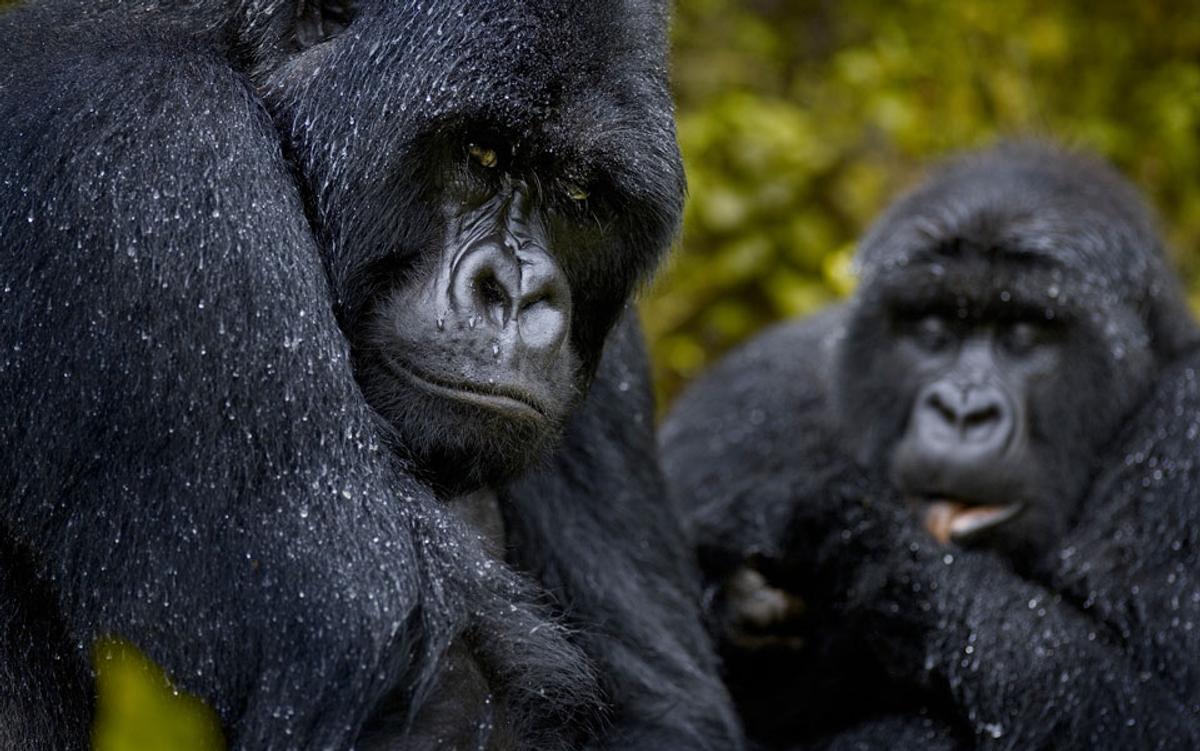
The more we learn about the emotions shared by all mammals, the more we must rethink our own human intelligence
Taking Love Seriously: What Ancient Wisdom & Modern Psychology Say About Interconnectedness - The Great Simplification
In this episode, Nate welcomes Dr. John Churchill, a psychologist and former Buddhist monk, to explore a map of human development that runs from "first-person" perspective of the isolated self all the way to a felt, embodied sense of interdependence with the planet itself.

Midjourney
An independent research lab exploring new mediums of thought and expanding the imaginative powers of the human species.
He’s Spent the Last 13 Years Walking the Globe - Here’s What He’s Learned | Amanpour and Company
Introducing Open Souls PBC and our historic mission
Nurturing our humanity: how domination and partnership shape our brains, lives, and future
Nurturing Our Humanity offers a new perspective on our …

2026 - European Ecovillage Gathering
Europe’s biggest annual festival in celebration of ecovillages and regenerative communities, where over 800 people come together to learn, share, co-create, celebrate, and experience what it takes to build community.
Sapiens [Tenth Anniversary Edition]: A Brief History of Humankind
New York Times Readers’ Pick: Top 100 Books of the 21st CenturyThe tenth anniversary edition of the internationally bestselling phenomenon that cemented Yuval Noah Harari as one of the most prominent historians of our time—featuring a new afterword from the author.One hundred thousand years ago, at least six human species inhabited the earth. Today there is just one. Us. Homo sapiens. How did our species succeed in the battle for dominance? Why did our foraging ancestors come together to create cities and kingdoms? How did we come to believe in gods, nations, and human rights; to trust money, books, and laws; and to be enslaved by bureaucracy, timetables, and consumerism? And what will our world be like in the millennia to come?In Sapiens, Professor Yuval Noah Harari spans the whole of human history, from the very first humans to walk the earth to the radical—and sometimes devastating—breakthroughs of the Cognitive, Agricultural, and Scientific Revolutions. Drawing on insights from biology, anthropology, paleontology, and economics, and incorporating full-color illustrations throughout the text, he explores how the currents of history have shaped our human societies, the animals and plants around us, and even our personalities. Can we ever free our behavior from the legacy of our ancestors? And what, if anything, can we do to influence the course of the centuries to come?Bold, wide-ranging, and provocative, Sapiens integrates history and science to challenge everything we thought we knew about being human: our thoughts, our actions, our heritage...and our future.
Human Life in a Post-AGI World - Google DeepMind Talk
Tyler Cowen at Google DeepMind on life after AGI: rebuilding every institution, the rise of "AI maniacs," and why the future will be drenched in meaning.
How Cultivating Awe Can Save the World — Douglas Rushkoff
The best-kept but scientifically-validated secret for engendering generosity
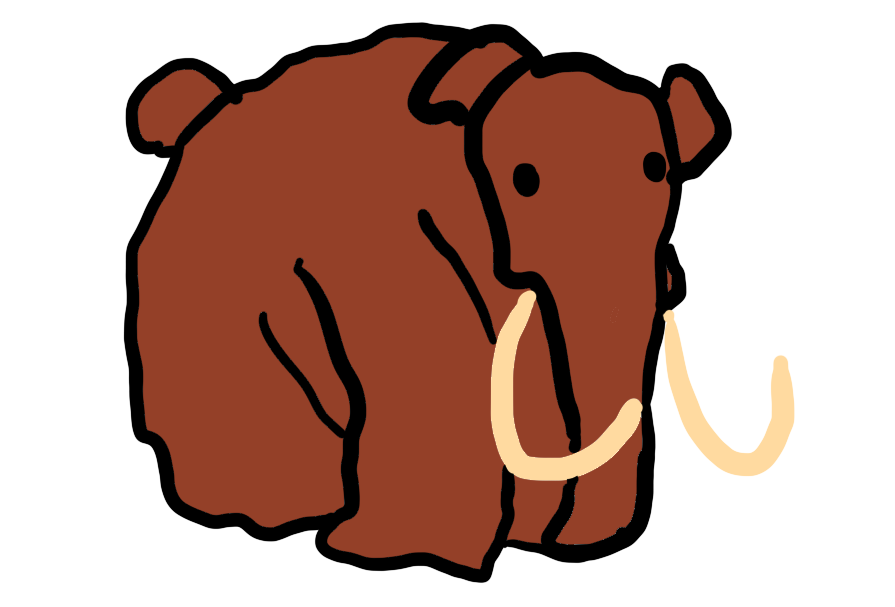
Taming the Mammoth: Why You Should Stop Caring What Other People Think
We all care way too much what other people think of us. Here's why.
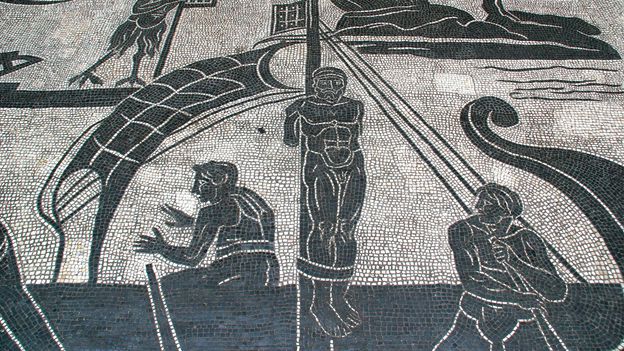
For 1,000 years, a cult worshipped the hero of the Odyssey
The Odyssey was far more than entertainment to ancient Greeks. Archaeologists have unearthed evidence of a cult that revered the Homeric hero on his legendary home island of Ithaca.