

The Highly Sensitive Person: Books, Information, Self-tests, Events and Research
Epistemic Vigilance
Humans massively depend on communication with others, but this leaves them open to the risk of being accidentally or intentionally misinformed. To ensure that, despite this risk, communication remain...

How to Read Fewer Books - The School of Life
We publish articles around emotional education: calm, fulfilment, perspective and self-awareness. | How to Read Fewer Books — Read now

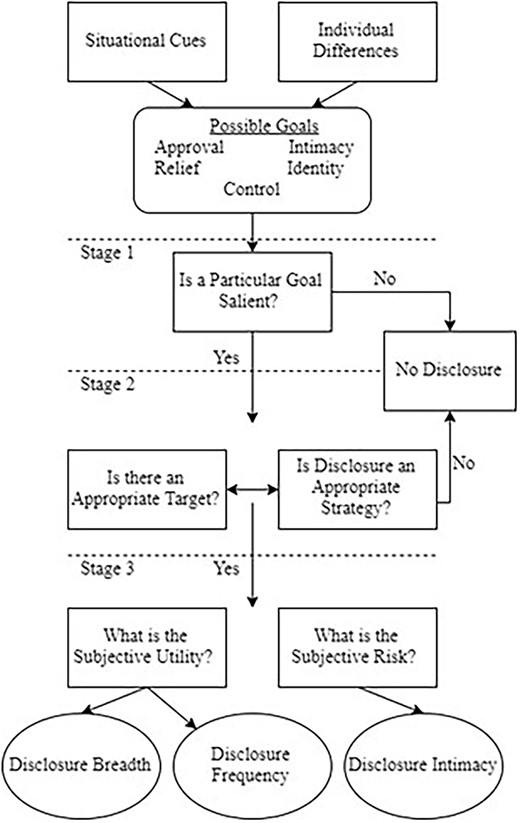
Digital Confessions: The Willingness to Disclose Intimate Information to a Chatbot and its Impact on Emotional Well-Being
Abstract Chatbots have several features that may stimulate self-disclosure, such as accessibility, anonymity, convenience and their perceived non-judgmental nature. The aim of this study is to investigate if people disclose (more) intimate information to a chatbot, compared to a human, and to what extent this enhances their emotional well-being through feelings of relief. An experiment with a 2 (human vs. chatbot) by 2 (low empathetic vs. high empathetic) design was conducted (N = 286). Results showed that there was no difference in the self-reported intimacy of self-disclosure between the human and chatbot conditions. Furthermore, people perceived less fear of judgment in the chatbot condition, but more trust in the human interactant compared to the chatbot interactant. Perceived anonymity was the only variable to directly impact self-disclosure intimacy. The finding that humans disclose equally intimate information to chatbots and humans is in line with the CASA paradigm, which states that people can react in a social manner to both computers and humans.
Eiko Fried (@eikofried.bsky.social)
Professor of Mental Health & Data Science at Leiden University. Studying mental health problems as systems (http://eiko-fried.com). Building an early warning system for depression (http://WARN-D.com).

Raf on Twitter / X
Conversations about sentience and emotions in #AI systems always remind me of Lisa Feldman Barrett’s wonderful book “How Emotions are Made”🧵https://t.co/uF2onQHwwz— Raf (@RafMBatista) August 30, 2026
Blog | Online Therapy NYC | New York City 11096 | The Keely Group
Struggling with self-doubt at work? Click here to explore therapy for imposter syndrome in Manhattan, NY, tailored for twice-exceptional professionals.

“I was surprised how upset some people got”: A conversation with the creator of TomWikiAssist, the bot that edited Wikipedia
"It's almost like people were really quite disoriented and terrified by it. And to some extent I get it and I'm trying to empathize with how they're feeling."

Empathy, Thick and Thin
When we empathize with someone going through something, we often draw on our past experiences with the someone and the something. These kinds of experiences gro

Your Most Important Skill: Empathy
TL;DR — Empathy is the most important skill you can practice. It will lead to greater success personally and professionally and will allow…
Laura Matsue on Twitter / X
The most radical thing you can do to rebel against this emerging post-literate, brain-slop-world we are entering is read long, complicated books on a daily basis. The ability to pay attention for long periods will be one of the most valuable and rare skills of the future.— Laura Matsue (@lauramatsue) October 18, 2026
So You've Been Publicly Shamed | Penguin Random House Secondary Education
From the New York Times bestselling author of The Psychopath Test, a captivating and brilliant exploration of one of our world's most underappreciated forces: shame.

Distinguishing Person-Specific from Situation-Specific Variation in Media Use: A Meta-Analysis - Anna Schnauber-Stockmann, Michael Scharkow, Veronika Karnowski, Teresa K. Naab, Daniela Schlütz, Paul Pressmann, 2025
Media use varies between persons (person-specific variation) and within persons (situation-specific variation, that is, the same individual uses media different...

New paradigm for psychology just dropped
OR: the ideas your mother warned you about

Alice GG • Attention is all you have
The Tetris effect is one of psychology’s most easy to reproduce experiments.Simply spend a bit of time playing the eponymous game every day for a few weeks.A...

Dark Matters: On the Surveillance of Blackness by Simon…
Discover and share books you love on Goodreads.

Capturing our Attention by @neillevy.bsky.social "we possess sophisticated capacities of epistemic vigilance, which work reasonably well to distinguish reliable from unreliable information, but ... we do not have parallel defences against attentional capture" > tandfonline.com/doi/full/10.1080/00048402.202…
