


A Blog post by Amazon on Hugging Face
TorchNeuron: running HF models on AWS Trainium is easier than ever
We’re on a journey to advance and democratize artificial intelligence through open source and open science.

NeuralBench: A Unifying Framework to Benchmark NeuroAI Models | Hubert Banville
🧠 NeuralBench is now open source. Today we're releasing NeuralBench, a unified framework for benchmarking foundation models of brain activity, developed by the Brain & AI team at FAIR, Meta. 💻 Code: https://lnkd.in/dNJsgBgM 📄 White paper: https://lnkd.in/dvWMg7rx Brain foundation models are starting to show positive transfer to a range of downstream tasks, from brain-computer interfacing to clinical classification. But systematically evaluating them is hard: heterogeneous preprocessing pipelines, input structures, and adaptation methodologies make results difficult to compare. Most prior work also focuses on a narrow set of downstream tasks. NeuralBench addresses this by defining each task end-to-end with config files (data source, preprocessing, splits, optimiser, metrics, architecture) so all models can be evaluated on the same footing. What's in our first release, NeuralBench-EEG v1.0: ⚡ 36 EEG tasks across 94 public datasets, spanning motor imagery, clinical classification, cognitive decoding, and phenotype prediction. 🤖 Task-specific deep learning architectures (EEGNet, Deep4, EEGConformer, CTNet, ...) benchmarked side-by-side with recent EEG foundation models (BENDR, LaBraM, BIOT, CBraMod, LUNA, REVE). 🧩 Extensible to other neuroimaging modalities: the framework already runs MEG and fMRI tasks, leveraging our NeuralSet ecosystem for accessing brain imaging data and the broader neuroscientific software stack. 📜 Released under the MIT license. Help us make it better. Through our white paper, we invite the community to contribute new tasks, datasets, and models, especially for fMRI, MEG, and iEEG. The long-term goal is a fully unified benchmark across neuroimaging tasks and modalities. 🙏🙏🙏 This was a big team effort with Stéphane d'Ascoli, Simon Dahan, Jérémy RAPIN, Marlène Careil, Yohann Benchetrit, Jarod Lévy, Saarang P., Antoine Ratouchniak, Lucy (Mingfang) Zhang, Elisa Cascardi, Katie Begany, Teon Brooks, and Jean-Rémi King. Special thanks to Alexandre Gramfort, Thomas Moreau, Arnaud Delorme, Bruno A. and Pierre Guetschel for feedback and support. #Neuroscience #AI #NeuroAI #Python #OpenSource

clem 🤗 on Twitter / X
Introducing Kernels on the Hugging Face Hub ✨What if shipping a GPU kernel was as easy as pushing a model?- Pre-compiled for your exact GPU, PyTorch & OS- Multiple kernel versions coexist in one process- torch.compile compatible- 1.7x–2.5x speedups over PyTorch baselines pic.twitter.com/U0qDdxCWkd— clem 🤗 (@ClementDelangue) April 14, 2026
#brainfoundationmodels #neuroai #eeg #meg #fmri #neuroscience #machinelearning #opensource #fair | Jarod Lévy
Today, the Brain&AI team announces a new release with NeuralBench. 📊📊📊 A unified framework for benchmarking foundation models of brain activity. This wouldn’t have been possible without the tremendous work of Hubert Banville 🎉 🎉 🎉 - 🧠 36 EEG tasks - 🗄️ 94 public datasets. - 💻 Code: https://lnkd.in/dPDMwja3 - 📄 Paper: https://lnkd.in/ddDU2p6d This package allows systematic evaluation of any foundation models. NeuralBench addresses this by defining each task end-to-end with config files (data source, preprocessing, splits, optimizer, metrics, architecture) so all models can be evaluated on the same footing. We invite the community to contribute new tasks, datasets, and models, especially for fMRI, MEG, and iEEG. The long-term goal is a fully unified benchmark across neuroimaging tasks and modalities. What's in the first release, NeuralBench-EEG v1.0: - 36 EEG tasks across 94 public datasets, spanning motor imagery, clinical classification, cognitive decoding, and phenotype prediction. - Task-specific deep learning architectures (EEGNet, Deep4, EEGConformer, CTNet, ...) benchmarked side-by-side with recent EEG foundation models (BENDR, LaBraM, BIOT, CBraMod, LUNA, REVE). - Extensible to other neuroimaging modalities: the framework already runs MEG and fMRI tasks, leveraging our NeuralSet ecosystem for accessing brain imaging data and the broader neuroscientific software stack. - Released under the MIT license. Big team effort with Stéphane d'Ascoli, Simon Dahan, Jérémy RAPIN, Marlène Careil, Yohann Benchetrit, Saarang P., Antoine Ratouchniak, Lucy (Mingfang) Zhang, Elisa Cascardi, Katie Begany Teon Brooks, and Jean-Rémi King. And special thanks: Alexandre Gramfort Thomas Moreau Arnaud Delorme Bruno A. Pierre Guetschel #BrainFoundationModels #NeuroAI #EEG #MEG #fMRI #Neuroscience #MachineLearning #OpenSource #FAIR

FaceDetail - Amazon Rekognition
This is the API Reference for Amazon Rekognition Image, Amazon Rekognition Custom Labels, Amazon Rekognition Stored Video, Amazon Rekognition Streaming Video. It provides descriptions of actions, data types, common parameters, and common errors.

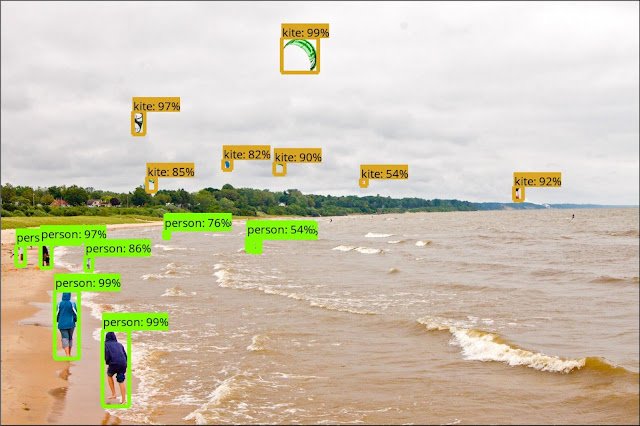
Supercharge your Computer Vision models with the TensorFlow Object Detection API
Posted by Jonathan Huang, Research Scientist and Vivek Rathod, Software Engineer (Cross-posted on the Google Open Source Blog) At Google, we develo...
Why We Built VIBE Bench: Rethinking Evaluation for Real Workloads
A Blog post by MiniMax on Hugging Face

LLMs Can Now Write GPU Kernels That Beat torch.compile - Break AI Scaling Limits in 7 Days
We're now seeing multi-agent systems that take your PyTorch code and produce CUDA or Triton kernels with 2x to 14x speedups over torch.compile(mode='max-autotune-no-cudagraphs'). Not on toy benchmarks. On real models like Llama-3.1-8B, Whisper, and Stable Diffusion. Learn proven techniques to shift the scaling law intercept and achieve 10-50% performance gains.
OSINT Navigator
Find the right OSINT tool for your investigation. AI-powered recommendations from 9 curated toolkits.
Daisy-Zhang/Awesome-Deepfakes-Detection
A list of tools, papers and code related to Deepfake Detection.
"AI" centralization
So it seems like NVIDIA has agreed to buy Hugging Face. NVIDIA is the company building most of the chips used in “AI” data centers and Hugging face runs probably the biggest repository for data sets and open weight “AI” models in the world (Hugging Face also offers inference but not at relevant rates and […]

Spiral on Twitter / X
4/ Spiral is our database built on Vortex: • Direct S3 → GPU data loading (skip the CPU bottleneck) • One API for 10KB embeddings AND 4GB videos • Time-bounded, audited permissions (no more credentials passed to AI agents) • Actually saturates your GPUs— Spiral (@SpiralDB) September 11, 2025
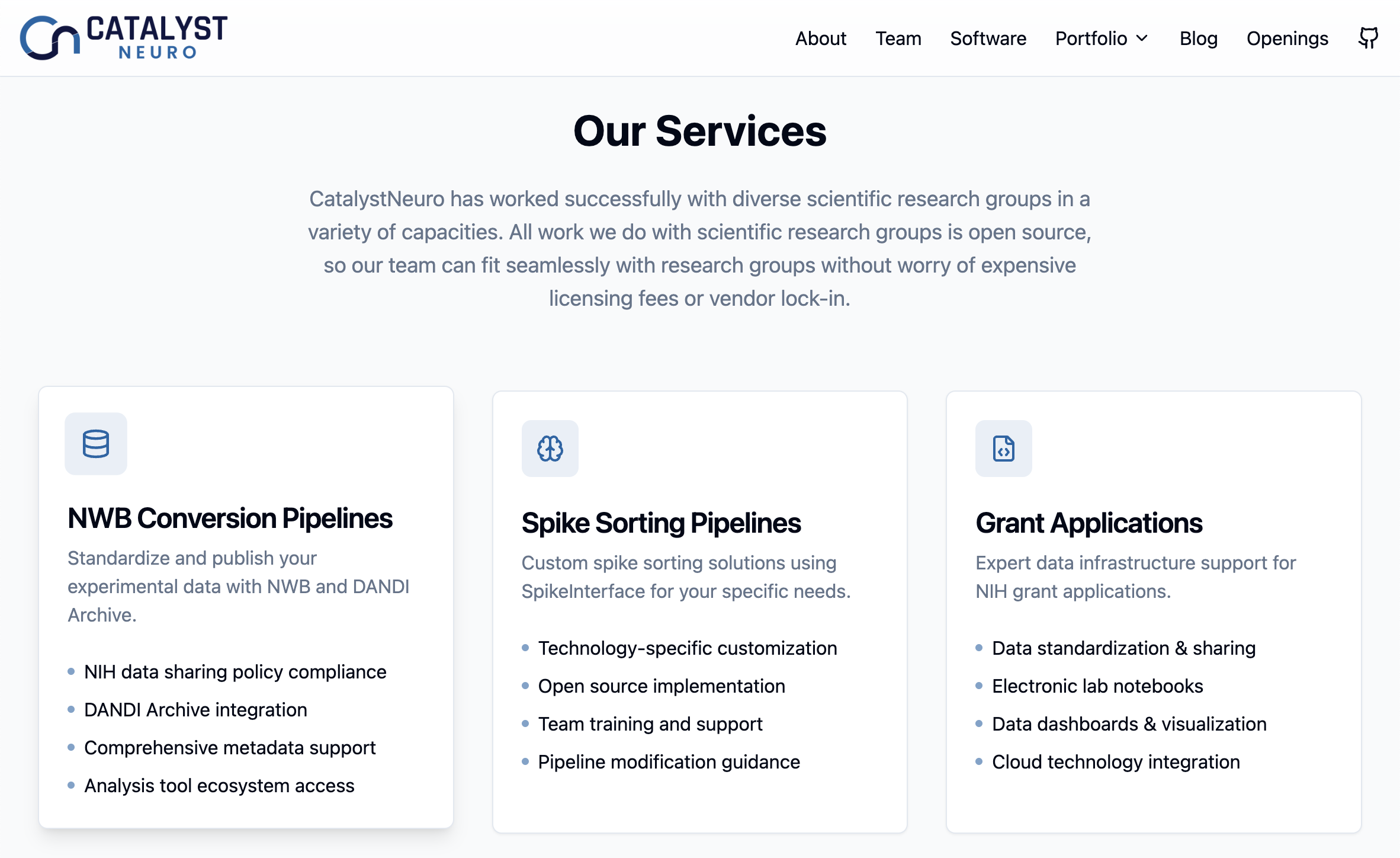
CatalystNeuro - Neurophysiology Data & Software Solutions
CatalystNeuro empowers neuroscience labs with data standardization, NWB conversions, spike sorting pipelines, and open-source software tools for neurophysiology research.
The State of On-Device LLMs
Xuan-Son Nguyen, an engineer at Hugging Face, specializes in on-device large language models (LLMs) and runtime optimization, working extensively with llam...

The State of On-Device LLMs
Xuan-Son Nguyen, an engineer at Hugging Face, specializes in on-device large language models (LLMs) and runtime optimization, working extensively with llam...