A Blog post by IBM Granite on Hugging Face
The State of On-Device LLMs
Xuan-Son Nguyen, an engineer at Hugging Face, specializes in on-device large language models (LLMs) and runtime optimization, working extensively with llam...

The State of On-Device LLMs
Xuan-Son Nguyen, an engineer at Hugging Face, specializes in on-device large language models (LLMs) and runtime optimization, working extensively with llam...
Palette: teaching a small model to build decks in your design language
A Blog post by IBM Research on Hugging Face

LLMON: An LLM-native Markup Language to Leverage Structure and Semantics at the LLM Interface
Textual Large Language Models (LLMs) provide a simple and familiar interface: a string of text is used for both input and output. However, the information conveyed to an LLM often has a richer structure and semantics, which is not conveyed in a string. For example, most prompts contain both instructions ("Summarize this paper into a paragraph") and data (the paper to summarize), but these are usually not distinguished when passed to the model. This can lead to model confusion and security risks, such as prompt injection attacks. This work addresses this shortcoming by introducing an LLM-native mark-up language, LLMON (LLM Object Notation, pronounced "Lemon"), that enables the structure and semantic metadata of the text to be communicated in a natural way to an LLM. This information can then be used during model training, model prompting, and inference implementation, leading to improvements in model accuracy, safety, and security. This is analogous to how programming language types can be used for many purposes, such as static checking, code generation, dynamic checking, and IDE highlighting. We discuss the general design requirements of an LLM-native markup language, introduce the LLMON markup language and show how it meets these design requirements, describe how the information contained in a LLMON artifact can benefit model training and inference implementation, and provide some preliminary empirical evidence of its value for both of these use cases. We also discuss broader issues and research opportunities that are enabled with an LLM-native approach.

Announcing the General Availability of LangSmith and Our Series A Led By Sequoia Capital
LangSmith is now generally available. Build, test, and monitor LLM applications from prototyping to production with debugging and evaluations.

10 Easy Ways to Enhance Your LLM Wiki or Knowledge Base
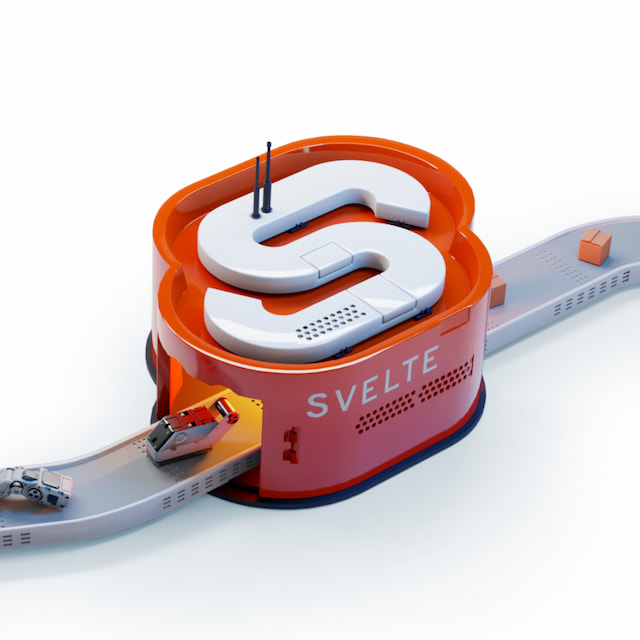
https://svelte.dev/docs/llms
We support the llms.txt convention for making documentation available to large language models and the applications that make use of them.
Running a Hugging Face LLM on your laptop
Programming Language Design in the Era of LLMs: A Return to Mediocrity?
The most exciting part of Programming Languages (PL) research for me has always been in Programming Language Design.
Compiling knowledge, not retrieving it: a hands-on deep dive into llm-wiki-compiler
The thesis of this piece is simple and uncomfortable: the problem of making an LLM “remember” what you’ve read isn’t solved with more…
𝕵𝖔𝖘𝖊 𝕸𝖎𝖌𝖚𝖊𝖑 (@omixann.me)
If you ever come back to it and you're open to new alternatives, let me shamelessly plug spade-lang.org by @thezoq2.bsky.social and friends. In quite literal terms, it is the Rust of digital HW design :)

Yixin Dong on Twitter / X
We’re excited to announce that XGrammar has partnered with Outlines! 🎉XGrammar is now the grammar backend powering Outlines, enabling structured LLM generation with higher speed.Check out Outlines — an amazing library for LLM structured text generation! 🚀 pic.twitter.com/6VJgCeAauN— Yixin Dong (@yi_xin_dong) August 21, 2025
Sakana AI on Twitter / X
We’re excited to introduce Doc-to-LoRA and Text-to-LoRA, two related research exploring how to make LLM customization faster and more accessible.https://t.co/wGKDNhBcJXBy training a Hypernetwork to generate LoRA adapters on the fly, these methods allow models to instantly… pic.twitter.com/gId3J6hgEr— Sakana AI (@SakanaAILabs) February 27, 2026
The Topos of Programming | Yon
A topos-oriented programming language. Native via MLIR and LLVM, with a content-addressed heap on the Leech lattice.
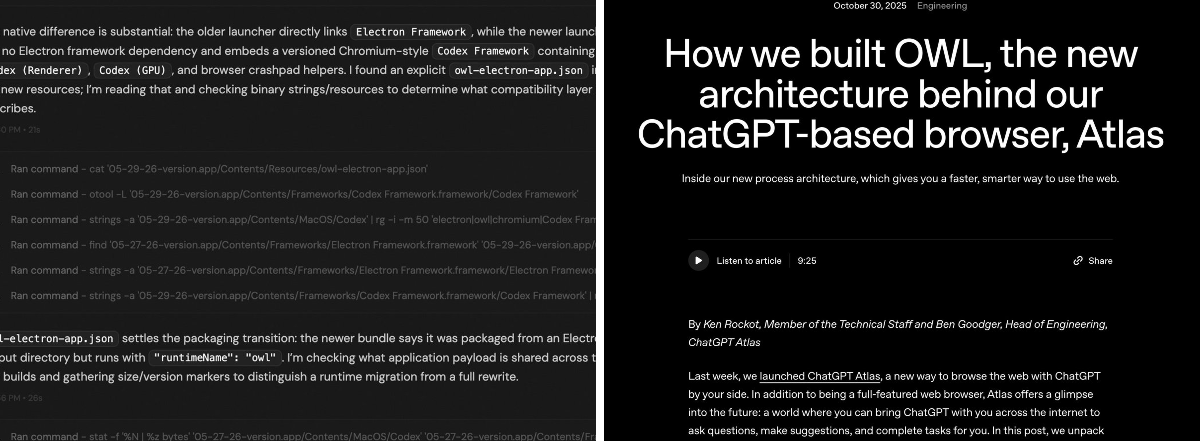
Theo - t3.gg on Twitter / X
I think Codex stopped using Electron 👀The owl was a big hint, the custom architecture used for the ChatGPT Atlas browser was called "OWL" (OpenAI’s Web Layer) https://t.co/L6PFio3EBE pic.twitter.com/ALFTbVCIXq— Theo - t3.gg (@theo) May 29, 2026