We’re on a journey to advance and democratize artificial intelligence through open source and open science.
Edge0-145B: Open-Source On-Device AI with 145B Parameters
Meet Edge0-145B, an open-source 145B model for local coding, reasoning, and agent tasks, with no cloud-model token fees for local inference.

Transformers Model Integration Contracts
We’re on a journey to advance and democratize artificial intelligence through open source and open science.

The Future of Meta Superintelligence: A 1 Year Progress Update
A top tier RL environment startup spawns out of thin air, the most aggressive compute ramp we've ever seen, 2000km+ scale-across, and some advice for Google DeepMind

Awni Hannun on Twitter / X
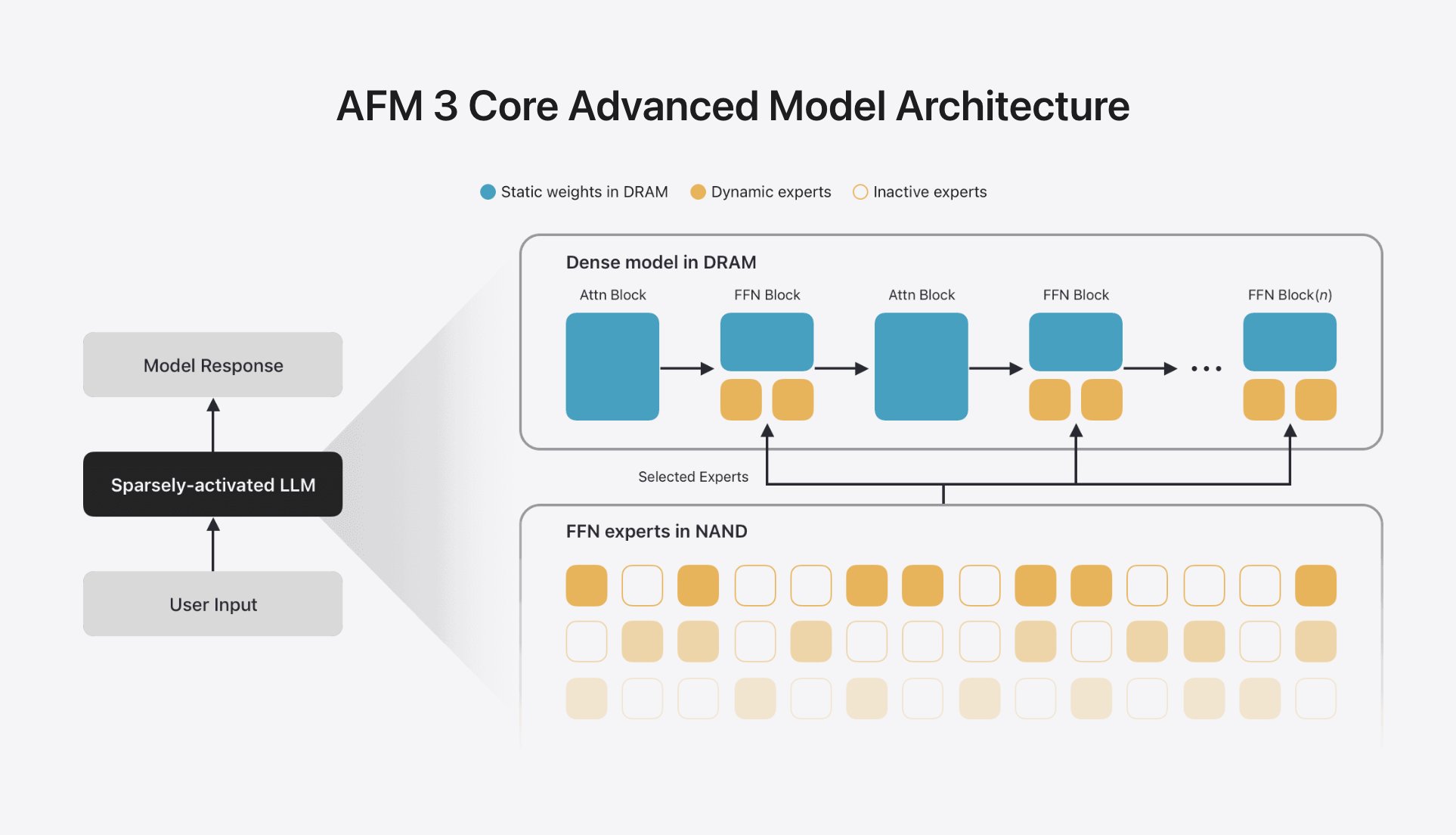
It's very cool that Apple shipped a 20B parameter on-device. You can't put 20B parameters in RAM at any reasonable precision. To make it work they are using pretty exotic architecture by today's standards.A small model predicts from the query (or prompt) which experts to load… pic.twitter.com/Zhe5HcbGuL— Awni Hannun (@awnihannun) June 9, 2026
How Cerebras Deploys Trillion-Parameter AI Models
Learn how Cerebras maps trillion-parameter frontier models across WSE-3T wafers to deliver scalable inference at 1,000–2,000+ tokens per second.

High Performance AI Lab
High Performance AI Lab builds open inference systems and publishes the conditions behind every number — device, model, quant, and rep count.
You can now train a 70b language model at home – Answer.AI
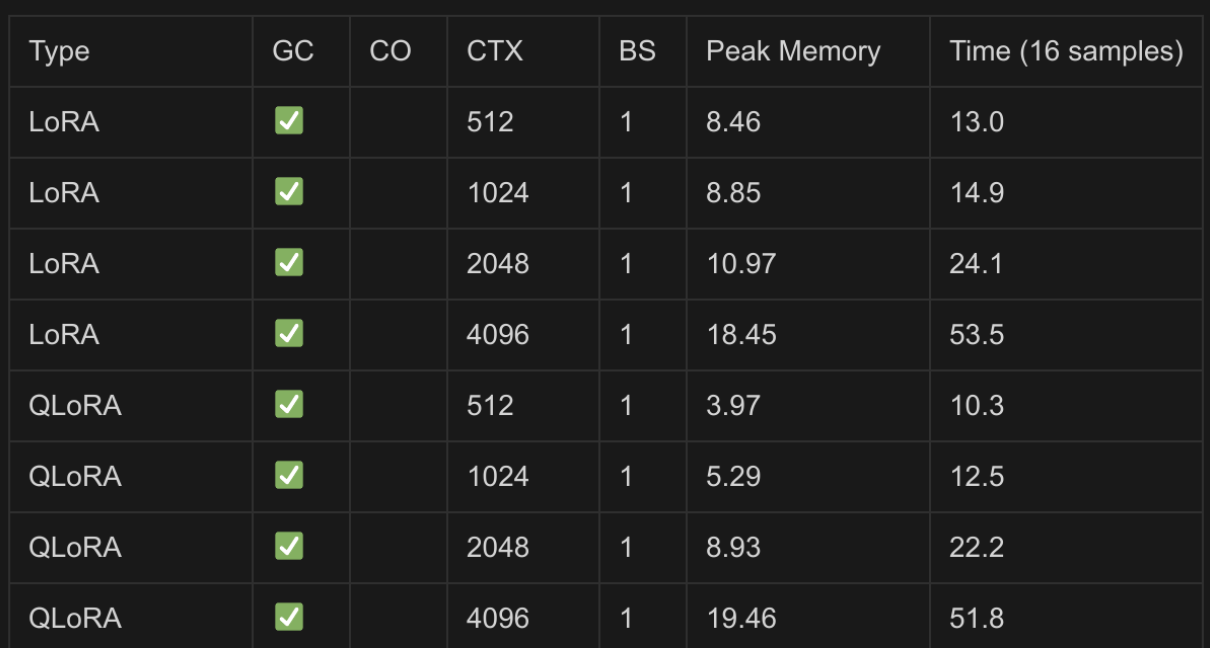
We’re releasing an open source system, based on FSDP and QLoRA, that can train a 70b model on two 24GB GPUs.
Can LLMs Be Computers? | Percepta
We build a computer inside a transformer — executing arbitrary C programs for millions of steps with exponentially faster inference via 2D attention heads.
Can LLMs Be Computers? | Percepta
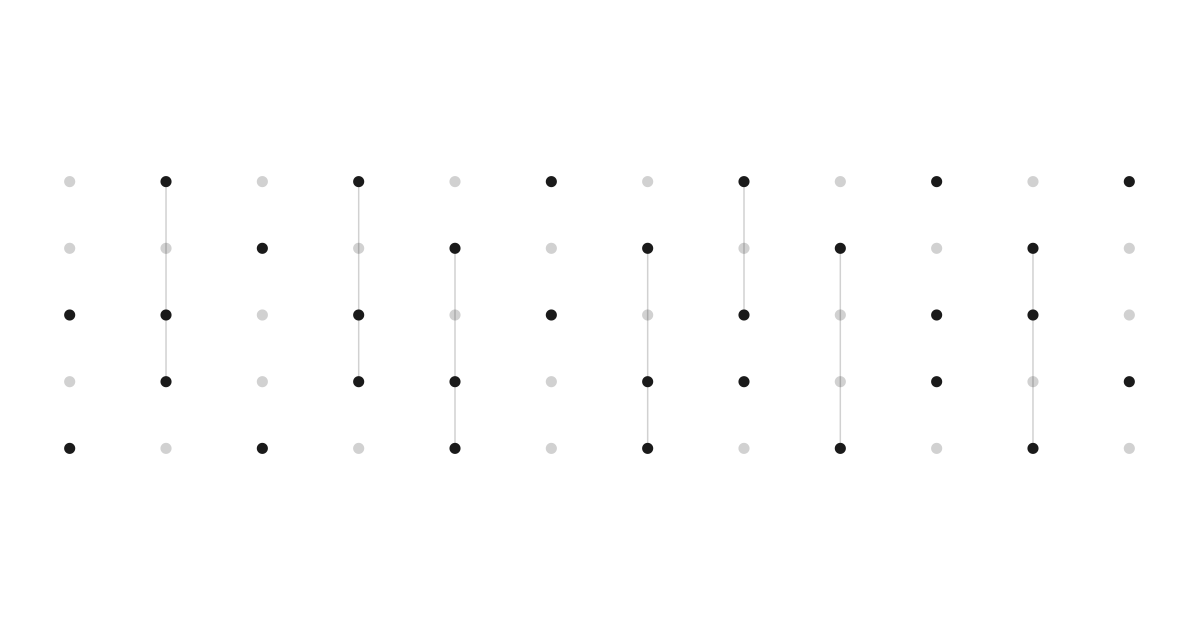
We build a computer inside a transformer — executing arbitrary C programs for millions of steps with exponentially faster inference via 2D attention heads.
Liquid AI on Twitter / X
Today, we release LFM2.5-350M. Agentic loops at 350M parameters.A 350M model trained for reliable data extraction and tool use, where models at this scale typically struggle.<500MB when quantized, built for environments where compute, memory, and latency are constrained.🧵 pic.twitter.com/zZPKzcCwH9— Liquid AI (@liquidai) March 31, 2026

DeepSeek-V3 Technical Report
We present DeepSeek-V3, a strong Mixture-of-Experts (MoE) language model with 671B total parameters with 37B activated for each token. To achieve efficient inference and cost-effective training, DeepSeek-V3 adopts Multi-head Latent Attention (MLA) and DeepSeekMoE architectures, which were thoroughly validated in DeepSeek-V2. Furthermore, DeepSeek-V3 pioneers an auxiliary-loss-free strategy for load balancing and sets a multi-token prediction training objective for stronger performance. We pre-train DeepSeek-V3 on 14.8 trillion diverse and high-quality tokens, followed by Supervised Fine-Tuning and Reinforcement Learning stages to fully harness its capabilities. Comprehensive evaluations reveal that DeepSeek-V3 outperforms other open-source models and achieves performance comparable to leading closed-source models. Despite its excellent performance, DeepSeek-V3 requires only 2.788M H800 GPU hours for its full training. In addition, its training process is remarkably stable. Throughout the entire training process, we did not experience any irrecoverable loss spikes or perform any rollbacks. The model checkpoints are available at https://github.com/deepseek-ai/DeepSeek-V3.
ST-MoE: Designing Stable and Transferable Sparse Expert Models
Scale has opened new frontiers in natural language processing -- but at a high cost. In response, Mixture-of-Experts (MoE) and Switch Transformers have been proposed as an energy efficient path to even larger and more capable language models. But advancing the state-of-the-art across a broad set of natural language tasks has been hindered by training instabilities and uncertain quality during fine-tuning. Our work focuses on these issues and acts as a design guide. We conclude by scaling a sparse model to 269B parameters, with a computational cost comparable to a 32B dense encoder-decoder Transformer (Stable and Transferable Mixture-of-Experts or ST-MoE-32B). For the first time, a sparse model achieves state-of-the-art performance in transfer learning, across a diverse set of tasks including reasoning (SuperGLUE, ARC Easy, ARC Challenge), summarization (XSum, CNN-DM), closed book question answering (WebQA, Natural Questions), and adversarially constructed tasks (Winogrande, ANLI R3).

Daniel Han on Twitter / X
OpenAI's OSS model possible breakdown:1. 120B MoE 5B active + 20B text only2. Trained with Float4 maybe Blackwell chips3. SwiGLU clip (-7,7) like ReLU64. 128K context via YaRN from 4K5. Sliding window 128 + attention sinks6. Llama/Mixtral arch + biasesDetails:1. 120B MoE… https://t.co/bMFp3Z6Gs5 pic.twitter.com/1NFO4utPqr— Daniel Han (@danielhanchen) August 1, 2025

Hugging Face's TensorFlow Philosophy
We’re on a journey to advance and democratize artificial intelligence through open source and open science.

LLM in a flash: Efficient Large Language Model Inference with Limited Memory
Large language models (LLMs) are central to modern natural language processing, delivering exceptional performance in various tasks. However, their substantial computational and memory requirements present challenges, especially for devices with limited DRAM capacity. This paper tackles the challenge of efficiently running LLMs that exceed the available DRAM capacity by storing the model parameters in flash memory, but bringing them on demand to DRAM. Our method involves constructing an inference cost model that takes into account the characteristics of flash memory, guiding us to optimize in two critical areas: reducing the volume of data transferred from flash and reading data in larger, more contiguous chunks. Within this hardware-informed framework, we introduce two principal techniques. First, "windowing" strategically reduces data transfer by reusing previously activated neurons, and second, "row-column bundling", tailored to the sequential data access strengths of flash memory, increases the size of data chunks read from flash memory. These methods collectively enable running models up to twice the size of the available DRAM, with a 4-5x and 20-25x increase in inference speed compared to naive loading approaches in CPU and GPU, respectively. Our integration of sparsity awareness, context-adaptive loading, and a hardware-oriented design paves the way for effective inference of LLMs on devices with limited memory.