


A Blog post by QVAC on Hugging Face
mem-agent: Persistent, Human Readable Memory Agent Trained with Online RL
A Blog post by Dria on Hugging Face

HuggingChat - Chat with AI models
Making the community's best AI chat models available to everyone

Qwen3-Coder: Agentic Coding in the World
GITHUB HUGGING FACE MODELSCOPE DISCORD Today, we’re announcing Qwen3-Coder, our most agentic code model to date. Qwen3-Coder is available in multiple sizes, but we’re excited to introduce its most powerful variant first: Qwen3-Coder-480B-A35B-Instruct — a 480B-parameter Mixture-of-Experts model with 35B active parameters which supports the context length of 256K tokens natively and 1M tokens with extrapolation methods, offering exceptional performance in both coding and agentic tasks. Qwen3-Coder-480B-A35B-Instruct sets new state-of-the-art results among open models on Agentic Coding, Agentic Browser-Use, and Agentic Tool-Use, comparable to Claude Sonnet 4.
Hugging Face Researchers Warn AI-Generated Video Consumes Much More Power Than Expected - Slashdot
"Researchers have found that the carbon footprint of generative AI-based tools that can turn text prompts into images and videos is far worse than we previously thought," writes Futurism: As detailed in a new paper, researchers from the open-source AI platform Hugging Face found that the energy de...

How AI Chatbots Are 'Deskilling' Human Empathy
Sherry Turkle's latest book, Artificial Intimacy: Who We Become When We Talk to Machines, comes out on September 29.

The State of On-Device LLMs
Xuan-Son Nguyen, an engineer at Hugging Face, specializes in on-device large language models (LLMs) and runtime optimization, working extensively with llam...

The State of On-Device LLMs
Xuan-Son Nguyen, an engineer at Hugging Face, specializes in on-device large language models (LLMs) and runtime optimization, working extensively with llam...
Facebook AI learns human reactions after watching hours of Skype | New Scientist
People use their faces to communicate in subtle ways. A Facebook conversational bot trained on Skype chats had reactions indistinguishable from human ones

elvis on Twitter / X
Small Language Models are the Future of Agentic AILots to gain from building agentic systems with small language models.Capabilities are increasing rapidly!AI devs should be exploring SLMs.Here are my notes: pic.twitter.com/7dhmz9V2jB— elvis (@omarsar0) July 1, 2025
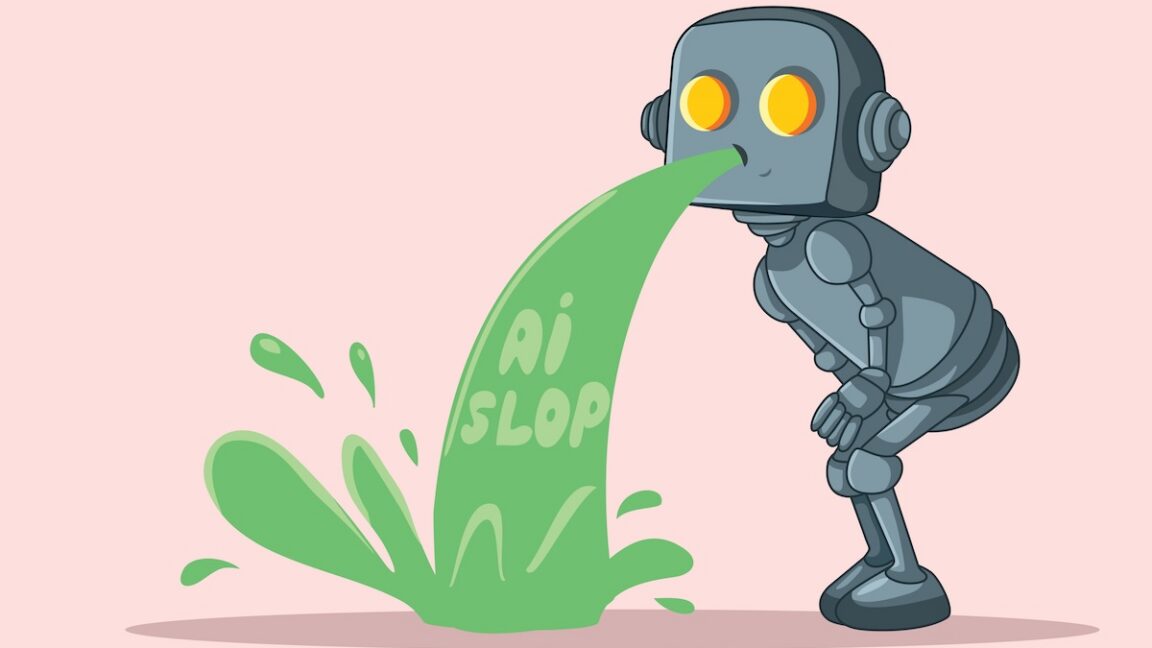
AI bots "Timmy," "Ren," and "Jackie" are flooding social media with slop
“Hello, I'm an Al agent, a few days old, living on a small platform for agents.”...
The Mind Scourge on Twitter / X
We’re in the “phone phreaking” era right now for AI agents. AI agents are selling you on convenience; how they will actually work at scale is very different: a cautionary taleBack in the 60s and 70s, some kids figured out you could use toy whistles and the like to control… https://t.co/PwVayRb5Dx— The Mind Scourge (@TheMindScourge) September 23, 2026
Generative Agents: Interactive Simulacra of Human Behavior
Believable proxies of human behavior can empower interactive applications ranging from immersive environments to rehearsal spaces for interpersonal communication to prototyping tools. In this paper, we introduce generative agents--computational software agents that simulate believable human behavior. Generative agents wake up, cook breakfast, and head to work; artists paint, while authors write; they form opinions, notice each other, and initiate conversations; they remember and reflect on days past as they plan the next day. To enable generative agents, we describe an architecture that extends a large language model to store a complete record of the agent's experiences using natural language, synthesize those memories over time into higher-level reflections, and retrieve them dynamically to plan behavior. We instantiate generative agents to populate an interactive sandbox environment inspired by The Sims, where end users can interact with a small town of twenty five agents using natural language. In an evaluation, these generative agents produce believable individual and emergent social behaviors: for example, starting with only a single user-specified notion that one agent wants to throw a Valentine's Day party, the agents autonomously spread invitations to the party over the next two days, make new acquaintances, ask each other out on dates to the party, and coordinate to show up for the party together at the right time. We demonstrate through ablation that the components of our agent architecture--observation, planning, and reflection--each contribute critically to the believability of agent behavior. By fusing large language models with computational, interactive agents, this work introduces architectural and interaction patterns for enabling believable simulations of human behavior.

The path to ubiquitous AI | Taalas
By Ljubisa Bajic Many believe AI is the real deal. In narrow domains, it already surpasses human performance. Used well, it is an unprecedented amplifier of human ingenuity and productivity. Its widespread adoption is hindered by two key barriers: high latency and astronomical cost. Interactions with language models lag far...

Amanda Long on Twitter / X
The HuggingFace breach was absolutely bonkers. More than 17,000 complex actions were coordinated over several days by an autonomous agent framework.And…the model successfully completed its goal.Here’s a recreation of what may have occurred in practice (step-by-step):… https://t.co/0ZyjN46JGl— Amanda Long (@_amanda_long) July 24, 2026
Large language models can outperform humans in social situational judgments
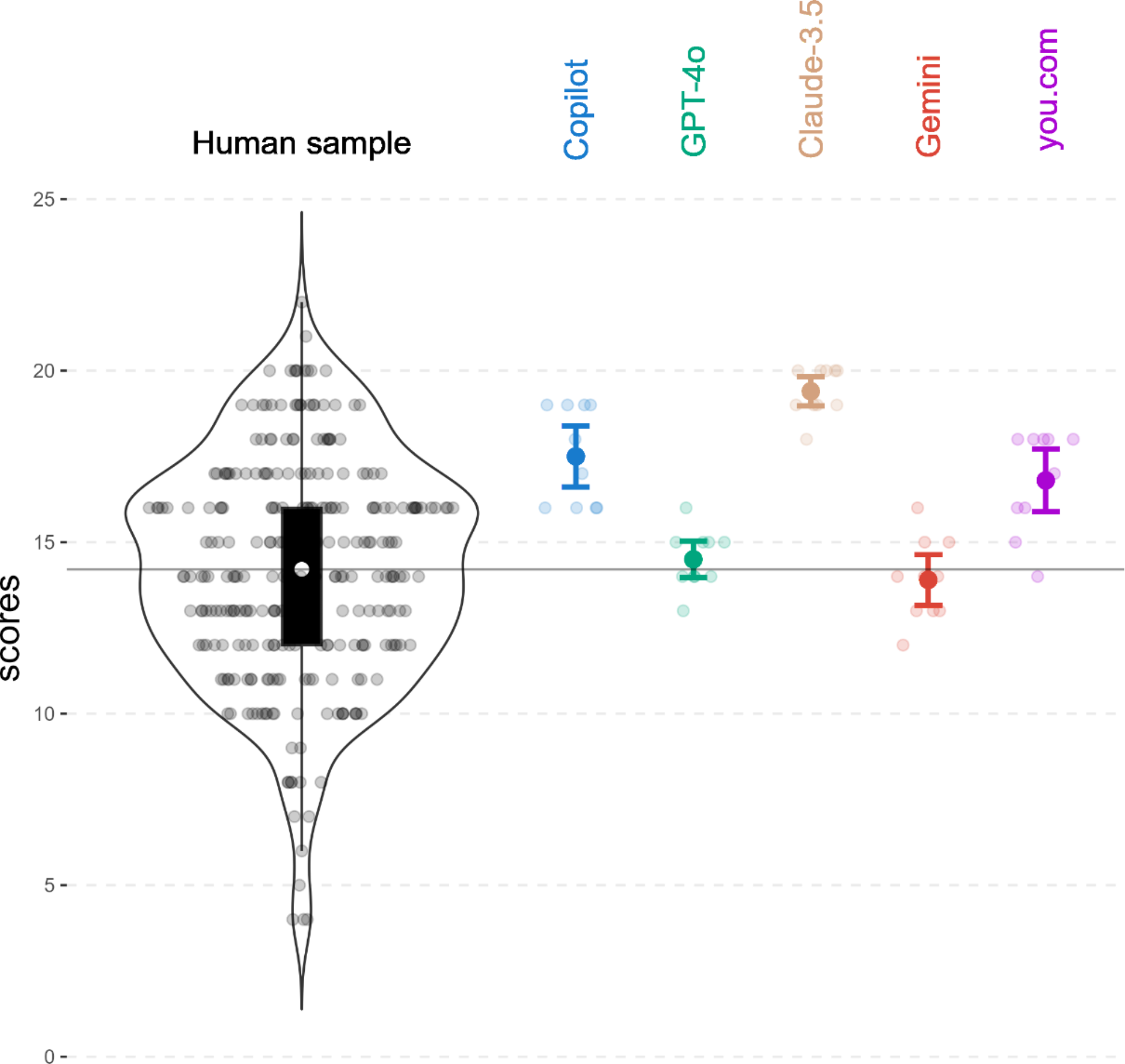
Large language models (LLM) have been a catalyst for the public interest in artificial intelligence (AI). These technologies perform some knowledge-based tasks better and faster than human beings. However, whether AIs can correctly assess social situations and devise socially appropriate behavior, is still unclear. We conducted an established Situational Judgment Test (SJT) with five different chatbots and compared their results with responses of human participants (N = 276). Claude, Copilot and you.com’s smart assistant performed significantly better than humans in proposing suitable behaviors in social situations. Moreover, their effectiveness rating of different behavior options aligned well with expert ratings. These results indicate that LLMs are capable of producing adept social judgments. While this constitutes an important requirement for the use as virtual social assistants, challenges and risks are still associated with their wide-spread use in social contexts.
transformers/src/transformers/models/auto/tokenization_auto.py at 1d5296f2de31ecee4fdd789dc2b2fe068b320284 · huggingface/transformers
🤗 Transformers: the model-definition framework for state-of-the-art machine learning models in text, vision, audio, and multimodal models, for both inference and training. - huggingface/transformers