This application visualizes how over 400 machine learning models in the Transformers library are connected and related to each other. Users can see which models are derived from or import features ...
transformers/src/transformers/models/auto/tokenization_auto.py at 1d5296f2de31ecee4fdd789dc2b2fe068b320284 · huggingface/transformers
🤗 Transformers: the model-definition framework for state-of-the-art machine learning models in text, vision, audio, and multimodal models, for both inference and training. - huggingface/transformers
Anatomy of a Machine Learning Ecosystem: 2 Million Models on Hugging Face
Generative artificial intelligence (AI) and machine learning (ML) models are being adopted across a variety of domains. As these technologies develop, there is notable diversity in their levels of availability and paths of diffusion. For example, fully closed-source models may be available through chatbots and API calls, but their weights, source code, training data, and other artifacts remain hidden from view. In contrast, open models make some or all of these materials publicly available for developers and downstream users.

MiniMaxAI/OctoCodingBench · Datasets at Hugging Face
We’re on a journey to advance and democratize artificial intelligence through open source and open science.

An Introduction to Transformers
The transformer is a neural network component that can be used to learn useful representations of sequences or sets of data-points. The transformer has driven recent advances in natural language processing, computer vision, and spatio-temporal modelling. There are many introductions to transformers, but most do not contain precise mathematical descriptions of the architecture and the intuitions behind the design choices are often also missing. Moreover, as research takes a winding path, the explanations for the components of the transformer can be idiosyncratic. In this note we aim for a mathematically precise, intuitive, and clean description of the transformer architecture. We will not discuss training as this is rather standard. We assume that the reader is familiar with fundamental topics in machine learning including multi-layer perceptrons, linear transformations, softmax functions and basic probability.

Stanford CS25: V5 I Transformers in Diffusion Models for Image Generation and Beyond
Train AI models with Unsloth and Hugging Face Jobs for FREE
We’re on a journey to advance and democratize artificial intelligence through open source and open science.

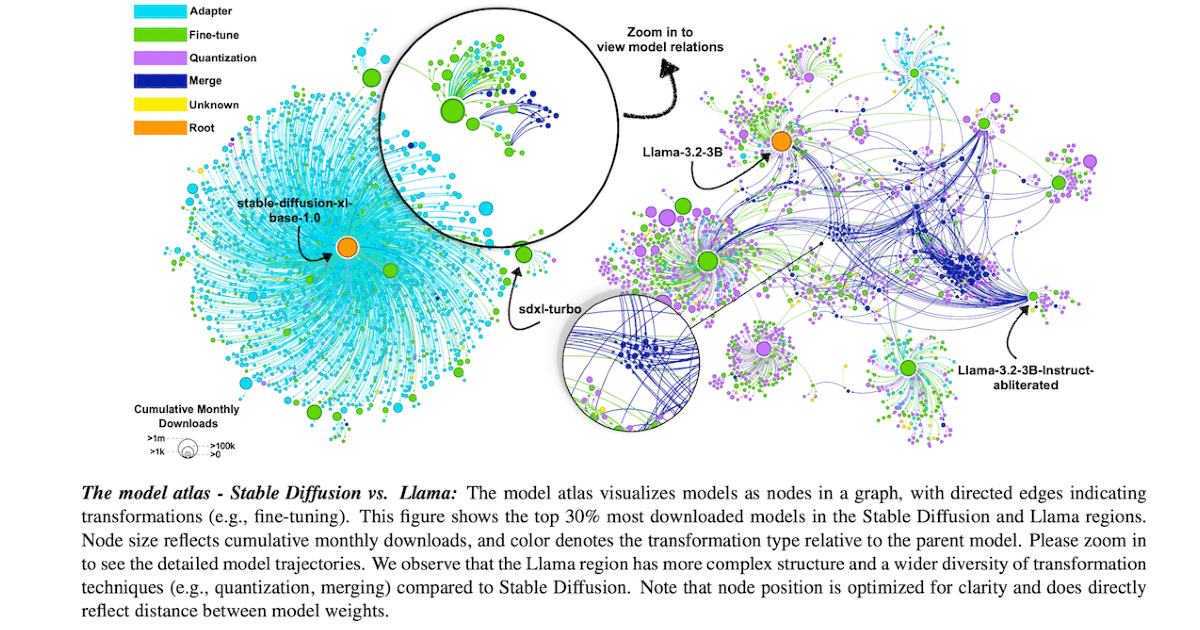
Charting and Navigating Hugging Face's Model Atlas
Charting and Navigating Hugging Face's Model Atlas: an interactive visualization and analysis tool for exploring large-scale AI model repositories. The atlas maps model relationships, and helps identify trends and fill in undocumented regions using structural patterns in the data.
Getting started with Transformers and TPU using PyTorch
Learn how to get started with Hugging Face Transformers and TPUs using PyTorch, fine-tune a BERT model for Text Classification using the newest Google Cloud TPUs.
ONNX Model Explorer - a Hugging Face Space by onnx-community
This tool lets you upload an ONNX model file and instantly see a clear, interactive diagram of its structure, including layers, inputs, and outputs. You can navigate through the graph to understand...
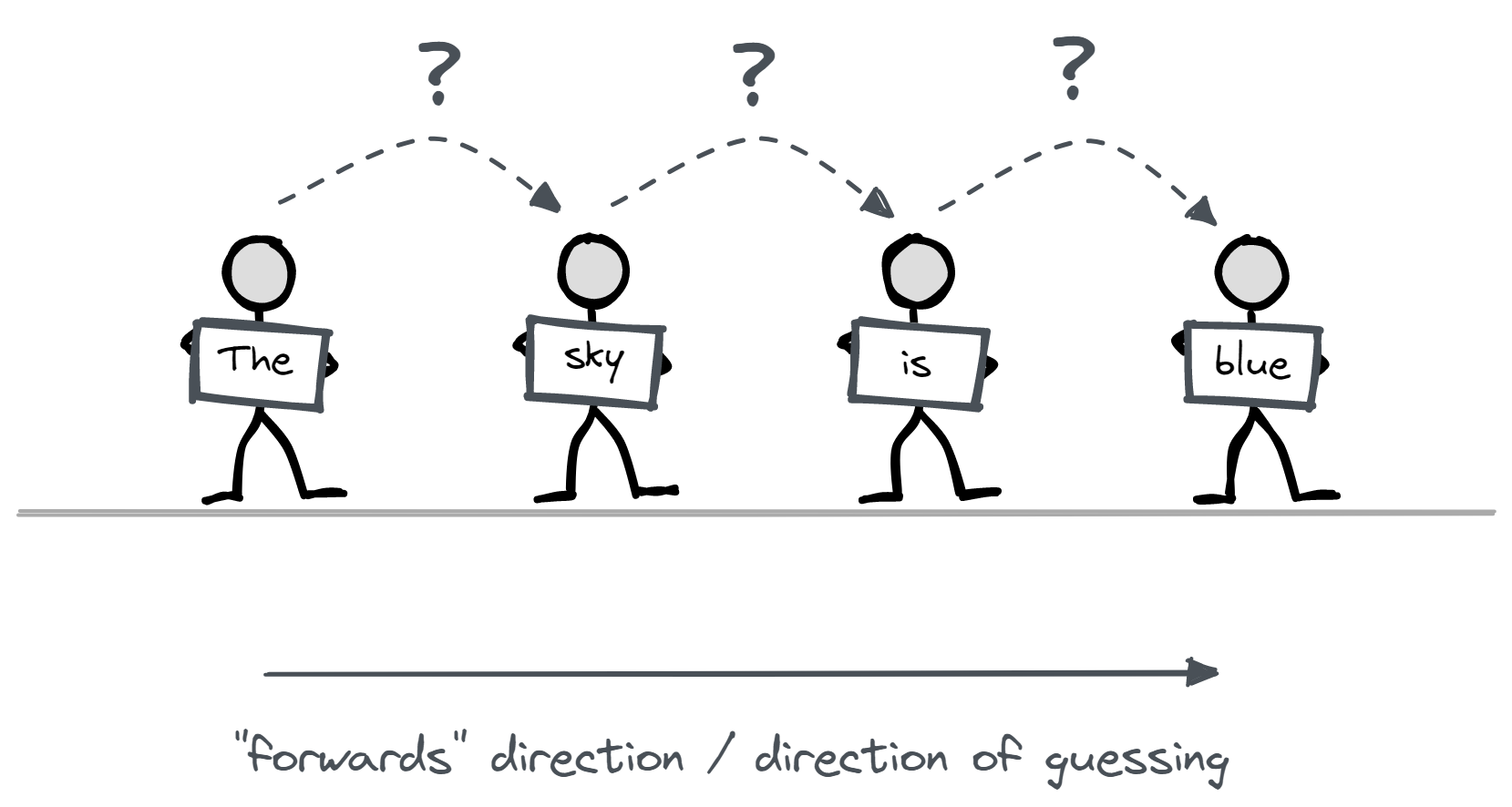
An Analogy for Understanding Transformers — LessWrong
Thanks to the following people for feedback: Tilman Rauker, Curt Tigges, Rudolf Laine, Logan Smith, Arthur Conmy, Joseph Bloom, Rusheb Shah, James Da…
continuedev/instinct-data · Datasets at Hugging Face
We’re on a journey to advance and democratize artificial intelligence through open source and open science.

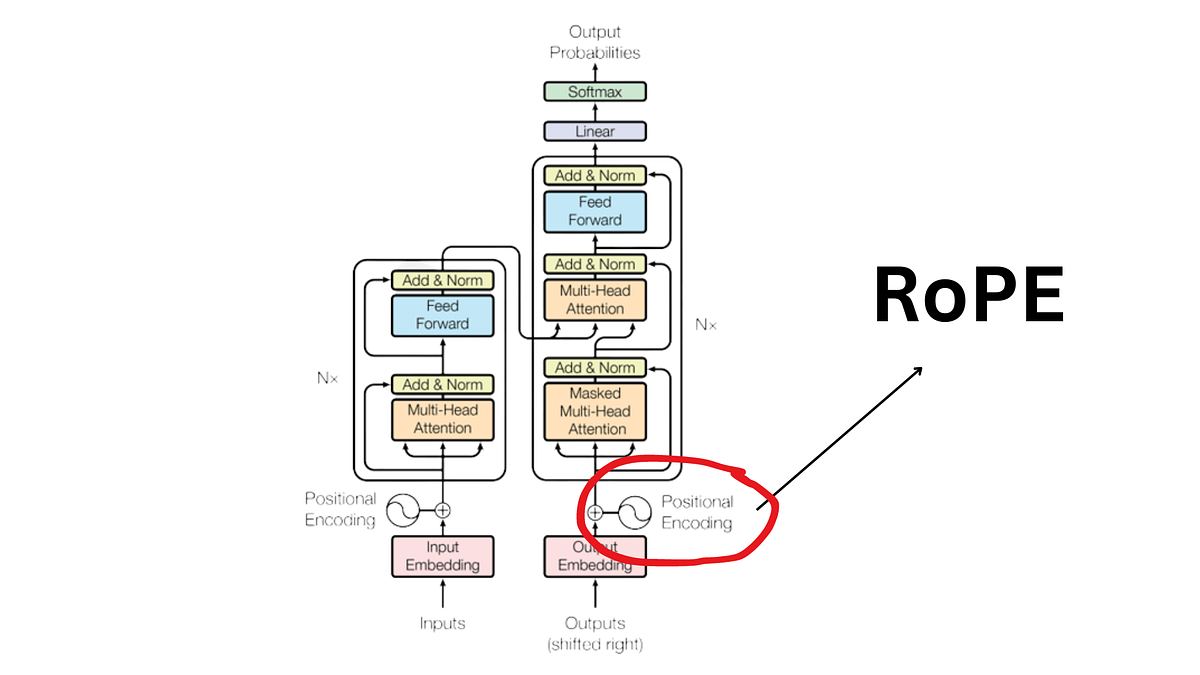
Rotary Positional Embeddings: A Detailed Look and Comprehensive Understanding
Since the “Attention Is All You Need” paper in 2017, the Transformer architecture has been a cornerstone in the realm of Natural Language…
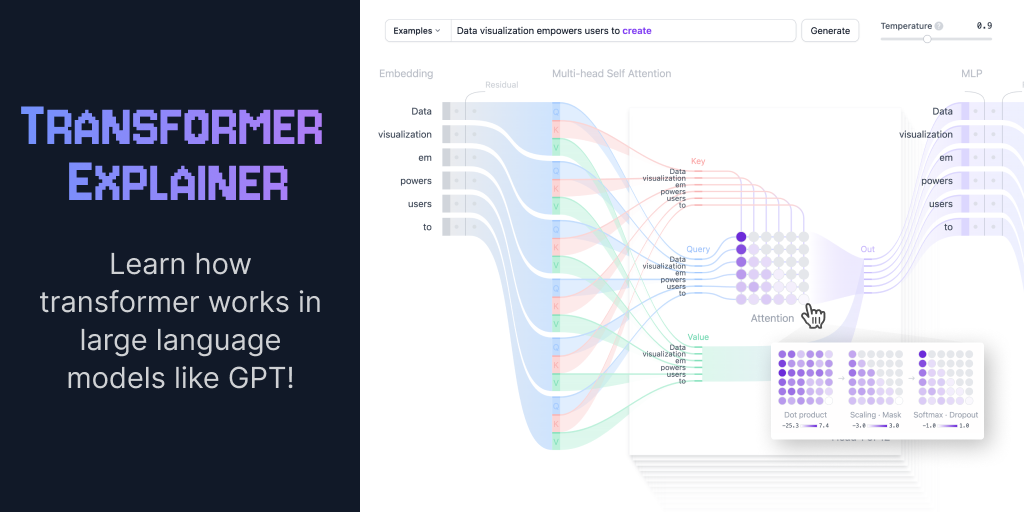
Transformer Explainer: LLM Transformer Model Visually Explained
An interactive visualization tool showing you how transformer models work in large language models (LLM) like GPT.
Inkling: Our open-weights model
Mira Murati's Thinking Machines Lab just released their first open-weights model. Inkling is "a Mixture-of-Experts transformer with 975B total parameters, 41B active" - an Apache-2.0 licensed multimodal model trained on …