

Improve your empathic communication by role playing with LLMs
Practicing with Language Models Cultivates Human Empathic Communication
Empathy is central to human connection, yet people often struggle to express it effectively. In blinded evaluations, large language models (LLMs) generate responses that are often judged more empathic than human-written ones. Yet when a response is attributed to AI, recipients feel less heard than when comparable responses are attributed to a human. We built a conversation platform in which participants are asked to offer empathic support to an LLM expressing realistic troubles and conducted a randomized experiment collecting 33,938 messages spanning 2,904 text-based conversations between 968 participants and their LLM conversational partners. We find participants report feeling empathy but systematically fail to express it, but an LLM coaching intervention offering personalized feedback on effective empathic communication significantly boosts it without homogenizing participants' responses. Moreover, we derive a data-driven taxonomy of idiomatic empathic expressions in naturalistic dialogues across personal and workplace trouble scenarios. These results advance the scientific understanding of how empathy is expressed and demonstrate a scalable, AI-based intervention for scaffolding and cultivating it.

The scientific case for being nice to your chatbot
New research confirms that LLMs often perform better when you encourage them. But why?
What Happens, Exactly, When a Person Talks to an LLM?
A phenomenology of thinking with a model.

Your Most Important Skill: Empathy
TL;DR — Empathy is the most important skill you can practice. It will lead to greater success personally and professionally and will allow…
There's Something Fundamentally Wrong With LLMs
LLMs aren't trained on the "vast majority of speech," experts warn, a major blind spot that could have sweeping consequences.

Cognitive exponents and LLM leverage
I know a few people for whom LLMs have been a near-immediate multiplier of attention and effort. I know a lot for whom LLMs clearly make them worse at thinking and doing things. So: why?

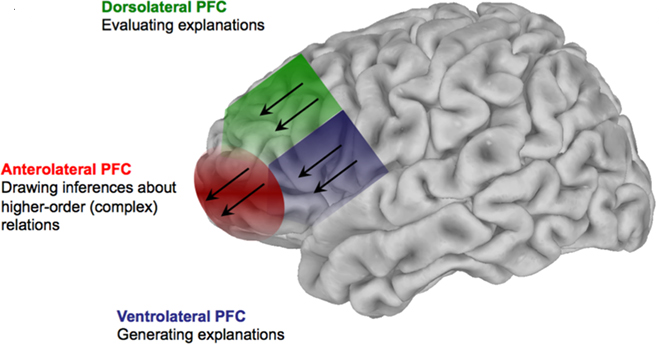
How LLMs are and are not like the brain
Hi from buttondown! At the bottom of this newsletter is a bit of administrivia about the new platform How LLMs are and are not like the brain Beneath all the...
Use This 8-Word Phrase To Build Trust in Conversations
Plus, how active listening creates stronger bonds (not unsolicited advice).

Use This 8-Word Phrase To Build Trust in Conversations
Plus, how active listening creates stronger bonds (not unsolicited advice).
LLMs are good at playing you
Large language models seem just like humans, but some of this is in our heads.

Replacing my best friends with an LLM trained on 500,000 group chat messages
An exploration into customizing LLMs for personal use

Dan Shipper 📧 on Twitter / X
this is true and is a big reason why you don’t need to be a highly technical researcher to use LLMs in surprising and novel ways https://t.co/TuxNzXzToU— Dan Shipper 📧 (@danshipper) July 27, 2025
Can we trust LLMs to judge whether a research idea is novel?
A Blog post by Ai2 on Hugging Face

Well-intentioned obscenity
An LLM lied about me at the office and I'm cranky about it. That interaction makes me think a lot about how LLMs are becoming normalized, though, and what we're looking at in terms of their role in human-to-human interactions in the future.