

Emacs as a free software project focuses on empowering its users without compromising its ethical principles. As users of Emacs, we are interested in ensuring that we can continue to use it and contribute to it in good faith in the future.
Front Page — Free Software Foundation — working together for free software
The technology overrunning our communities isn't built for the benefit of humanity: it's built so that billionaires can control us. Our lives don't have to be this way. The FSF empowers users with free software, technology built through global collaboration, mutual respect, and above all, freedom. The FSF will always continue to resist the encroachment of nonfree software. We're fighting to protect all computer users and build a better future.
The Emacs Editor | Emacs Docs
Emacs is the advanced, extensible, customizable, self-documenting editor. This manual describes how to edit with Emacs and some of the ways to customize it; it corresponds to GNU Emacs version 30.2.

Endor Labs launches free tool AURI after study finds only 10% of AI-generated code is secure
Endor Labs launches AURI, a free security platform that embeds directly into AI coding assistants like Cursor and Claude to catch vulnerabilities in AI-generated code before they ship to production.

Sorting out the Ethical Licensing Mess
Software developers who give the world, for free, usage rights to the code they write often use open source licenses to make this gift legally explicit. These free usage rights (and then some) are …

ETCH
We believe technology should serve humanity and that human creativity is essential and irreplaceable. We support the ethical development and deployment of AI by funding protective technologies and translating research into real-world tools for creative communities.

Nicholas Carlini - Black-hat LLMs | [un]prompted 2026
Yes: Affirmative Consent as a Theoretical Framework for Understanding and Imagining Social Platforms | Proceedings of the 2021 CHI Conference on Human Factors in Computing Systems
As part of the Digital Library's transition to Open Access, new features for researchers are available in the Premium Edition. Click here to learn more.

Introducing EmDash — the spiritual successor to WordPress that solves plugin security
Today we are launching the beta of EmDash, a full-stack serverless JavaScript CMS built on Astro 6.0. It combines the features of a traditional CMS with modern security, running plugins in sandboxed Worker isolates.

imput
We develop private, efficient, and respectful software. We also do security research, reverse engineering, and develop network services.
We Can Just Build Things
Build the tools your community needs — production-grade, privacy-respecting freedom tech, made with an AI agent and grounded in a verified, values-aligned catalog (Nostr, AT Protocol, and beyond).
The community-first software era
Some ideas about how to encode our values into the tools we use

What is Free Software? - GNU Project - Free Software Foundation
Since 1983, developing the free Unix style operating system GNU, so that computer users can have the freedom to share and improve the software they use.
Human-Centered Artificial Intelligence: Three Fresh Ideas
Human-Centered AI (HCAI) is a promising direction for designing AI systems that support human self-efficacy, promote creativity, clarify responsibility, and facilitate social participation. These human aspirations also encourage consideration of privacy, security, environmental protection, social justice, and human rights. This commentary reverses the current emphasis on algorithms and AI methods, by putting humans at the center of systems design thinking, in effect, a second Copernican Revolution. It offers three ideas: (1) a two-dimensional HCAI framework, which shows how it is possible to have both high levels of human control AND high levels of automation, (2) a shift from emulating humans to empowering people with a plea to shift language, imagery, and metaphors away from portrayals of intelligent autonomous teammates towards descriptions of powerful tool-like appliances and tele-operated devices, and (3) a three-level governance structure that describes how software engineering teams can develop more reliable systems, how managers can emphasize a safety culture across an organization, and how industry-wide certification can promote trustworthy HCAI systems. These ideas will be challenged by some, refined by others, extended to accommodate new technologies, and validated with quantitative and qualitative research. They offer a reframe -- a chance to restart design discussions for products and services -- which could bring greater benefits to individuals, families, communities, businesses, and society.
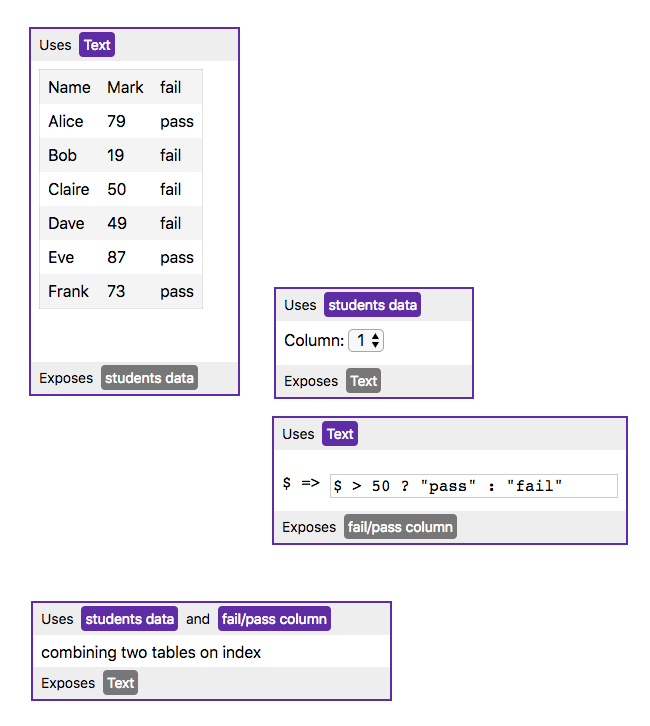
End-user Programming
A vision for empowered computing that reaches back forty years. Our research lab examines why it has been so hard to achieve.
Ethical Web Principles
The web should be a platform that helps people and provides a positive social benefit. As we continue to evolve the web platform, we must therefore consider the consequences of our work. The following document sets out ethical principles that will drive W3C's continuing work in this direction.