

Hyperproblems: New Ways of Doing and Communicating Science - Hyperproblems
Hyperproblems: New Ways of Doing and Communicating Science - Hyperproblems
Hyperproblems: Hyperproblems are scientific challenges whose scale, complexity, novelty and interdependence overwhelm traditional research models, requiring…
Infinite Researchers | AI-Powered Scientific Discovery
What happens to the speed of discovery if we have infinite researchers? Explore AI experiments accelerating breakthroughs.

Hyperfast AI: Rethinking Design for 1000 tokens/s
I recently spoke at AI Tinkerers Raleigh about hyperfast inference systems and how they’re fundamentally changing AI application design. If you haven’t heard of Cerebras (or however they pronounce it), you’re in for a treat—this is one of the most exciting areas of research in AI right now.
Theory Beyond Theorems and Proofs: A Guest Post
Scott’s foreword: I’m extremely grateful to my brilliant colleagues, Pravesh Kothari, Raghu Meka, and Prasad Raghavendra, for sharing the guest post below about how theoretical computer…

Universal Scientific Protocols, Inc.
Universal Scientific Protocols, Inc. — research publishing, reconsidered. A knowledge management platform for machine learning researchers.
Glimmer · Reproducible AI science
Glimmer turns a research project into a navigable knowledge graph you can explore, run, verify, and extend — reproducibly.

Reproducible Execution Environment (REE) | Tech | Gensyn
Run AI model inference in a machine-agnostic environment where the same model and inputs produce the same outputs across supported hardware.

Mathematician catches AI-generated research error by OpenAI president | Benjamin Golub posted on the topic | LinkedIn
In case you think the problem of science slop is hypothetical, here's something that happened on X yesterday: The president of OpenAI sharing wrong science slop as proud evidence of the power of mathematical AI. Within a day, the mathematician Tony Feng found a gap that undercut the paper's central argument; the author conceded, and (to his credit!) Brockman deleted the tweet as soon as he became aware. Feng was a hero to catch this. The author of the refuted claim is a mathematician but a self-described outsider to this area, with a prior big claim posted and quickly withdrawn. Greg Brockman is not an expert, either. Neither could check what they were amplifying. Heroes catching errors one at a time won't hold against the volume of AI-generated research now coming. We need an automated, independent verification layer for knowledge work, which is what we're building at Refine (refine.ink). Passing such verification should become a necessary step before big claims, especially outside one's own expertise. A link to a bigger-picture post on this is in the comments. | 23 comments on LinkedIn

Self-Revising Discovery Systems for Science: A Categorical Framework for Agentic Artificial Intelligence
Scientific discovery is not only answer generation but revision of the representational regime in which evidence, artifacts, operations, and verifiers are typed. We develop a category-theoretic account of agentic discovery for materials science. In a fixed regime b with schema category S_b, the system state is a copresheaf I_t: S_b -> Set, and provenance is the category of elements \int_{S_b} I_t. Fixed-regime operation is an update on such states, endofunctorial only when provenance-preserving refinements are specified and preserved. Discovery is instead a verified regime transition u: S_b -> S_b': old artifacts are preserved, transported by the left Kan extension Lan_u I_t, and compared with the post-transition state to identify residual content beyond functorial transport. This separates retrieval, search, and discovery without subjective novelty. We instantiate the framework in two systems. In Builder/Breaker, a protein-mechanics world model is revised under a Minimum Description Length gate; the accepted law expresses within-chain flexibility as all-mode elastic compliance conditioned by slow collective-mode participation, or mode-conditioned compliance. In CategoryScienceClaw, typed skills, artifacts, open needs, workflow mutation, gates, stress tests, and public discourse become a proof-carrying knowledge-computation graph. A fiber-network example records candidate models, rejected alternatives, an AIC gate, perturbation tests, and an accepted orientation-tensor anisotropic stiffness surrogate over an isotropic fiber-count descriptor. Together, the cases show how category theory can be both a mathematical language for discovery and an engineering specification for self-revising AI discovery systems.

Solving a Million-Step LLM Task with Zero Errors
LLMs have achieved remarkable breakthroughs in reasoning, insights, and tool use, but chaining these abilities into extended processes at the scale of those routinely executed by humans,...
GRN · German Reproducibility Network
Working together for trustworthy and useful research
Ultra-Processed Information: AI and the Coming Deluge of Noise | Frankly 128
Computational reproducibility

The why and how of making scientific computations reproducible
Konrad Hinsen's blog
Home Page - Software Heritage
GNU Guix transactional package manager and distribution — GNU Guix

Keynote: Reproducibility and replicability of computer simulations | Canal U
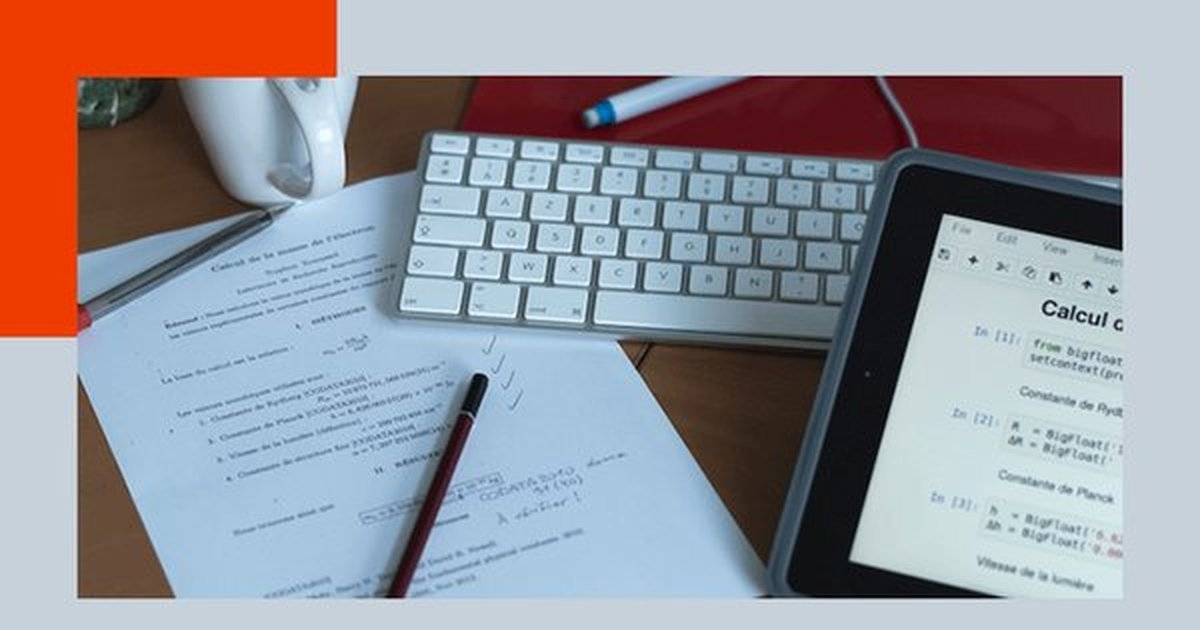
Reproducible research: methodological principles for transparent…
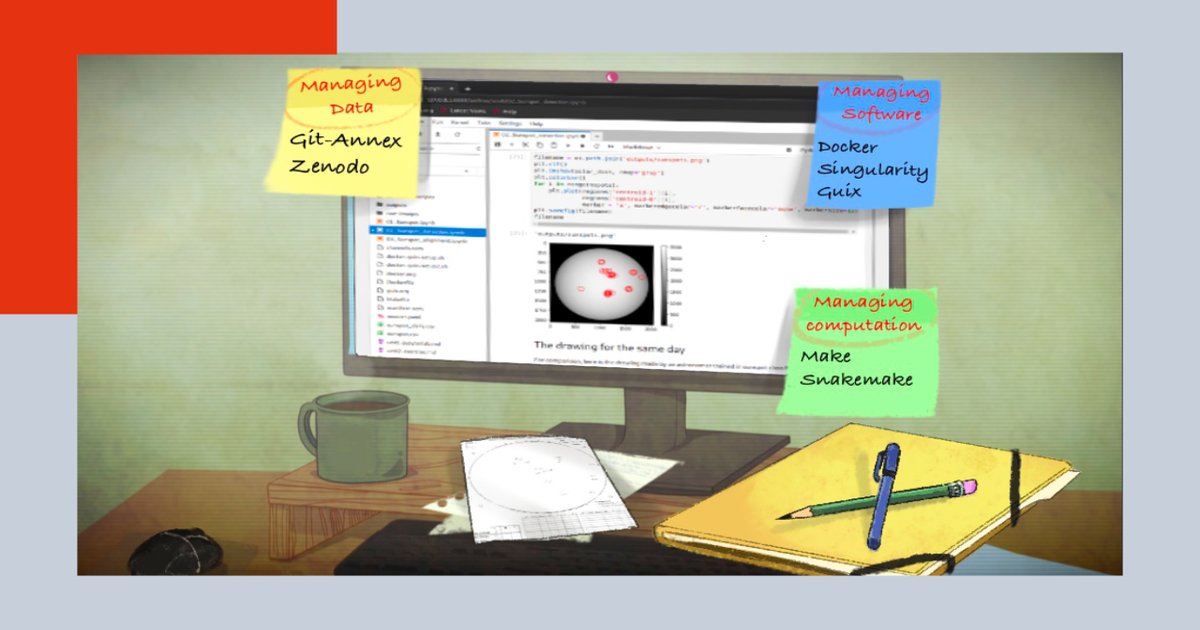
Reproducible Research II: Practices and tools for managing compu…