

An overview of perceptual hashing
Robustness of Practical Perceptual Hashing Algorithms to...
Perceptual hashing algorithms (PHAs) are widely used for identifying illegal online content and are thus integral to various sensitive applications. However, due to their hasty deployment in...

Hash Functions for GPU Rendering – Nathan Reed’s coding blog
Pixels and polygons and shaders, oh my!
Random Hash Generator - BenNadel.com
The following hashes are generated from 300-bytes of random input using the "sha1prng" algorithm.
Fast Embeddings on GPUs
Fast and accurate search is vital to all of Perplexity, from Search and Computer to our API Platform. Behind the scenes, the heavy lifting is done by embedding

Nectar - Find similar images across the ATmosphere
Nectar is an image search API for AT Protocol. Query images and records by perceptual hash. Find reposts, add annotations, track popularity.
Bab
Bab is a family of secure hash functions, heavily inspired by BLAKE3. Bab hashes allow for streaming verification of strings, similar to the BLAKE3-based Bao algorithm. We discuss several optimization techniques that go beyond the Bao specification. Further, unlike BLAKE3 and Bao, Bab digests allow for constant-sized length proofs of their strings.
Shared Geometry As A Rosetta Stone: Cross-Modal Alignment Without Paired Data
Multimodal representations enable zero-shot classification and retrieval, but aligning independently trained models usually requires large amounts of paired data. Yet, the Platonic Representation Hypothesis suggests that models trained on different modalities may converge spontaneously toward a shared representation geometry. But then, do we even need paired examples for cross-modal alignment? Remarkably, we show that paired examples are unnecessary for coarse cross-modal alignment. Our simple Wasserstein Procrustes method with a coarse geometric initialization aligns two disjoint embedding sets by estimating a single orthogonal map without seeing any pairs. Across datasets, modalities, and unimodal models, we show that we can consistently align independently trained representations without pairs, and standard geometric alignment metrics accurately predict when this is possible. Nevertheless, we can naturally benefit from paired examples. In the very few-pair regime, our method substantially outperforms existing ones, while staying competitive with pair-based methods with more added examples. Finally, we demonstrate that the resulting alignments can enable text-to-image generation without paired examples. These results show that independently trained models often share enough geometry to establish cross-modal correspondence with little or no paired data.
Google for Developers Blog - News about Web, Mobile, AI and Cloud
EmbeddingGemma 2 is a compact, open-source multimodal embedding model that maps text, code, images, video, and audio into a unified 768-dimensional space. Developers can use the sentence-transformers library to selectively load modular modality encoders—ranging from 270M to 740M parameters—to optimize memory usage. Additionally, Matryoshka Representation Learning enables dynamic dimension truncation down to 128d, significantly reducing vector database storage requirements while maintaining high retrieval performance.

Linkup - SPARSEUP: Linkup's Open-Source Sparse Embedding Model
Linkup Research releases SPARSEUP, an open-source sparse embedding model under 150M parameters. SOTA on BEIR-13, sub-millisecond retrieval, Apache 2.0 license.

Tyler Angert on Twitter / X
we're working on a new photo search engine called Angles. it's focused on doing one thing well: finding photos + videos by visual similarity.here is raw, unedited footage of me going through my 80,000 photo camera roll *in realtime* with text-to-image search, image-to-image… pic.twitter.com/fsCqIHv00j— Tyler Angert (@tylerangert) March 24, 2026

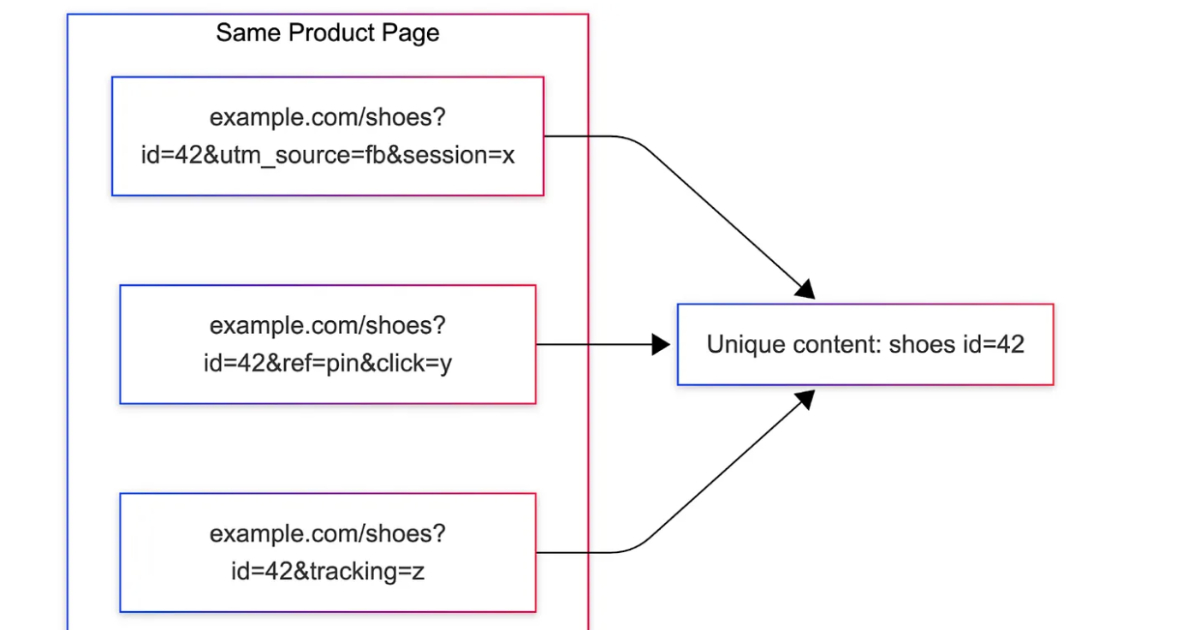
Pinterest Uses Content Fingerprints for URL Deduplication across Millions of Domains
Pinterest introduced MIQPS, a URL normalization system that identifies which query parameters affect page identity using rendered content fingerprints. It reduces duplicate processing across millions of domains by replacing rule-based approaches with offline analysis, anomaly detection, and runtime parameter maps, improving ingestion efficiency and scalability in large-scale content pipelines.
Precise Zero-Shot Dense Retrieval without Relevance Labels
While dense retrieval has been shown effective and efficient across tasks and languages, it remains difficult to create effective fully zero-shot dense retrieval systems when no relevance label is available. In this paper, we recognize the difficulty of zero-shot learning and encoding relevance. Instead, we propose to pivot through Hypothetical Document Embeddings~(HyDE). Given a query, HyDE first zero-shot instructs an instruction-following language model (e.g. InstructGPT) to generate a hypothetical document. The document captures relevance patterns but is unreal and may contain false details. Then, an unsupervised contrastively learned encoder~(e.g. Contriever) encodes the document into an embedding vector. This vector identifies a neighborhood in the corpus embedding space, where similar real documents are retrieved based on vector similarity. This second step ground the generated document to the actual corpus, with the encoder's dense bottleneck filtering out the incorrect details. Our experiments show that HyDE significantly outperforms the state-of-the-art unsupervised dense retriever Contriever and shows strong performance comparable to fine-tuned retrievers, across various tasks (e.g. web search, QA, fact verification) and languages~(e.g. sw, ko, ja).
Blob store design challenges
It's just hashed data, what's so complex about a blob store anyway?
Data-OOB: Out-of-bag Estimate as a Simple and Efficient Data Value
Data valuation is a powerful framework for providing statistical insights into which data are beneficial or detrimental to model training. Many Shapley-based data valuation methods have shown promising results in various downstream tasks, however, they are well known to be computationally challenging as it requires training a large number of models. As a result, it has been recognized as infeasible to apply to large datasets. To address this issue, we propose Data-OOB, a new data valuation method for a bagging model that utilizes the out-of-bag estimate. The proposed method is computationally efficient and can scale to millions of data by reusing trained weak learners. Specifically, Data-OOB takes less than $2.25$ hours on a single CPU processor when there are $10^6$ samples to evaluate and the input dimension is $100$. Furthermore, Data-OOB has solid theoretical interpretations in that it identifies the same important data point as the infinitesimal jackknife influence function when two different points are compared. We conduct comprehensive experiments using 12 classification datasets, each with thousands of sample sizes. We demonstrate that the proposed method significantly outperforms existing state-of-the-art data valuation methods in identifying mislabeled data and finding a set of helpful (or harmful) data points, highlighting the potential for applying data values in real-world applications.
Svelte - Data Visualization

MIERUNE/svelte-maplibre-gl
Rich-Harris/pancake
www.npmjs.com

Unovis
Layer Cake

TanStack Table