

How to get focused

Writing is Thinking: Learning to Write with Confidence
Learning to write is learning to think, because writing is thinking. They are two peas in a powerful pod. This article goes over my writing process, focused on minimizing the activation energy to get started.

People who write extensively about note-writing rarely have a serious context of use
Many bloggers and “life-hackers” have made a full-time job of suggesting how you should organize your journal, or how you should most effectively Write about what you read to internalize texts deeply .NoteLink.Active { background-color: rgba(10, 132, 255, 0.15); } . We should take this advice seriously insofar as those practices have helped the authors achieve meaningful creative work: “Better note-taking” misses the point; what matters is “better thinking” .NoteLink.Active { background-color: rgba(10, 132, 255, 0.15); }
Writing Is Thinking
When you write about your work, it makes all of us smarter for the effort, including you. Done well, this kind of sharing means you’re contributing signal, instead of noise. But writers are made, n…

“Better note-taking” misses the point; what matters is “better thinking”
Lots of people write about solutions to the problem that Note-writing practices are generally ineffective .NoteLink.Active { background-color: rgba(10, 132, 255, 0.15); } . The vast majority of that writing fixates on a myopic, “lifehacking”-type frame, focused on answering questions like: “how should I organize my notes?”, “what kind of journal should I use?”, “how can I make it easy to capture snippets of things I read?”, etc.
Standard Paper — Independent writing, beautifully read
Discover articles from across the atmosphere, gathered in one place for focused reading.

Standard Paper — Independent writing, beautifully read
Discover articles from across the atmosphere, gathered in one place for focused reading.
Docs as Code: The Best Guide for Technical Writers
Recently, my work has involved writing a lot of documentation and. Doing this has introduced me to...

FocusWriter
FocusWriter is a distraction-free text editor for Microsoft Windows and Linux. An old version (1.7.6) still can be used on MacOS.

Creative Reading: Scaffolding Reading for Transformation
Reading augmentation systems increasingly help readers process text at scale. While these tools address real constraints of time and cognitive load, they often implicitly frame reading as...

Ink
Handwriting and drawing directly between paragraphs using a digital pen, stylus, or Apple pencil.
On Writing #3
Periodically I like to gather various observations about writing, and share my perspective.

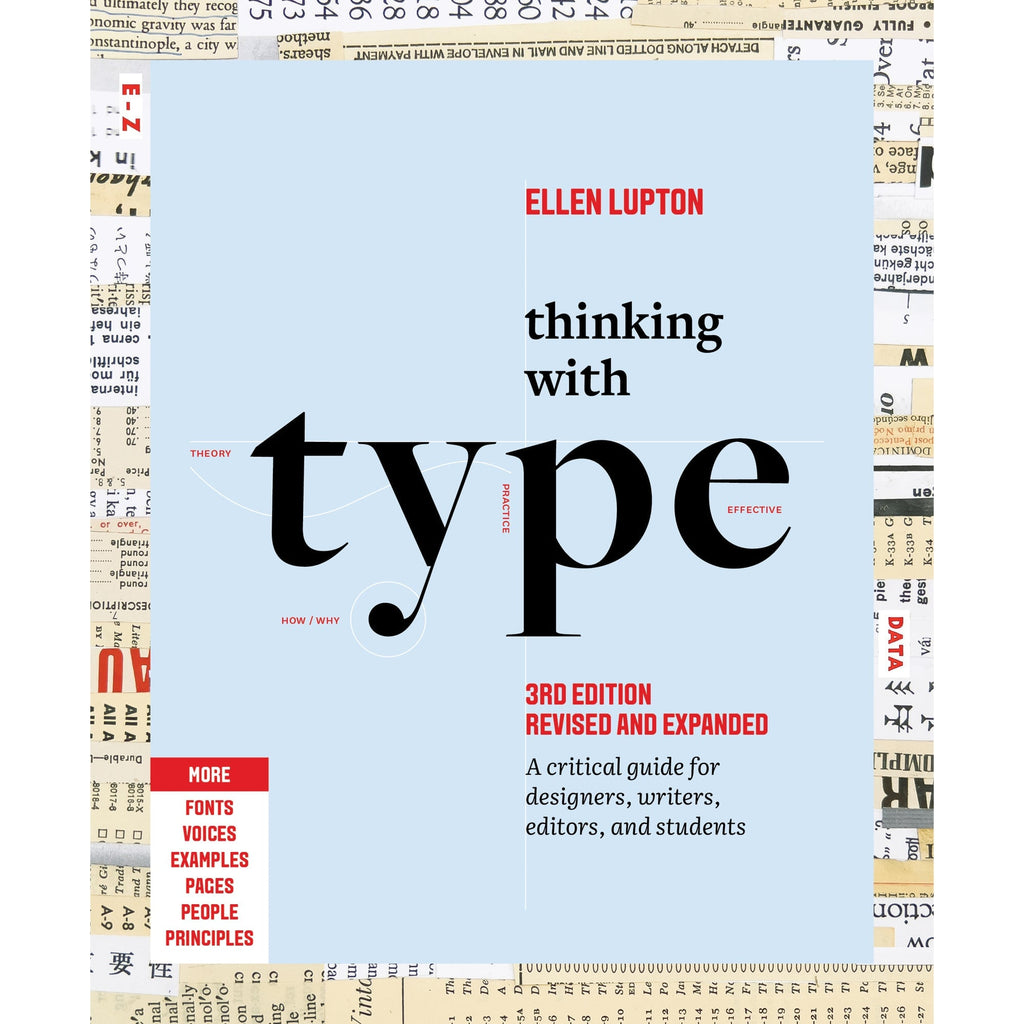
Thinking with Type
The essential and bestselling guide to typography from beloved design educator Ellen Lupton—revised and expanded to include new and additional voices, examples, and principles, and a wider array of typefaces. "Thinking with Type is to typography what Stephen Hawking's A Brief History of Time is to physics."—I Love TypographyThe bestselling Thinking with Type in a revised and expanded third edition: This is the definitive guide to using typography in visual communication. Covering the essentials of typography, this book explores everything from typefaces and type families to kerning and tracking to grids and layout principles.Ellen Lupton provides clear and focused guidance on how letters, words, and paragraphs should be aligned, spaced, ordered, and shaped. Historical and contemporary examples of graphic design show how to learn the rules and how to break them. Critical essays, eye-opening diagrams, helpful exercises, and dozens of examples and illustrations show readers how to be inventive within systems that inform and communicate.Featuring 32 pages of new content, the third edition is revised and refined from cover to cover: More fonts: old fonts, new fonts, weird fonts, libre fonts, Google fonts, Adobe fonts, fonts from independent foundries, and fonts and lettering by women and BIPOC designersIntroductions to diverse writing systems, contributed by expert typographers from around the worldDemonstrations of basic design principles, such as visual balance, Gestalt grouping, and responsive layoutCurrent approaches to typeface design, including variable fonts and optical sizes; tips for readability, legibility, and accessibility; and stunning reproductions from the Letterform Archive Thinking with Type is the typography book for everyone: designers, writers, editors, students, anyone who works with words on page or screen, and enthusiasts of type and lettering. Readers will also love Ellen Lupton's book Extra Bold: A Feminist, Inclusive, Anti-racist, Nonbinary Field Guide for Graphic Designers. Ellen Lupton is a designer, writer, and educator. She has written numerous books about graphic design, including Thinking with Type, Graphic Design Thinking, and Extra Bold: A Feminist, Inclusive, Anti-racist, Nonbinary Field Guide for Graphic Designers. She teaches in the Graphic Design MFA program at Maryland Institute College of Art in Baltimore (MICA), where she proudly serves as the Betty Cooke and William O. Steinmetz Design Chair. She is Curator Emerita at Cooper Hewitt, Smithsonian Design Museum in New York City, where her exhibitions included Herbert Bayer: Bauhaus Master and The Senses: Design Beyond Vision. Lupton loves reading, writing, teaching, and learning new things about design.
Page 4: POW+TREE Writing Strategy
As Ms. Lin reflects on the trouble her students are having with writing, she realizes that many of her students need help incorporating the four elements of the writing process (i.e., planning, organizing, writing, and editing and revising) into their essays. She concludes that they need a guide or strategy to follow as they write.[.....]
From bench to bot: Why AI-powered writing may not deliver on its promise
Efficiency isn’t everything. The cognitive work of struggling with prose may be a crucial part of what drives scientific progress.

How I draft stories
I discovered that trying to write one big blob does not work for me. I can get as far as 2000 words before the volume overwhelms. As with many things in life, breaking it down into pieces helps a lot! This is where most outlining writers suggest a big bulleted