


The 'uni-context' and a left hemisphere dominated world
The Origins Of <br>‘Planetary Realism’ And <br>‘Whole Earth’ Thinking | NOEMA
There is no escaping an interconnected world.
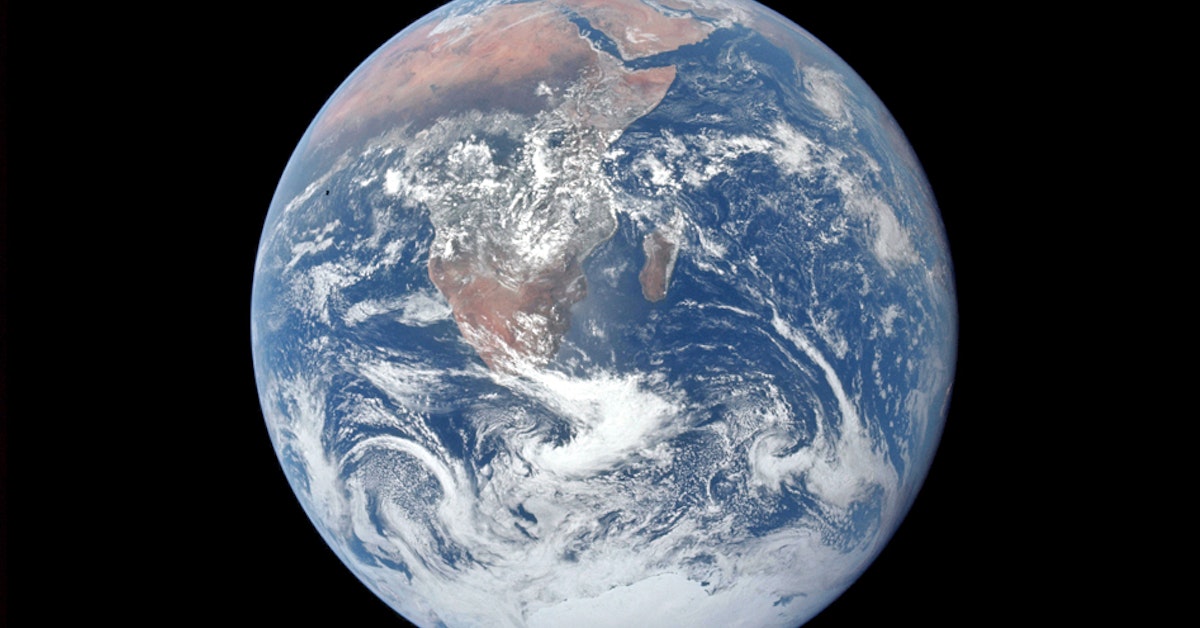

The New Planetary Nationalism
The realization of human embeddedness in Earth’s natural systems does not inevitably create a cosmopolitan politics oriented toward universal well-being.
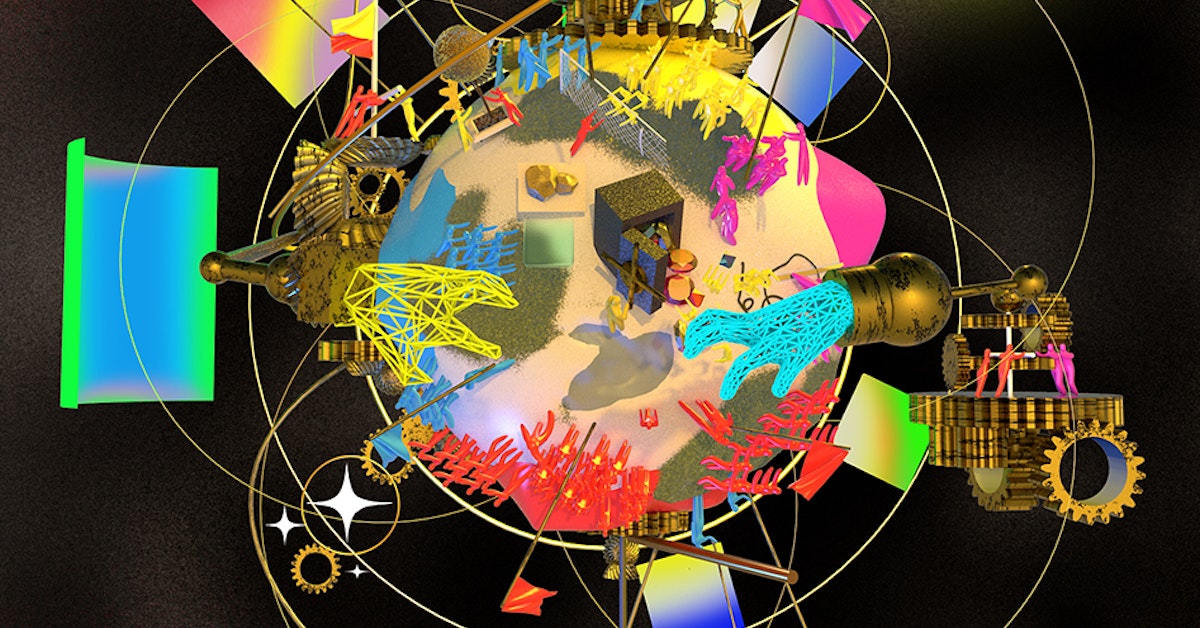
A Philosopher’s One-Word Theory to Explain Why the World Feels So Weird
Once you learn what the "uni-context" is, you won't stop seeing it everywhere

The Master and His Emissary: The Divided Brain and the Making of the Western World
In a book of unprecedented scope--now available in a larger format-Iain McGilchrist presents a fascinating exploration of the differences between the brain's left and right hemispheres, and how those differences have affected society, history, and culture. McGilchrist draws on a vast body of recent research in neuroscience and psychology to reveal that the difference is profound: the left hemisphere is detail oriented, while the right has greater breadth, flexibility, and generosity. McGilchrist then takes the reader on a journey through the history of Western culture, illustrating the tension between these two worlds as revealed in the thought and belief of thinkers and artists from Aeschylus to Magritte. "A landmark new book. . . . It tells a story you need to hear, of where we live now."-Bryan Appleyard, Sunday Times "A very remarkable book. . . . McGilchrist, who is both an experienced psychiatrist and a shrewd philosopher, looks at the relation between our two brain-hemispheres in a new light, not just as an interesting neurological problem but as a crucial shaping factor in our culture . . . splendidly thought-provoking. . . . I couldn't put it down."-Mary Midgley, The Guardian Named one of the best books of 2010 by The Guardian
The Standpoint of Heimatlosigskeit and the Planet
Since the launch of Sputnik in 1957, it has become impossible to comprehend the world solely through the lens of Hegel’s Berlin or Kojève’s Paris—even as nation-states continue to wrestle with their growing obsolescence. The planetary condition of human existence has also intensified a form of nihilism rooted in modernity: geographically through globalization, and cosmically through thermodynamics. If, in the twentieth century, reactionary politics sought to “overcome modernity” by returning to a notion of homeland (Heimat), the twenty-first century calls for a renewed framework—one that begins, perhaps, from the standpoint of Heimatlosigkeit.

The Standpoint of Heimatlosigskeit and the Planet
Since the launch of Sputnik in 1957, it has become impossible to comprehend the world solely through the lens of Hegel’s Berlin or Kojève’s Paris—even as nation-states continue to wrestle with their growing obsolescence. The planetary condition of human existence has also intensified a form of nihilism rooted in modernity: geographically through globalization, and cosmically through thermodynamics. If, in the twentieth century, reactionary politics sought to “overcome modernity” by returning to a notion of homeland (Heimat), the twenty-first century calls for a renewed framework—one that begins, perhaps, from the standpoint of Heimatlosigkeit.
Annick de Witt on Worldview Theory in a Time Between Worlds
Join us for the Life Itself Research Community Call#33. Annick de Witt discusses how her research on worldviews helps us respond to our current period of global societal transition.
annotations: La tiers-mondisation de l'Amérique
traduction française du billet de blog "The third-worlding of America" de Paul Krugman
Imperialism | The Paper Pilot
The Paper Pilot's digital garden of thoughts on philosophy, politics, and sociology
Interdependent Thoughts – by Ton Zijlstra
Still, many questions have global aspects. Our information networks, our trade routes, our dependencies are truly global. Because of it many of our issues, including climate emergencies, are global in both their roots and consequences. We all suffer from small earth syndrome these days, as I phrased it in 2010 at the SHiFT Conference, where everything anyone of us does reverberates around the world because we are continuously bumping into real global limits, Club of Rome style.
Orientalism (book)
Orientalism is a 1978 book by Edward Said, in which he establishes the term "Orientalism" as a critical concept to describe the Western world's commonly contemptuous depiction and portrayal of the Eastern world. Societies and peoples of the Orient are those who inhabit regions throughout Asia and North Africa. Said argues that Orientalism, in the sense of Western scholarship about the Eastern world, is inextricably tied to the imperialist societies that produced it, which makes much Orientalist work inherently political and servile to power.

The Great Reckoning - The Ideas Letter
The world feels unsettled, as if history itself were changing tempo. The familiar landmarks of the modern age are blurring, slipping away, and the stories we once told ourselves about…
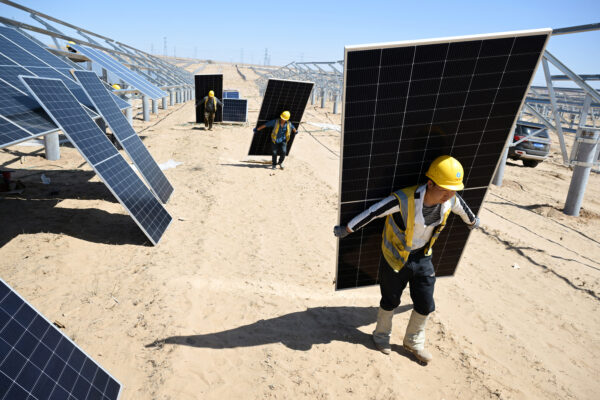
The Great Reckoning - The Ideas Letter
The world feels unsettled, as if history itself were changing tempo. The familiar landmarks of the modern age are blurring, slipping away, and the stories we once told ourselves about…
Edward Said’s Orientalism and Its Afterlives
Edward Said’s Orientalism instilled an anti-imperial sensibility into an entire generation of Western scholars. But even while it castigated the imperial project, its actual analysis didn’t give us the intellectual resources to overturn it.
If you were curious about Tooze's new climate book, check out this convo with @kaiserkuo.bsky.social “This is the material dethroning of the west as the central driver of world history. This is really what the provincialization of the west really looks like" sinicapodcast.com/p/the-thing-we-still-cant-say…

Albert Pinto
Adam Tooze's book Carbon is finally going to be out in February 2027. Pre-order here! Climate Crisis and the Eclipse of the West