

Inducing patterns from articles using LLMs
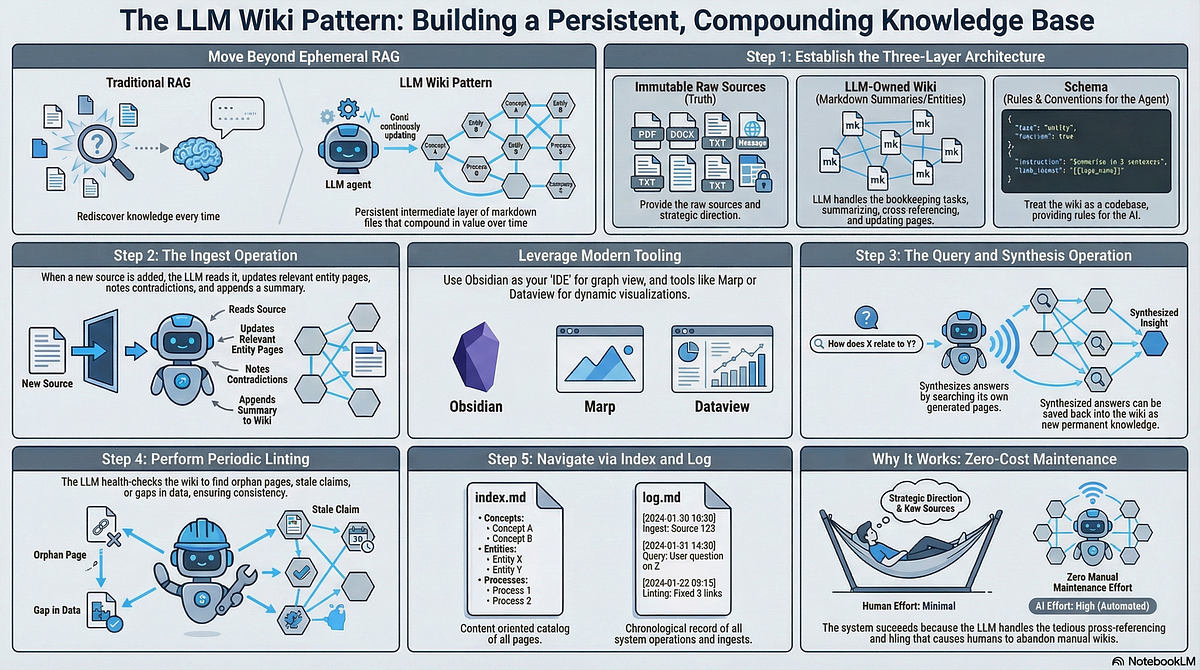
Yuchen Jin on Twitter / X
Karpathy’s “LLM Wiki” pattern: stop using LLMs as search engines over your docs. Use them as tireless knowledge engineers who compile, cross-reference, and maintain a living wiki. Humans curate and think.Diagram generated by my Claude agent knowledge worker. https://t.co/5u5i1GeFK8 pic.twitter.com/NIaq3KlAok— Yuchen Jin (@Yuchenj_UW) April 4, 2026
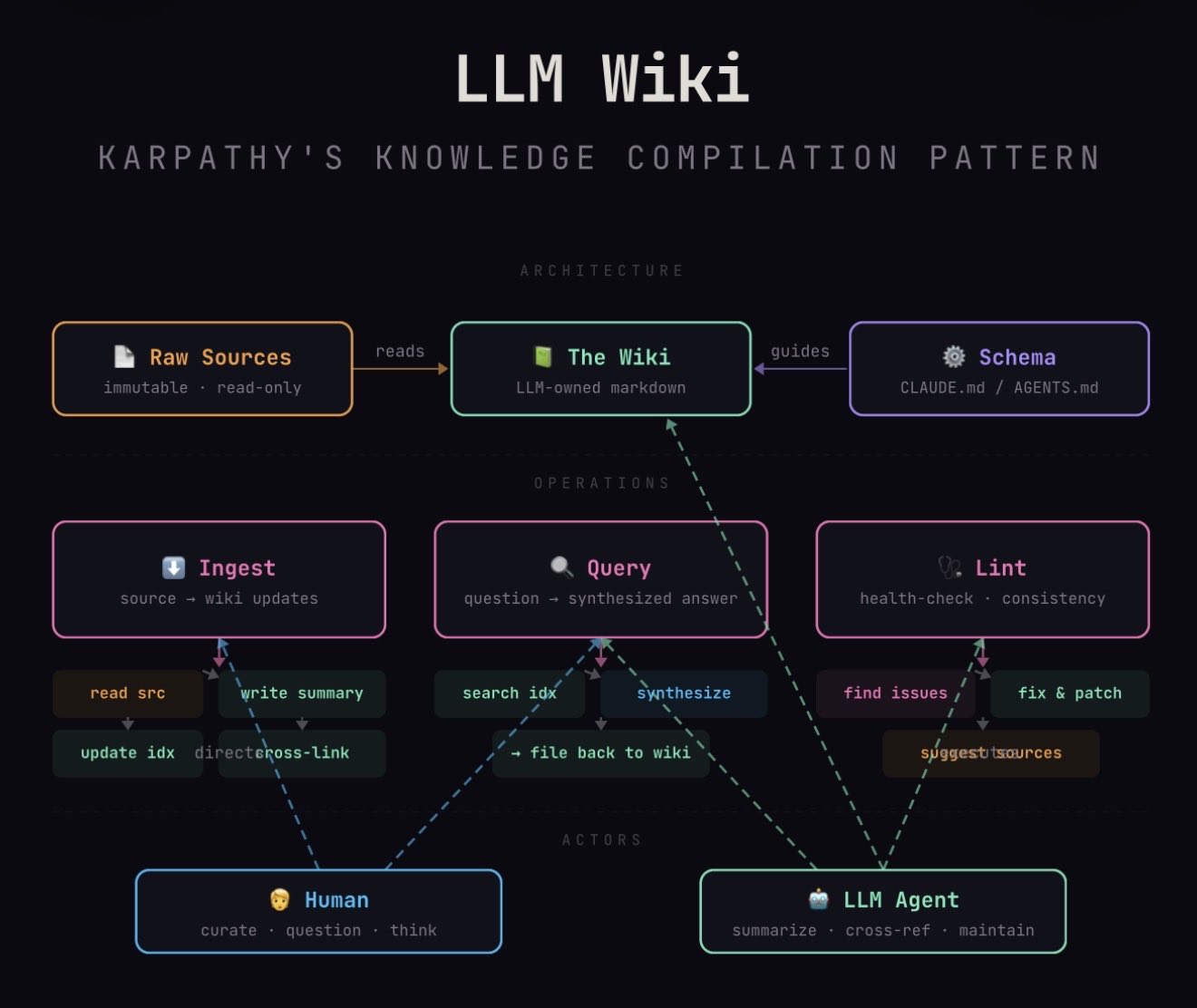
LLM Wiki v2 — extending Karpathy's LLM Wiki pattern with lessons from building agentmemory
LLM Wiki v2 — extending Karpathy's LLM Wiki pattern with lessons from building agentmemory · GitHub

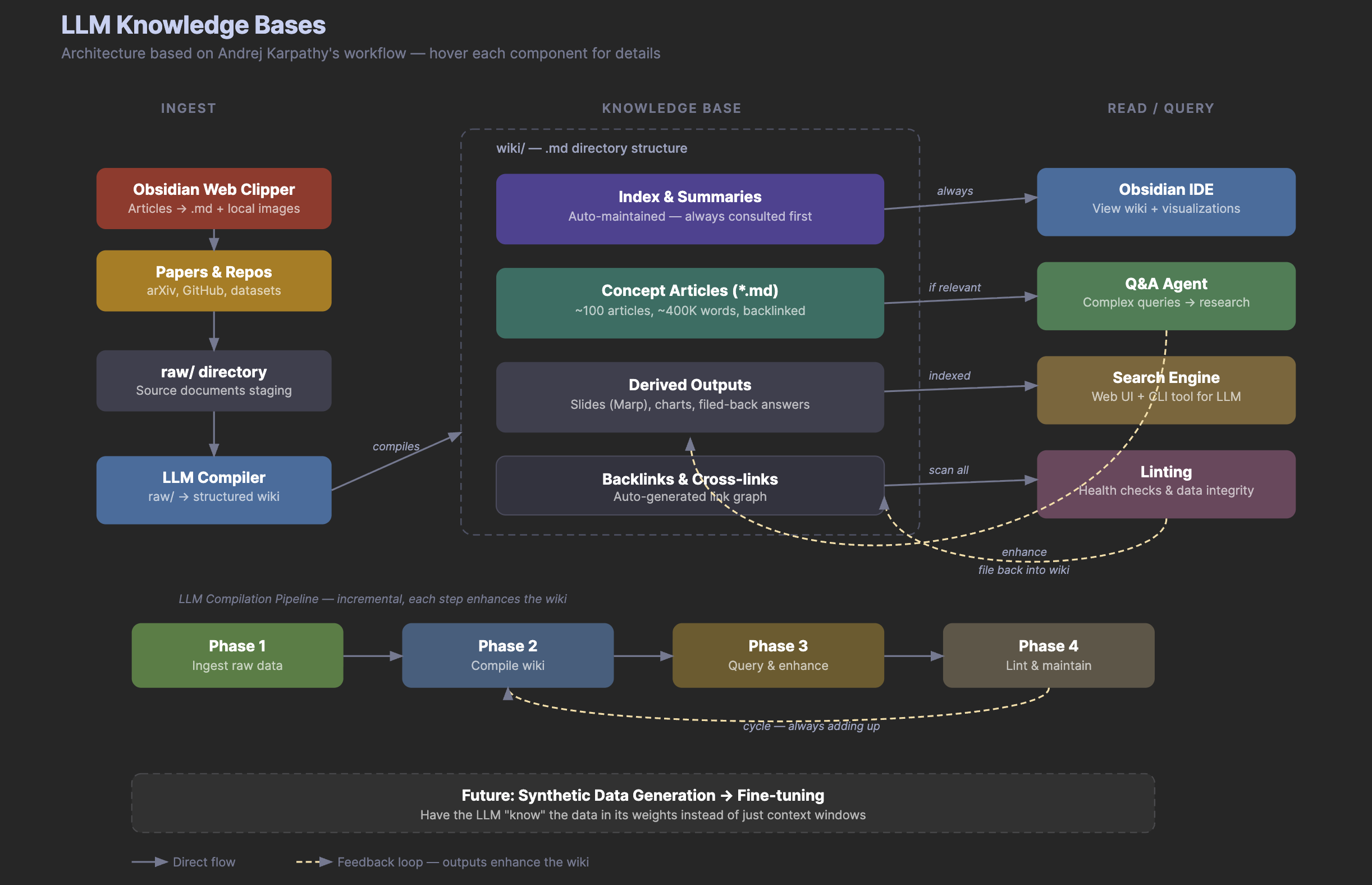
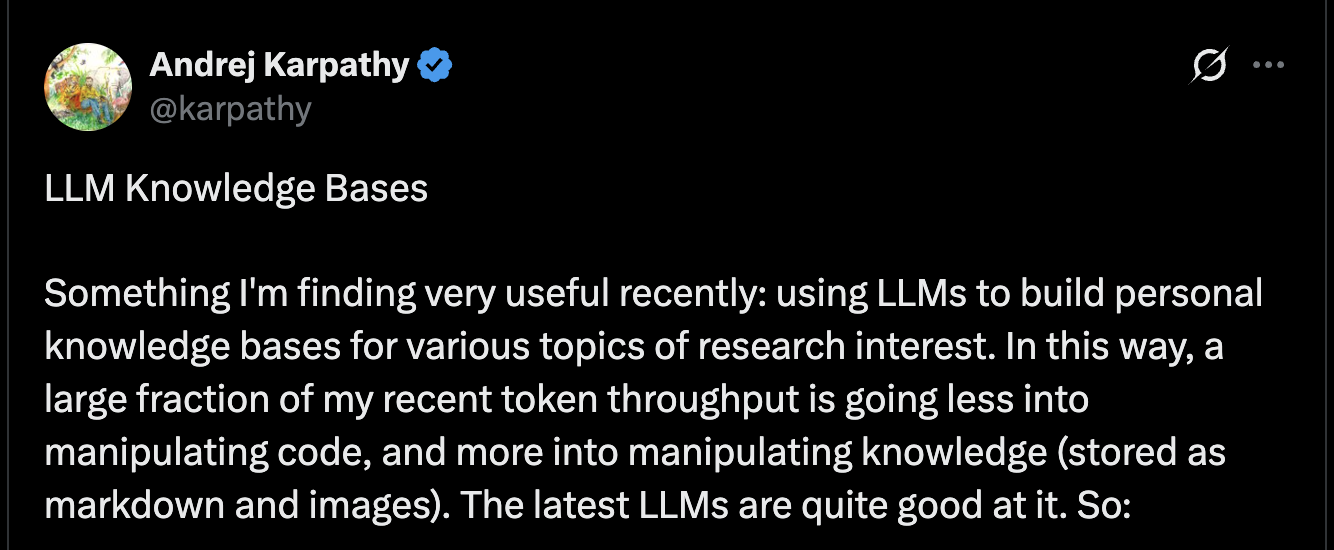
LLM Knowledge Bases
A visual breakdown of Andrej Karpathy's approach to building personal knowledge bases powered by LLMs. Learn the 4-phase pipeline: ingest, compile, query, and maintain - with an interactive architecture diagram.
Wikipedia:Writing articles with large language models
Text generated by large language models (LLMs)[a] often violates several of Wikipedia's core content policies. For this reason, the use of LLMs to generate or rewrite article content is prohibited,[b] save for these two exceptions:
How to Build an LLM Knowledge Base
A hands-on guide to building a simple LLM knowledge base with raw markdown sources, a compiled wiki, reusable prompts, and an agent that keeps improving the knowledge base over time.
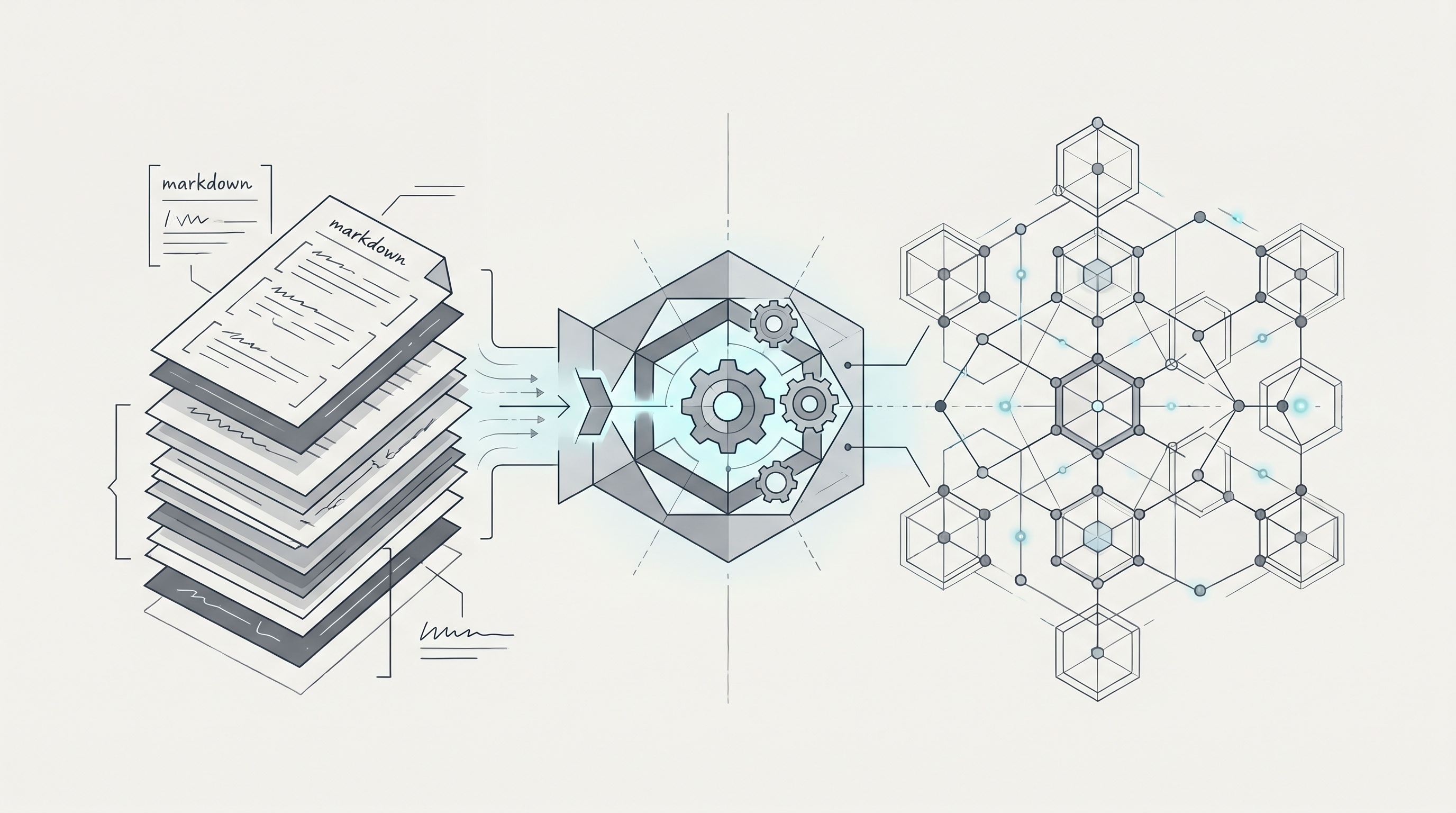
I Built a Knowledge Base That Writes Itself. Here Is What Andrej Karpathy Got Right.
Andrej Karpathy posted about using LLMs to build personal knowledge bases. I took his workflow, wired it into my Obsidian vault with Claude Code, and within an hour had 21 cross-linked wiki articles compiled from YouTube transcripts. Here is how it works and why it matters.
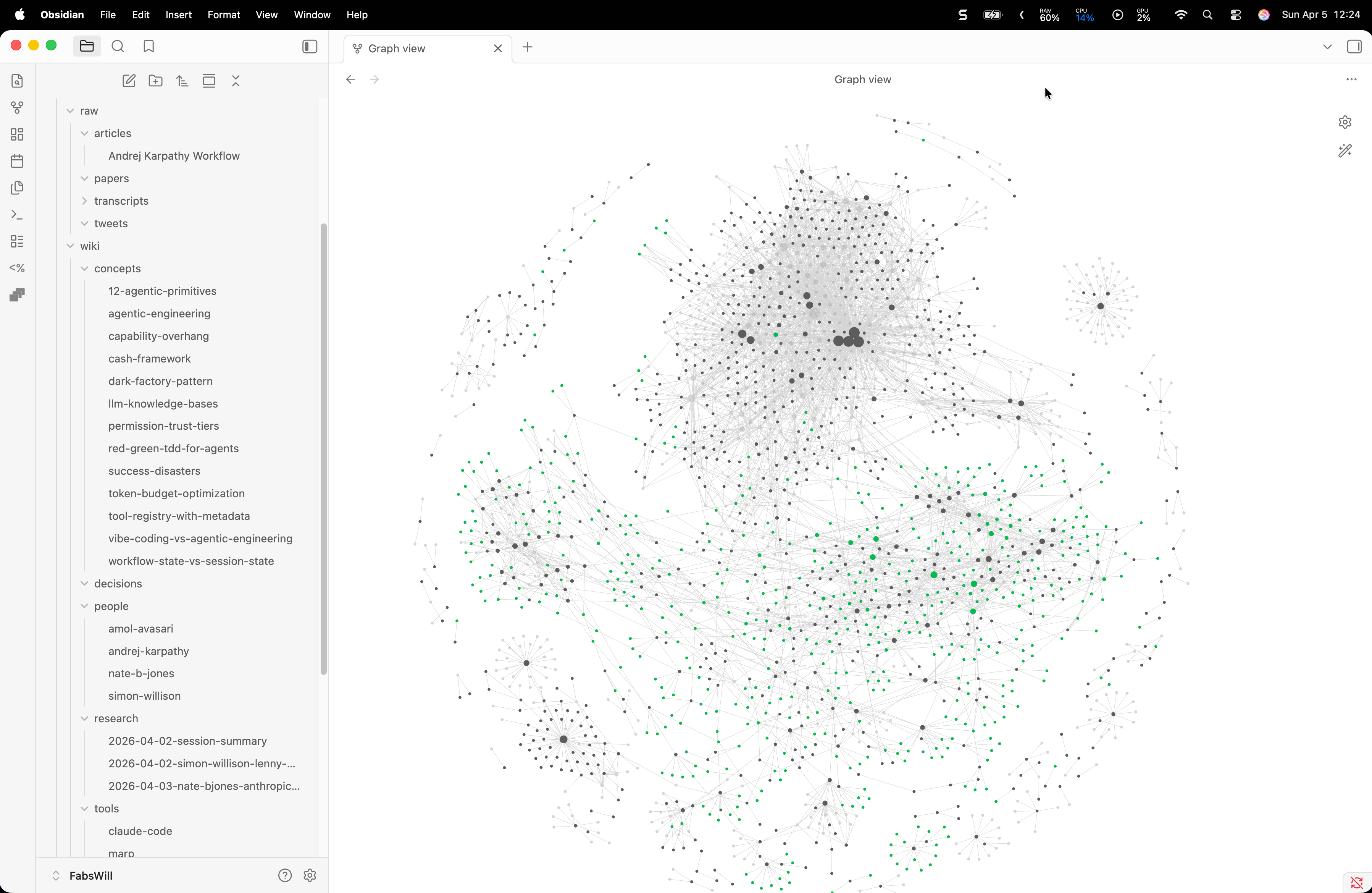
Andrej Karpathy on Twitter / X
LLM Knowledge BasesSomething I'm finding very useful recently: using LLMs to build personal knowledge bases for various topics of research interest. In this way, a large fraction of my recent token throughput is going less into manipulating code, and more into manipulating…— Andrej Karpathy (@karpathy) April 2, 2026
Structured LLM output from ATProto Lexicons
Causal schema induction for knowledge discovery
Making sense of familiar yet new situations typically involves making generalizations about causal schemas, stories that help humans reason about event sequences. Reasoning about events includes identifying cause and effect relations shared across event instances, a process we refer to as causal schema induction. Statistical schema induction systems may leverage structural knowledge encoded in discourse or the causal graphs associated with event meaning, however resources to study such causal structure are few in number and limited in size. In this work, we investigate how to apply schema induction models to the task of knowledge discovery for enhanced search of English-language news texts. To tackle the problem of data scarcity, we present Torquestra, a manually curated dataset of text-graph-schema units integrating temporal, event, and causal structures. We benchmark our dataset on three knowledge discovery tasks, building and evaluating models for each. Results show that systems that harness causal structure are effective at identifying texts sharing similar causal meaning components rather than relying on lexical cues alone. We make our dataset and models available for research purposes.

Build an LLM Wiki for Your AI Agents
Build an LLM Wiki for Your AI Agents with myKG and Obsidian How to turn a folder of mixed format documents into a typed, interlinked knowledge graph your agents can actually read — using myKG and …
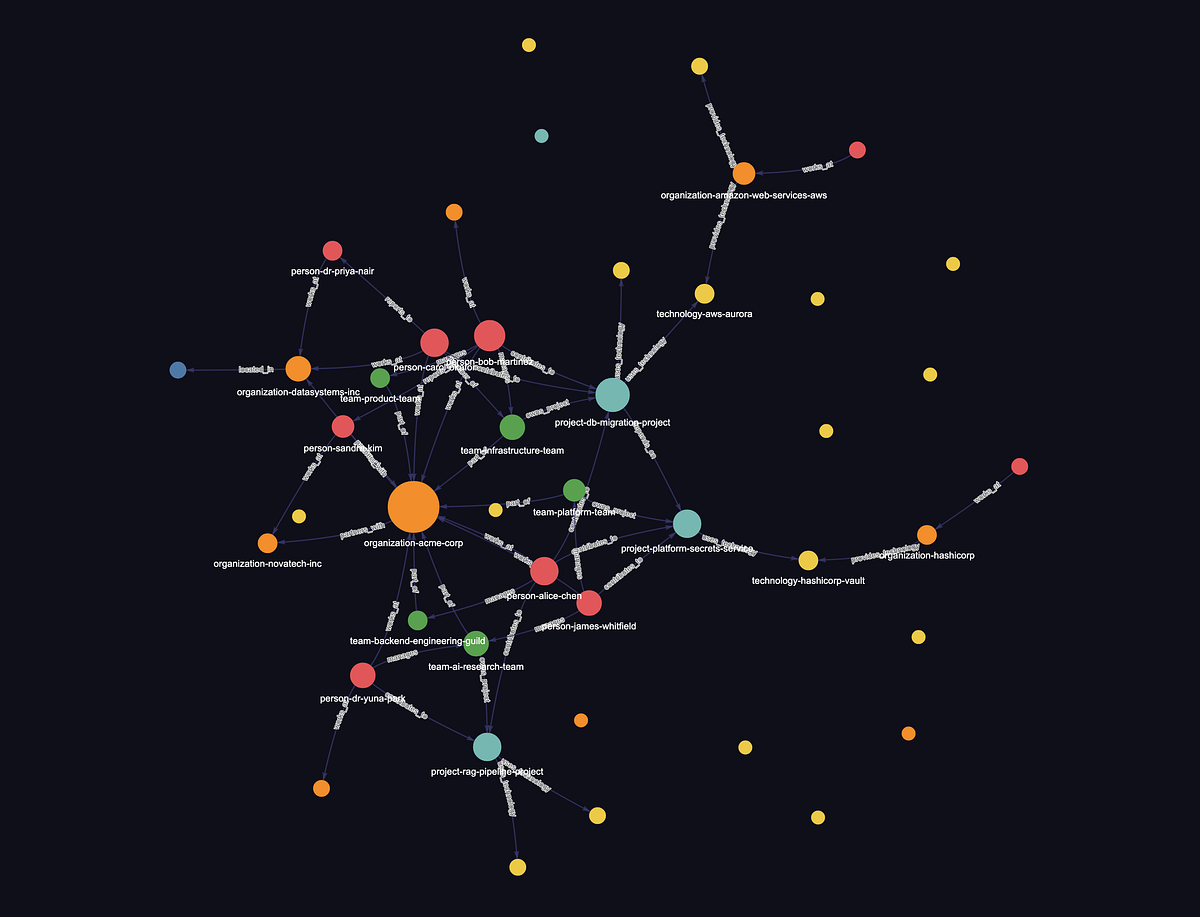
Alignment Is Proven To Be Solvable
That LLMs understand natural language as well as they do should dramatically change our understanding of the problem.

KARMA: Leveraging Multi-Agent LLMs for Automated Knowledge Graph Enrichment
Maintaining comprehensive and up-to-date knowledge graphs (KGs) is critical for modern AI systems, but manual curation struggles to scale with the rapid growth of scientific literature. This paper presents KARMA, a novel framework employing multi-agent large language models (LLMs) to automate KG enrichment through structured analysis of unstructured text. Our approach employs nine collaborative agents, spanning entity discovery, relation extraction, schema alignment, and conflict resolution that iteratively parse documents, verify extracted knowledge, and integrate it into existing graph structures while adhering to domain-specific schema. Experiments on 1,200 PubMed articles from three different domains demonstrate the effectiveness of KARMA in knowledge graph enrichment, with the identification of up to 38,230 new entities while achieving 83.1% LLM-verified correctness and reducing conflict edges by 18.6% through multi-layer assessments.
Announcing a new version of our 2024 paper on linguistic hypothesis generation from LMs! @najoung.bsky.social and I have systematized our hypothesis generation framework, added stringent criteria for model selection, 10x-ed our learning trials, and included an epigraph from Jeff Elman 🙏!
LLM Wikis

AI-compiled knowledge bases
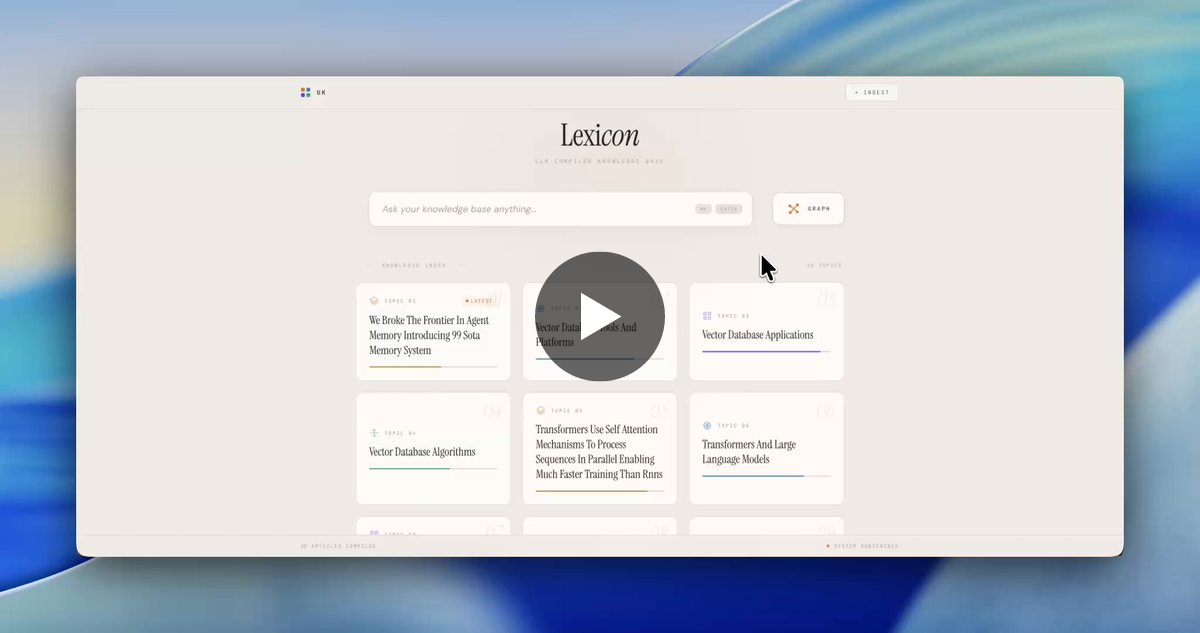
Jared Goering on Twitter / X
OpenWiki: Open Source Repo Documentation for Coding Agents
Wiki Memory

The Obsidian heads were right.
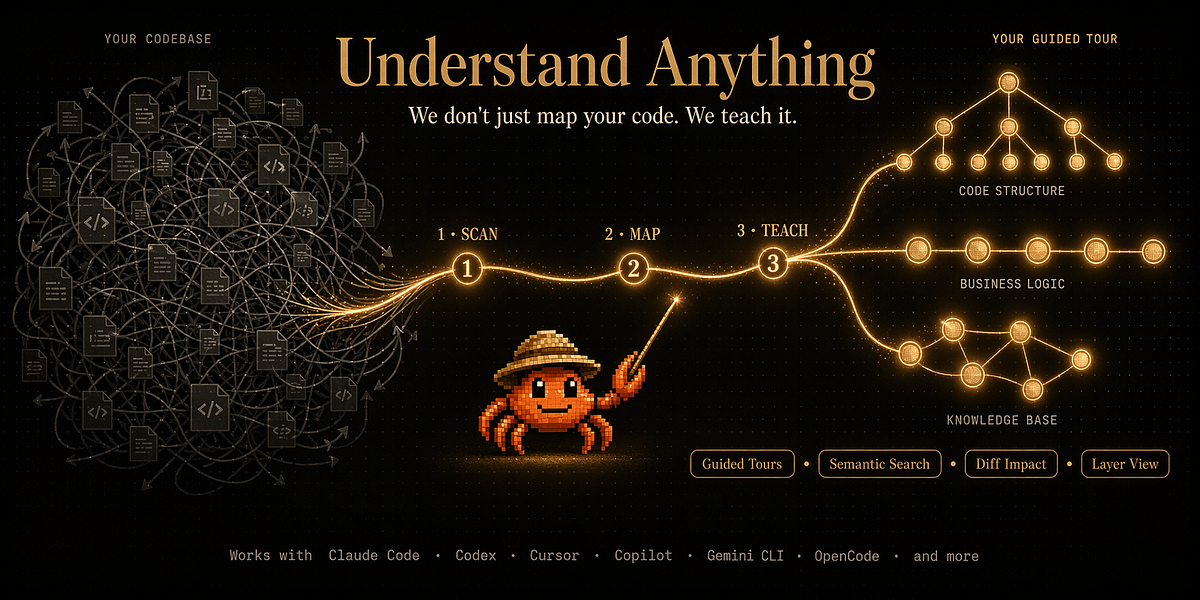
The Definitive Guide to Understand Anything: Turning Code and Knowledge Into Graphs That Teach
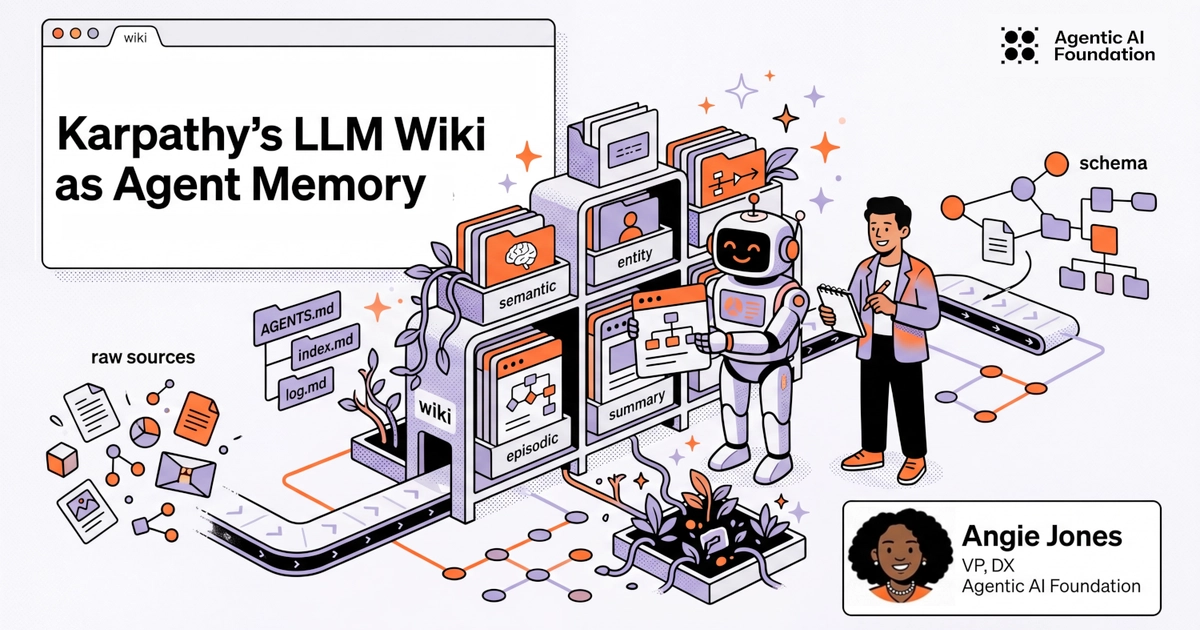
Karpathy's LLM Wiki as Agent Memory - Agentic AI Foundation (AAIF)
