

Conventional propositional logic rests upon the ground of TRUE and FALSE, creating the impression that logical thinking requires duality. Unary logic eliminates the traditional dichotomous system of values in favor of the single ground of existence. Unary logic is no longer about truth-values, it is about the utility of existing information. The three simple deletion/creation axioms of unary logic delete irrelevant and contextually meaningless information to arrive at the same deductive conclusions as does conventional logic. Like Iconic Arithmetic, the iconic boundaries of unary logic provide a visual, manipulative representation that illustrates the processes of deduction.
Homotopy Type Theory: Univalent Foundations of Mathematics
Homotopy type theory is a new branch of mathematics, based on a recently discovered connection between homotopy theory and type theory, which brings new ideas into the very foundation of mathematics. On the one hand, Voevodsky's subtle and beautiful "univalence axiom" implies that isomorphic structures can be identified. On the other hand, "higher inductive types" provide direct, logical descriptions of some of the basic spaces and constructions of homotopy theory. Both are impossible to capture directly in classical set-theoretic foundations, but when combined in homotopy type theory, they permit an entirely new kind of "logic of homotopy types". This suggests a new conception of foundations of mathematics, with intrinsic homotopical content, an "invariant" conception of the objects of mathematics -- and convenient machine implementations, which can serve as a practical aid to the working mathematician. This book is intended as a first systematic exposition of the basics of the resulting "Univalent Foundations" program, and a collection of examples of this new style of reasoning -- but without requiring the reader to know or learn any formal logic, or to use any computer proof assistant.

Introduction to Higher-Order Categorical Logic (Cambridge Studies in Advanced Mathematics)
Introduction to higher order catagorical logic by J. Lambek, March 25, 1988, Cambridge University Press edition, Paperback in English

Koans Are No Longer Paradoxical
Illuminating how they instantiate a rigorous form of logic

Axioms and Computation
We have seen that the version of the Calculus of Constructions that has been implemented in Lean includes dependent function types, inductive types, and a hierarchy of universes that starts with an impredicative, proof-irrelevant Prop at the bottom. In this chapter, we consider ways of extending the CIC with additional axioms and rules. Extending a foundational system in such a way is often convenient; it can make it possible to prove more theorems, as well as make it easier to prove theorems that could have been proved otherwise. But there can be negative consequences of adding additional axioms, consequences which may go beyond concerns about their correctness. In particular, the use of axioms bears on the computational content of definitions and theorems, in ways we will explore here.
Theories of Truth: A Critical Introduction
Theories of Truth provides a clear, critical introduction to one of the most difficult areas of philosophy. It surveys all of the major philosophical theories of truth, presenting the crux of the issues involved at a level accessible to nonexperts yet in a manner sufficiently detailed and original to be of value to professional scholars. Kirkham's systematic treatment and meticulous explanations of terminology ensure that readers will come away from this book with a comprehensive general understanding of one of philosophy's thorniest set of topics.Included are discussions of the correspondence, coherence, pragmatic, semantic, performative, redundancy, appraisal, and truth-as-justification theories. There are also chapters or sections of chapters on the liar paradox, three-valued logic, Field's critique of Tarski, Davidson's program, Dummett's theory of linguistic competence, satisfaction, recursion, the extension/intension distinction, and an explanation of how theories of justification, properly understood, differ from theories of truth.A persistent theme is that philosophers have too often failed to recognize that not all theories of truth are intended to answer the same question. When the various questions are made distinct, it is apparent that many of the "debates" in this field are really cases of philosophers talking past one another. There is much less disagreement within the field than has commonly been thought.

Sets for Mathematics in nLab
deduction system, natural deduction, sequent calculus, lambda-calculus, judgment
Home | Logic(s) Magazine
Logic(s) is a queer Black and Asian magazine devoted to deepening the discourse around technology. We publish twice a year in print and digital formats.
Home | Logic(s) Magazine
Logic(s) is a queer Black and Asian magazine devoted to deepening the discourse around technology. We publish twice a year in print and digital formats.
The Lambek Calculus
There is a noticeable revival of categorial grammar these days, as a vehicle for linguistic description. The systems used differ somewhat from the original calculus of Ajdukiewicz and Bar-Hillel, however. In particular, there is a component of rules for ‘type change’ of expressions, making for greater flexibility and elegance. One fundamental system of this kind is the so-called ‘Lambek Calculus’, whose type-change rules show a close analogy with the inference rules of constructive propositional logic. In this paper, we present one calculus of this kind, and survey its theoretical properties as a device in linguistic semantics. Our two main new contributions are a new and complete semantics for this calculus, as well as a modest study of its language-accepting capacity. In this way, we hope to provide a better understanding of the background theory of flexible categorial grammar, in tandem with its descriptive uses.

Conceptual mathematics: a first introduction to categories
Conceptual mathematics by F. W. Lawvere, 2009, Cambridge University Press edition, in English - 2nd ed.

Operadic consistency: a label-free signal for compositional...
Detecting LLM reasoning failures at inference time without ground-truth labels has motivated a wide range of confidence baselines, including self-consistency, semantic entropy, and P(True), built...
Producing The Perfect Token
The unspoken inference quality gap and how numerics determine if the inference you're paying for is worth it.
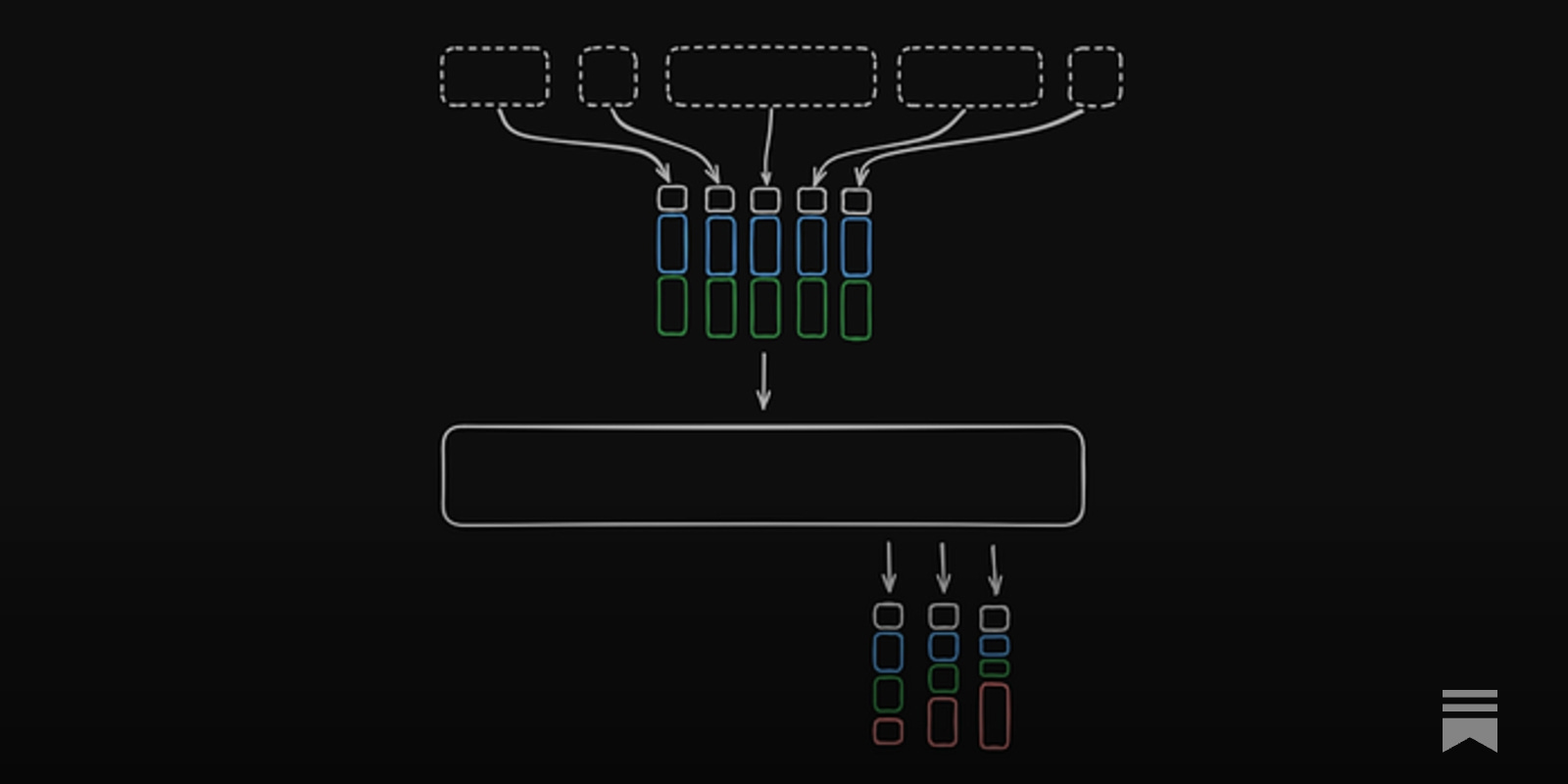
Predicate (logic)
In logic, a predicate is a non-logical symbol that represents a property or a relation, though, formally, does not need to represent anything at all. For instance, in the first-order formula P ( a ) {\displaystyle P(a)} , the symbol P {\displaystyle P} is a predicate that applies to the individual constant a {\displaystyle a} which evaluates to either true or false. Similarly, in the formula R ( a , b ) {\displaystyle R(a,b)} , the symbol R {\displaystyle R} is a predicate that applies to the individual constants a {\displaystyle a} and b {\displaystyle b} . Predicates are considered a primitive notion of first-order, and higher-order logic and are therefore not defined in terms of other more basic concepts.
Gödel's incompleteness theorems
Gödel's incompleteness theorems are two theorems of mathematical logic that are concerned with the limits of provability in formal axiomatic theories. These results, published by Kurt Gödel in 1931, are important both in mathematical logic and in philosophy of mathematics. The theorems are interpreted as showing that Hilbert's program to find a complete and consistent set of axioms for all mathematics is impossible.
Institutions: abstract model theory for specification and programming | Journal of the ACM
There is a population explosion among the logical systems used in computing science. Examples include first-order logic, equational logic, Horn-clause logic, higher-order logic, infinitary logic, dynamic logic, intuitionistic logic, order-sorted logic, ...
