


We’ve all created our own personal histories, marked by highs and lows, that we share with the world — and we can shape them to live with more meaning and purpose.
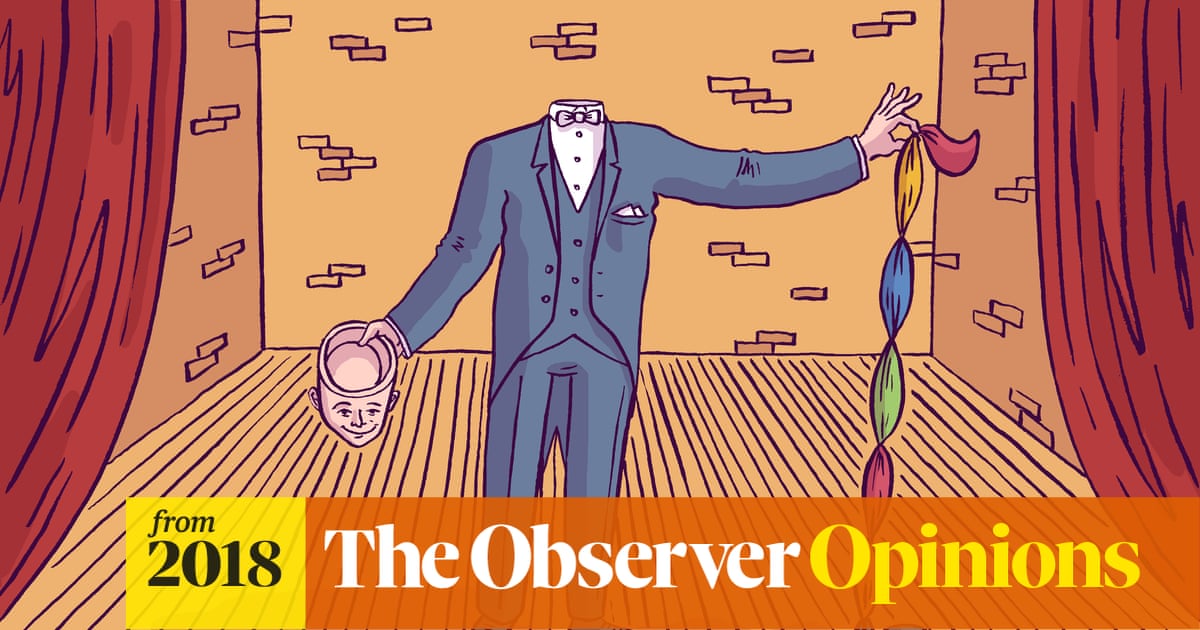
Our fiction addiction: Why humans need stories
From fireside folk tales to Netflix dramas, narratives are essential to every society – and evolutionary theorists are now trying to figure out why, writes David Robson.

Three Big Things: The Most Important Forces Shaping the World
An irony of studying history is that we often know exactly how a story ends, but have no idea where…
User Story: a Placeholder for a Conversation
User stories are meant to be a placeholder for a conversation. This article dives into the differences between user stories and tickets, where stories came from and how recent trends are moving us away from conversations. It shows the impact this is having on product development and easy ways to improve collaboration through conversation and writing better stories.

MATT THOMPSON
As part of my EngD project, I am creating ways for story authors to easily write narratives with multiple branches, along the lines of the Choose Your Own Adventure stories from the 1990s. Typically, this kind of story authoring is hard, as the number of material that needs to be written increases exponentially with the number of decision points.
Why do we collect things?
Desire, nostalgia, loss, and completeness in the personal collections of Joseph Cornell, Peter Blake, and Vladimir Nabokov

Life in Weeks
My life, where each week I’ve been alive is a little box, inspired by this post by Tim Urban. When meaningful things happen (for both better and worse) I make a note of it so I can remember how much of life is influenced by these factors. If you’d like to create your own version of this, it’s basically a data file, a template, and a blog post mashed together on Jekyll blog hosted on Netlify.
Food, foragers, and folklore: the role of narrative in human subsistence
Narrative is a species-typical, reliably developing, complex cognitive process whose design is unlikely to have emerged by chance. Moreover, the folklore record indicates that narrative content is consistent across widely divergent cultures. I have argued elsewhere that a storyteller may use narrative to manipulate an audience's representations of the social and/or physical environment to serve his or her own fitness ends. However, my subsequent research suggests that such manipulation results from a broader selection pressure which narrative effectively alleviates: information acquisition. By substituting verbal representations for potentially costly first-hand experience, narrative enables an individual to safely and efficiently acquire information pertinent to the pursuit of fitness in local habitats. If this hypothesis is true, narrative should be rich with information useful to the pursuit of fitness. One class of information integral to the accomplishment of this task is foraging knowledge. In this paper, then, I present evidence that foraging peoples use narrative to transmit subsistence information: specifically, I demonstrate how various narrative devices (e.g., setting, description, mimicry, anthropomorphism) are used to communicate foraging knowledge.
What Made Blogging Different?
Whether I like it or not, the first line of my obituary...

On Writing #3
Periodically I like to gather various observations about writing, and share my perspective.

A People’s History of Tech
A collective storytelling project to build a more representative history that reflects the human impacts of technology.

A revolution in our sense of self | Nick Chater
Psychologists have tried to plumb the depths of human motivation to make sense of our behaviour. But our inner mental world is a fiction, sustained by constant improvisation
Hello world!
Catapult publishes literary fiction and artful narrative nonfiction that engages with our Perception Box, the powerful metaphor we use to define the structure and boundaries of how we see others in th
Introducing WordPress Stories: A New Way to Engage Your Audience
Interested in a new way to create and publish engaging content on your WordPress site? Today, we’re unveiling our new Stories feature, now available in the WordPress apps.

Cory Doctorow: Stories Are a Fuggly Hack - Locus
I've mentioned before, stories are weird. I mean, really, really weird. Nothing that happens in a piece of fiction has any consequence in the real world. Romeo and Juliet did not live, did not die, and the ''tragedy'' they represent is objectively less important than the tragedy of the live yogurt culture I digested at the breakfast table this morning. My theory is that the parts of our brains that …Read More
Stories, Statistics, and Memory
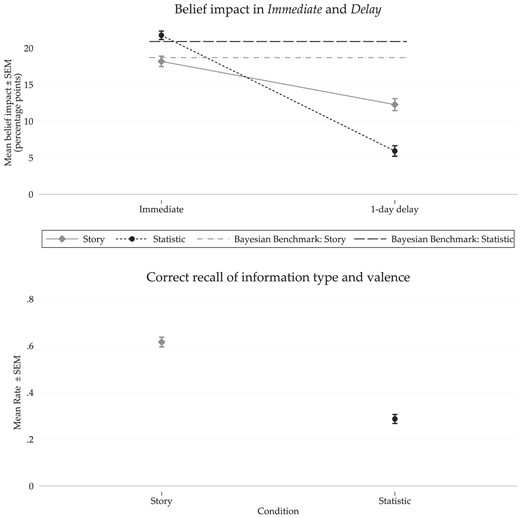
Abstract For many decisions, we encounter relevant information over the course of days, months, or years. We consume such information in various forms, including stories (qualitative content about individual instances) and statistics (quantitative data about collections of observations). This article proposes that information type—story versus statistic—shapes selective memory. In controlled experiments, we document a pronounced story-statistic gap in memory: the average impact of statistics on beliefs fades by 73% over the course of a day, but the impact of a story fades by only 32%. Guided by a model of selective memory, we disentangle different mechanisms and document that similarity relationships drive this gap. Recall of a story increases when its qualitative content is more similar to a memory prompt. Irrelevant information in memory that is similar to the prompt, on the other hand, competes for retrieval with relevant information, impeding successful recall.
Against the obsession with narratives: A materialist critique
In recent years, political and cultural debate has increasingly turned into a battle of stories. Everything seems to revolve around…