


Real-time detection of Al-generated images, video and synthetic voice. Trusted by Experian, KPMG and leading financial institutions across 90+ countries.
Daisy-Zhang/Awesome-Deepfakes-Detection
A list of tools, papers and code related to Deepfake Detection.
Detection of Deepfake Videos and Audios on Social Media Platforms
Deepfake technology, a rapidly evolving application of artificial intelligence, has enabled the creation of highly realistic yet synthetic multimedia content. While this innovation offers potential benefits in areas such as entertainment and education, its misuse has raised significant ethical and security concerns, including misinformation and financial fraud. This study evaluates the effectiveness of current deepfake detection methods, focusing on the Xception model for video detection and the LCNN model for audio detection, using a dataset composed of real-life and deepfake content. The dataset includes deepfakes generated by tools such as the Deepfake Offensive Toolkit and Haotian AI, a cutting-edge provider known for its high-quality outputs. Our findings reveal that the Xception model, while achieving 89.1% accuracy on control datasets, struggled to detect Haotian AI-generated deepfakes, misclassifying nearly all samples as authentic. This performance gap highlights the need for more diverse training datasets and advanced detection frameworks capable of addressing the nuances of emerging deepfake tools. Additionally, metadata changes caused by uploading and downloading content on social media platforms were found to have minimal impact on detection accuracy, challenging the feasibility of metadata-based detection approaches. This research underscores the limitations of current deepfake detection models and emphasizes the necessity for multimodal approaches and broader datasets to enhance robustness. The study’s implications call for continued advancements in detection methods to keep pace with the growing sophistication of deepfake technologies.
‘HELLO BOSS’: Inside the Chinese Realtime Deepfake Software Powering Scams Around the World
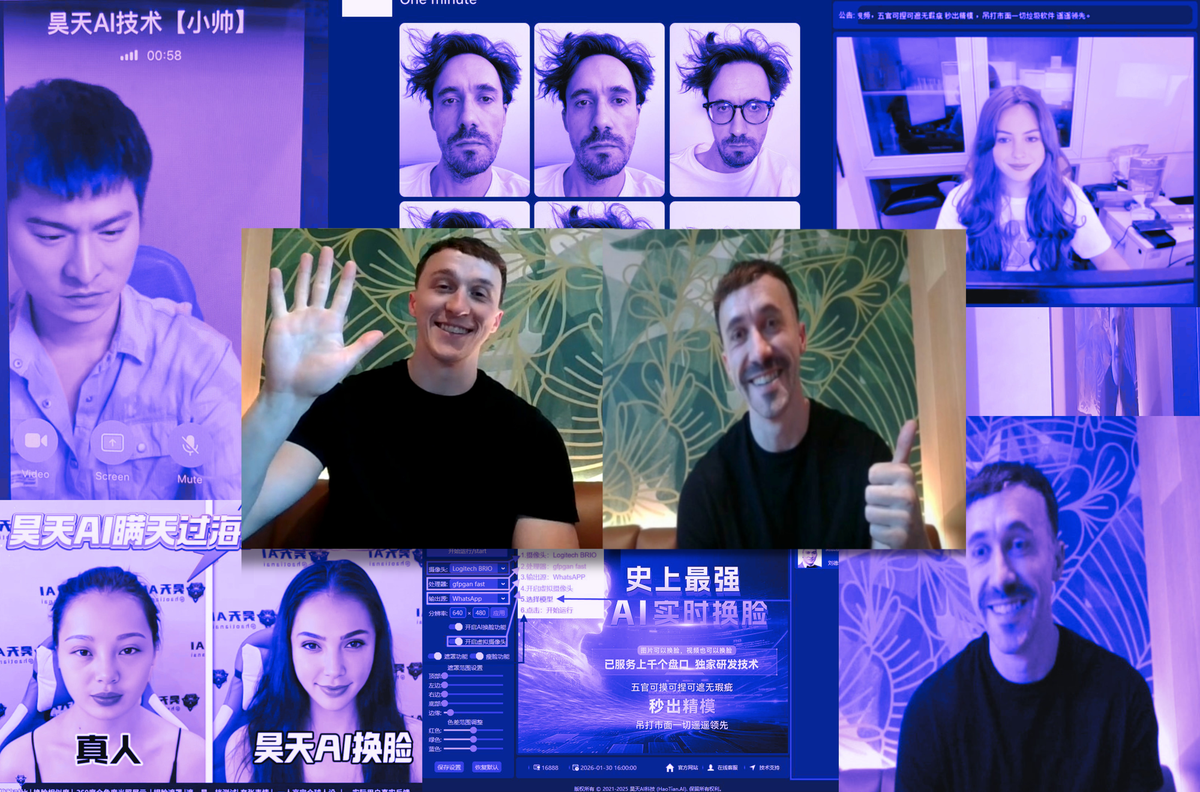
404 Media has obtained a copy of ‘Haotian AI’, a popular piece of realtime deepfake software marketed to scammers. It can turn a fraudster's face into anyone else's on WhatsApp, Zoom, and Teams.
The Age of Realtime Deepfake Fraud Is Here
Fraudsters are able to change their race, facial hair, voice, and more during live video calls with very little effort. Scammers are already fooling the elderly and verification systems.
Google joins AI watermarking coalition as deepfakes hit mainstream tech platforms
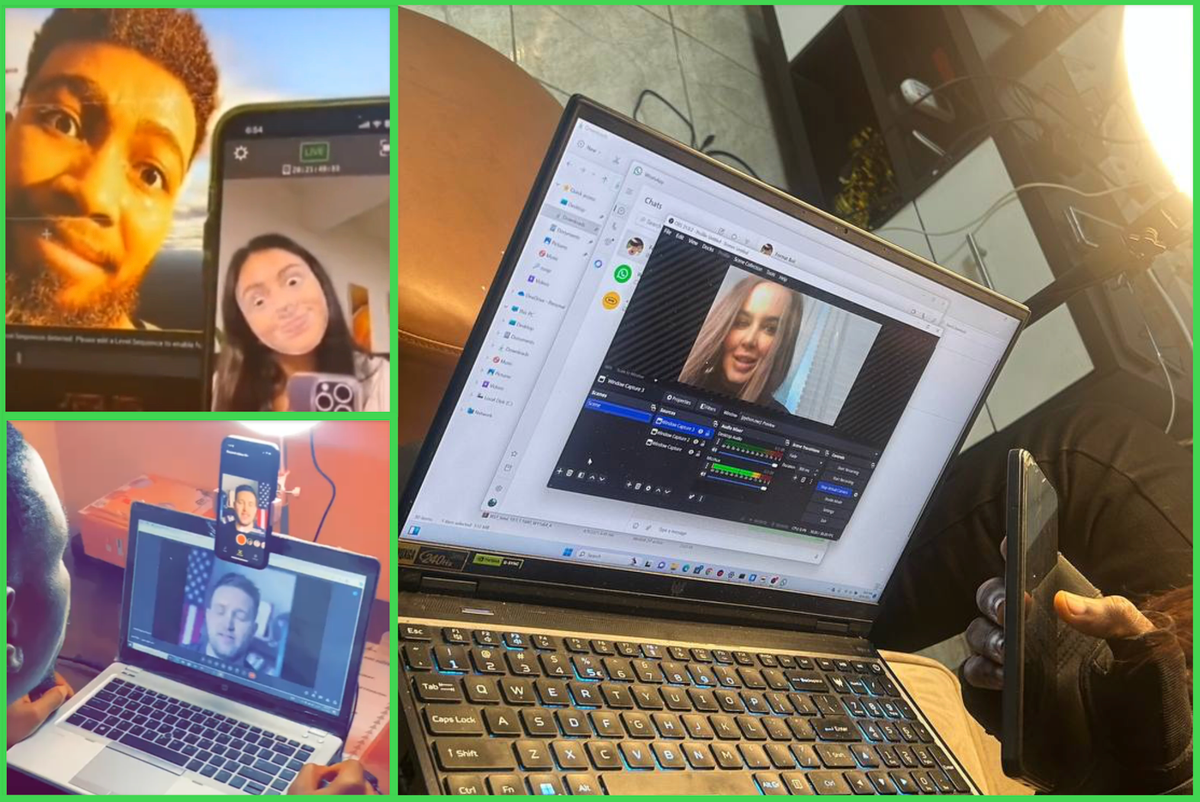
Google said it will look to use a project from Adobe called Content Credentials, which adds metadata that indicates AI editing and allows viewers to verify images, videos, audio and documents.

Deep Fakes: A Looming Challenge for Privacy, Democracy, and National Security — California Law Review
Harmful lies are nothing new. But the ability to distort reality has taken an exponential leap forward with “deep fake” technology. This capability makes it possible to create audio and video of real people saying and doing things they never said or did. Machine learning techniques are escalating th
An Indian politician says scandalous audio clips are AI deepfakes. We had them tested
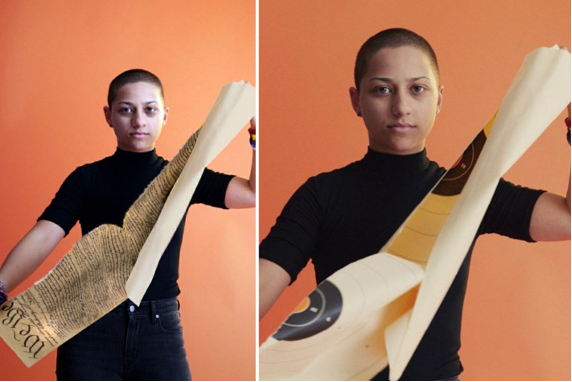
Deepfake experts noted that AI can be used as a cover by politicians when embarrassing audio and video clips of them emerge.

Deep Fakes: A Looming Challenge for Privacy
<p>Harmful lies are nothing new. But the ability to distort reality has taken an exponential leap forward with “deep fake” technology. This capability makes it possible to create audio and video of real people saying and doing things they never said or did. Machine learning techniques are escalating the technology’s sophistication, making deep fakes ever more realistic and increasingly resistant to detection. Deep-fake technology has characteristics that enable rapid and widespread diffusion, putting it into the hands of both sophisticated and unsophisticated actors.</p><p>While deep-fake technology will bring certain benefits, it also will introduce many harms. The marketplace of ideas already suffers from truth decay as our networked information environment interacts in toxic ways with our cognitive biases. Deep fakes will exacerbate this problem significantly. Individuals and businesses will face novel forms of exploitation, intimidation, and personal sabotage. The risks to our democracy and to national security are profound as well.</p><p>Our aim is to provide the first in-depth assessment of the causes and consequences of this disruptive technological change, and to explore the existing and potential tools for responding to it. We survey a broad array of responses, including: the role of technological solutions; criminal penalties, civil liability, and regulatory action; military and covert-action responses; economic sanctions; and market developments. We cover the waterfront from immunities to immutable authentication trails, offering recommendations to improve law and policy and anticipating the pitfalls embedded in various solutions.</p>
Deep Fakes: A Looming Challenge for Privacy
<p>Harmful lies are nothing new. But the ability to distort reality has taken an exponential leap forward with “deep fake” technology. This capability makes it possible to create audio and video of real people saying and doing things they never said or did. Machine learning techniques are escalating the technology’s sophistication, making deep fakes ever more realistic and increasingly resistant to detection. Deep-fake technology has characteristics that enable rapid and widespread diffusion, putting it into the hands of both sophisticated and unsophisticated actors.</p><p>While deep-fake technology will bring certain benefits, it also will introduce many harms. The marketplace of ideas already suffers from truth decay as our networked information environment interacts in toxic ways with our cognitive biases. Deep fakes will exacerbate this problem significantly. Individuals and businesses will face novel forms of exploitation, intimidation, and personal sabotage. The risks to our democracy and to national security are profound as well.</p><p>Our aim is to provide the first in-depth assessment of the causes and consequences of this disruptive technological change, and to explore the existing and potential tools for responding to it. We survey a broad array of responses, including: the role of technological solutions; criminal penalties, civil liability, and regulatory action; military and covert-action responses; economic sanctions; and market developments. We cover the waterfront from immunities to immutable authentication trails, offering recommendations to improve law and policy and anticipating the pitfalls embedded in various solutions.</p>
DeepL AI Platform: Translation, Voice & API
Explore our AI suite and get more done: Translate speech, text, and media, or integrate the DeepL API.

Deepfake detection by human crowds, machines, and machine-informed crowds
Significance The recent emergence of deepfake videos raises theoretical and practical questions. Are humans or the leading machine learning model more capable of detecting algorithmic visual manipulations of videos? How should content moderation systems be designed to detect and flag video-based misinformation? We present data showing that ordinary humans perform in the range of the leading machine learning model on a large set of minimal context videos. While we find that a system integrating human and model predictions is more accurate than either humans or the model alone, we show inaccurate model predictions often lead humans to incorrectly update their responses. Finally, we demonstrate that specialized face processing and the ability to consider context may specially equip humans for deepfake detection. , The recent emergence of machine-manipulated media raises an important societal question: How can we know whether a video that we watch is real or fake? In two online studies with 15,016 participants, we present authentic videos and deepfakes and ask participants to identify which is which. We compare the performance of ordinary human observers with the leading computer vision deepfake detection model and find them similarly accurate, while making different kinds of mistakes. Together, participants with access to the model’s prediction are more accurate than either alone, but inaccurate model predictions often decrease participants’ accuracy. To probe the relative strengths and weaknesses of humans and machines as detectors of deepfakes, we examine human and machine performance across video-level features, and we evaluate the impact of preregistered randomized interventions on deepfake detection. We find that manipulations designed to disrupt visual processing of faces hinder human participants’ performance while mostly not affecting the model’s performance, suggesting a role for specialized cognitive capacities in explaining human deepfake detection performance.

Deepfake detection by human crowds, machines, and machine-informed crowds
Significance The recent emergence of deepfake videos raises theoretical and practical questions. Are humans or the leading machine learning model more capable of detecting algorithmic visual manipulations of videos? How should content moderation systems be designed to detect and flag video-based misinformation? We present data showing that ordinary humans perform in the range of the leading machine learning model on a large set of minimal context videos. While we find that a system integrating human and model predictions is more accurate than either humans or the model alone, we show inaccurate model predictions often lead humans to incorrectly update their responses. Finally, we demonstrate that specialized face processing and the ability to consider context may specially equip humans for deepfake detection. , The recent emergence of machine-manipulated media raises an important societal question: How can we know whether a video that we watch is real or fake? In two online studies with 15,016 participants, we present authentic videos and deepfakes and ask participants to identify which is which. We compare the performance of ordinary human observers with the leading computer vision deepfake detection model and find them similarly accurate, while making different kinds of mistakes. Together, participants with access to the model’s prediction are more accurate than either alone, but inaccurate model predictions often decrease participants’ accuracy. To probe the relative strengths and weaknesses of humans and machines as detectors of deepfakes, we examine human and machine performance across video-level features, and we evaluate the impact of preregistered randomized interventions on deepfake detection. We find that manipulations designed to disrupt visual processing of faces hinder human participants’ performance while mostly not affecting the model’s performance, suggesting a role for specialized cognitive capacities in explaining human deepfake detection performance.
Supercharge your Computer Vision models with the TensorFlow Object Detection API
Posted by Jonathan Huang, Research Scientist and Vivek Rathod, Software Engineer (Cross-posted on the Google Open Source Blog) At Google, we develo...
AI company’s breached biometrics, ID document images make deepfake fraud easier | Biometric Update
Mercor, an AI company valued at $10B, has fallen victim of a major data breach which appears to include ID documents along with user face and voice biometrics.

BytePlus Free Trial: 4K AI Image/Video Models + LLM Tokens | 200 Free Images
BytePlus free trial, Seedream 4.0, Seedance 1.0, DeepSeek V3.1, GPT-OSS-120B, free 4K AI images, AI video generation, BytePlus LLM tokens

ICML WhisperKit: On-device Real-time ASR with Billion-Scale Transformers
Real-time Automatic Speech Recognition (ASR) is a fundamental building block for many commercial applications of ML, including live captioning, dictation, meeting transcriptions, and medical scribes. Accuracy and latency are the most important factors when companies select a system to deploy. We present WhisperKit, an optimized on-device inference system for real-time ASR that significantly outperforms leading cloud-based systems. We benchmark against server-side systems that deploy a diverse set of models, including a frontier model (OpenAI gpt-4o-transcribe), a proprietary model (Deepgram nova-3), and an open-source model (Fireworks large-v3-turbo).Our results show that WhisperKit matches the lowest latency at 0.46s while achieving the highest accuracy 2.2\% WER. The optimizations behind the WhisperKit system are described in detail in this paper.