

Caring for the Chips: Repair and Reuse as Permacomputing – Michelle Kaczmarek
Denizen
What are the narratives and paradigms that need to shift to facilitate a transition to a just, regenerative future? How do various mediums such as music, art, and film enable such changes to occur?
Regenerative Economics - Principles
Our hope is that the Regenerative Economics materials act like a wildflower, taking root in even the smallest of cracks and spreading seeds to change the way economics is understood by young people around the world. The guiding principles: Facilitate change from the ground up: We recognise the

The New Deal for the Open Source Community
Building the Economic Layer to our Digital Infrastructure

Why we must reclaim digital sovereignty
A new white paper envisions a radically different technological future
What technology takes from us – and how to take it back | Rebecca Solnit
The long read: Decisions outsourced, chatbots for friends, the natural world an afterthought: Silicon Valley is giving us life void of connection. There is a way out – but it’s going to take collective effort

Transmutations
We know from experience and empirical analysis that open source and open standards projects drift into oligarchies that struggle to reform themselves and become ossified. Often, we can simply let them die and replace them with fresher alternatives, but when that's a costly option we can learn from theoretical models of institutional change to understand how to compost the oligarchy and regrow the project from within.
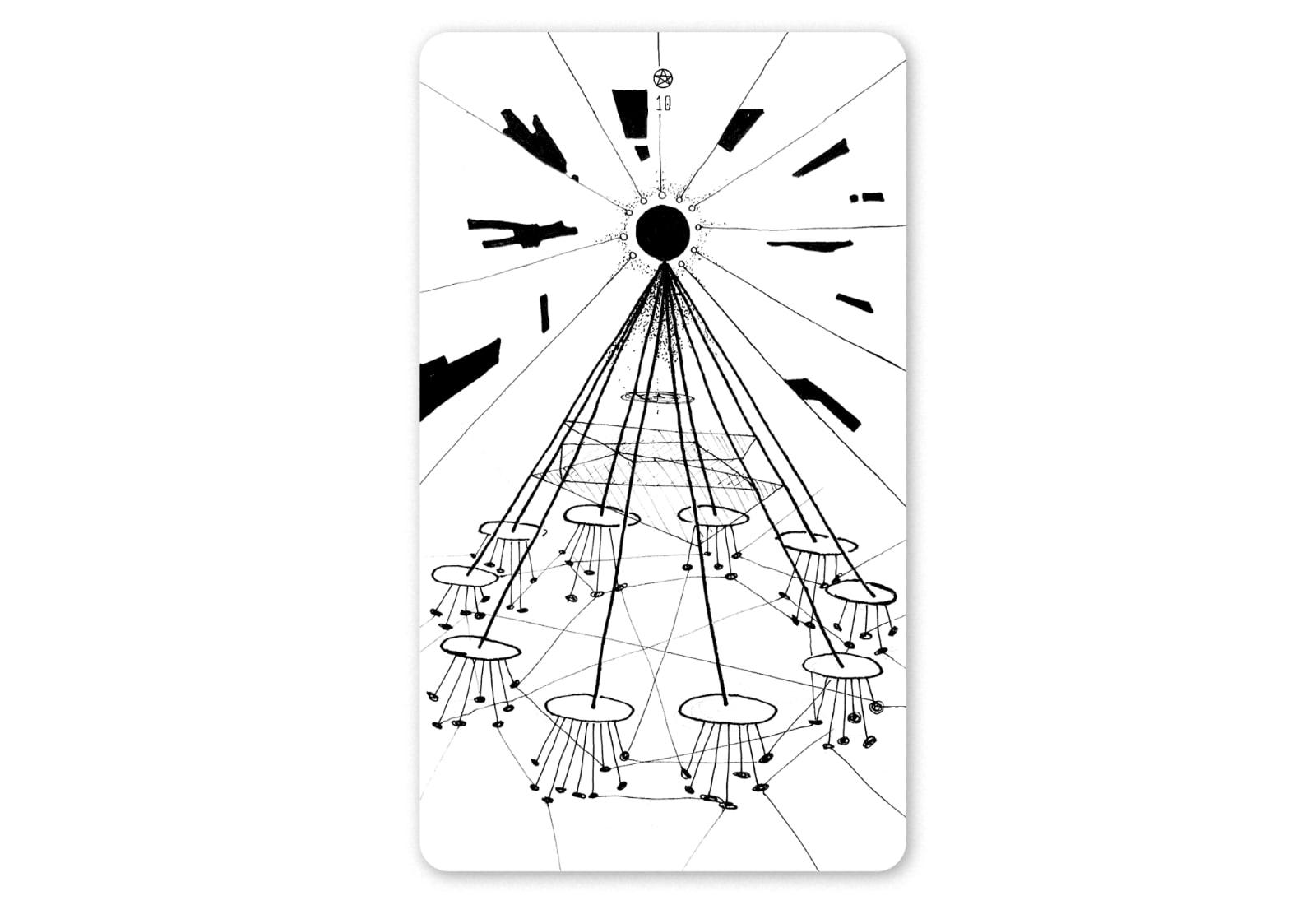
Folk Tech Futures Workshop & Atmospheric Afterpartea · Luma
Join us for our next in-person Folk Tech event! What could the future look like in a world of open protocols and community-driven technology? What could we do…

Call for Participation: AT Protocol Ecosystem Action Research - Ecosystem Action
A pilot program to facilitate cooperative, research-led innovation in the AT Protocol ecosystem.
Call for Participation: AT Protocol Ecosystem Action Research - Ecosystem Action
A pilot program to facilitate cooperative, research-led innovation in the AT Protocol ecosystem.
Digital Degrowth: Radically Rethinking our Digital Futures
We are fast approaching the point of “peak digital”, with the continued mass production and excessive consumption of digital technologies set to become a key driver of climate crisis, ecological breakdown and ongoing societal instability.<br /> <br /><i>Digital Degrowth</i> is a call to completely rethink our digital futures in these fast-changing times. It explores how degrowth thinking and alternate forms of “radically sustainable computing” might support ambitions of sustainable, scaled-down and equitable ways of living with digital technologies. Neil Selwyn proposes a rebalancing of digital technology use: digital degrowth is not a call for simply making reduced use of the digital technologies that we already have – rather it is an argument to reimagine digital practices that maximise societal benefits with minimal environmental and social impact. Drawing on illustrative examples from across computer science, hacker and environmental activist communities, this book examines how core degrowth principles of conviviality, autonomy and care are already being used to reimagine alternate forms of digital technology.<br /> <br />Original and stimulating, this is essential reading for students and scholars of media and communication, sustainability studies, political ecology, computer/data sciences, and across the social sciences.

The ecosystem is moving
Considerations for distributed and decentralized technologies from the perspective of a product that many would like to see decentralize....
Where Does Community Live?
ActivityPub and ATProto both promise to rebuild social life online, but they answer the question of where community actually forms in fundamentally different ways. Protocol design is institutional design, and right now those institutions are being built.

Blogging on the open social web - and more exciting features - pckt - Dev Journal
ATmosphere — referring to the growing ecosystem of applications built on the AT Protocol, a federated protocol for open social platforms. Not to be confused ...
Ecosystem Action Research
An initiative to facilitate cooperative, research-led innovation in the AT Protocol ecosystem
Dangerous Protocols - Summer of Protocols
Protocols are frequently touted as the liberating alternative to walled technological gardens, but the historical purpose of protocols has always been to simplify decision-making and reduce human agency. How do we reconcile these two narratives? I explore the dangerous side of protocols, and how their ability to drive coordination means they also have


TLDR Infographic: What does it actually take for digital technology to be regenerative? The question matters because most of the digital tools being adopted right now in bioregional movements, community organizing, regenerative finance, and the broader systemic-change ecosystem are being chosen without anyone asking it carefully. The slide decks are beautiful. The intentions are sincere. […]