


It's slow, expensive, the engineering is mostly port-a-potty chemistry, and the best-case outcome is that thirty years from now we’ll get to watch someone remotely operate a soil scoop from Mars instead of Pasadena
Neither Elon Musk Nor Anybody Else Will Ever Colonize Mars | Defector
Mars does not have a magnetosphere. Any discussion of humans ever settling the red planet can stop right there, but of course it never does. Do you have a low-cost plan for, uh, creating a gigantic active dynamo at Mars’s dead core? No? Well. It’s fine. I’m sure you have some other workable, sustainable plan…
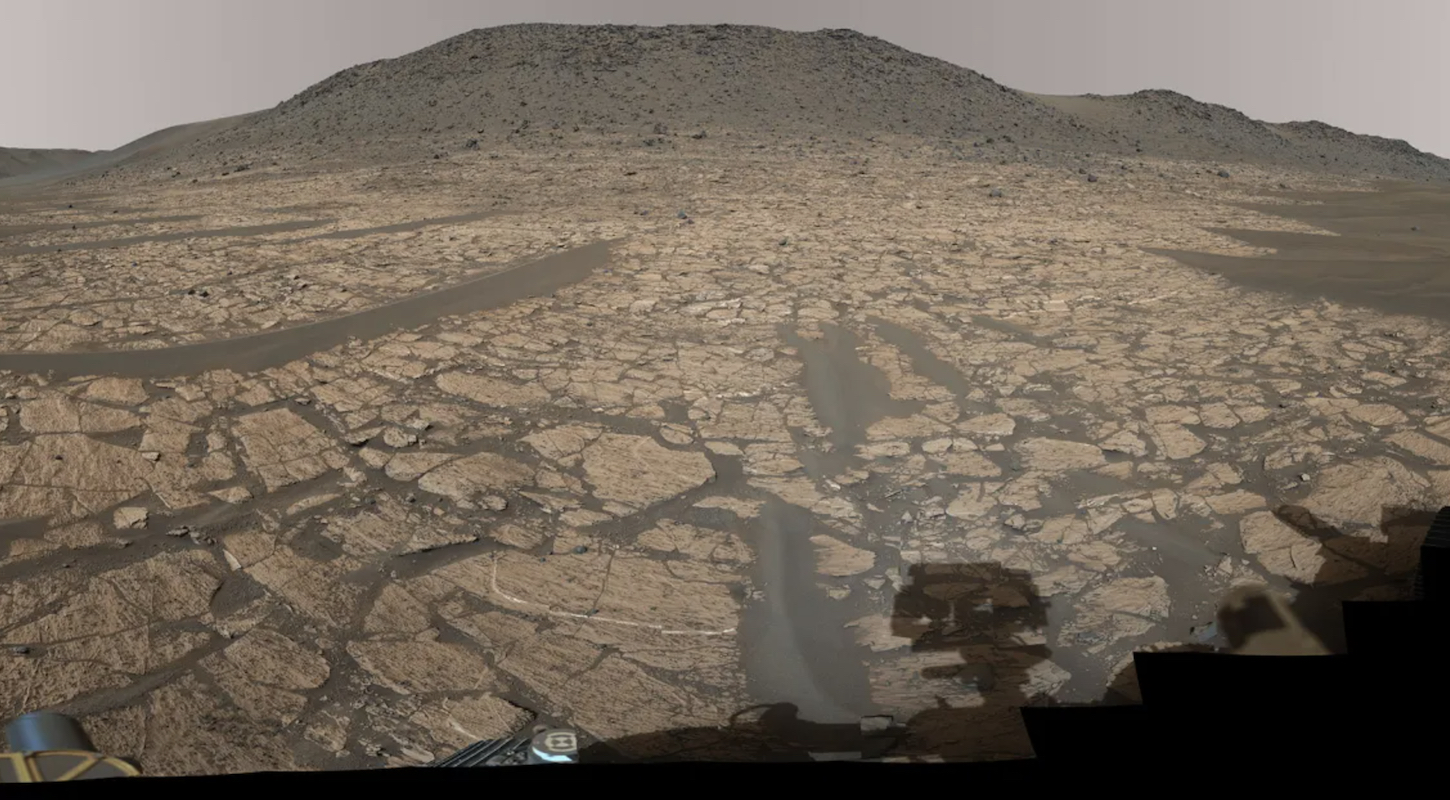
NASA
Import AI 480: Self-sustaining space economies; AI for science progress, and Meta builds perfect hands for a superintelligence
When do you think we'll have robots on the moon?

The Ground Truth Institute
Could we engineer scientific revolutions, then spin out radical improvements to everyday life?

Affordable, Rapid Bootstrapping of the Space Industry and Solar System Civilization
Advances in robotics and additive manufacturing have become game-changing for the prospects of space industry. It has become feasible to bootstrap a self-sustaining, self-expanding industry at reasonably low cost. Simple modeling was developed to identify the main parameters of successful bootstrapping. This indicates that bootstrapping can be achieved with as little as 12 metric tons (MT) landed on the Moon during a period of about 20 years. The equipment will be teleoperated and then transitioned to full autonomy so the industry can spread to the asteroid belt and beyond. The strategy begins with a sub-replicating system and evolves it toward full self-sustainability (full closure) via an in situ technology spiral. The industry grows exponentially due to the free real estate, energy, and material resources of space. The mass of industrial assets at the end of bootstrapping will be 156 MT with 60 humanoid robots, or as high as 40,000 MT with as many as 100,000 humanoid robots if faster manufacturing is supported by launching a total of 41 MT to the Moon. Within another few decades with no further investment, it can have millions of times the industrial capacity of the United States. Modeling over wide parameter ranges indicates this is reasonable, but further analysis is needed. This industry promises to revolutionize the human condition.

China’s Learn-On-The-Job Robots Outpace US’ Cautious Rollout
Which philosophy they will learn to think. Can a walled garden outlast an open field, or will openness inevitably prevail?

Space to Grow — the privatisation of the solar system
A useful primer explains how cosmic exploration has been commercialised and explores the challenges in policing this new wild west

Fluoddity
An interactive lava lamp? An evolvable ant farm? Explore a world very different from our own.

Fluoddity
An interactive lava lamp? An evolvable ant farm? Explore a world very different from our own.
Fluoddity
An interactive lava lamp? An evolvable ant farm? Explore a world very different from our own.
Fluoddity
An interactive lava lamp? An evolvable ant farm? Explore a world very different from our own.
Soil C Sequestration as a Biological Negative Emission Strategy
Soil carbon (C) sequestration in one of three main approaches to carbon dioxide removal and storage through management of terrestrial ecosystems. Soil C sequestration relies of the adoption of improved management practices that increase the amount of carbon stored as soil organic matter, primarily in cropland and grazing lands. These C sequestering practices act by increasing the rate of input of plant-derived residues to soils and/or by reducing the rates of turnover of organic C stocks already in the soil. In addition to carbon dioxide removal potential, increases in soil organic matter/soil C content are highly beneficial from the standpoint of soil health and soil fertility Practices to increase soil C stocks include well-known, proven techniques or “best management practices” (BMP) for building soil carbon. A second category includes what we refer to as frontier technologies for which significant technological and/or economic barriers exist today, but for which further R&D and/or economic incentives might offer the potential for greater sequestration over the longer term. We reviewed published estimates of global soil carbon sequestration potential, representing the biophysical potential for managed cropland and/or grassland systems to store additional carbon assuming widespread (near complete) adoption of BMPs. The majority of studies suggests that 4 to 5 GtCO2/y as an upper limit for global biophysical potential with near complete adoption of BMPs. In the longer-term, if frontier technologies are successfully deployed, the global estimate might grow to 8 GtCO2/y. There is a strong scientific basis for managing agricultural soils to act as a significant carbon (C) sink over the next several decades. A two-stage strategy, to first incentivize adoption of well developed, conventional soil C sequestering practices, while investing in R&D on new frontier technologies that could come on-line in the next 2-3 decades, could maximize benefits. Implementation of such policies will require robust, scientifically-sound measurement, reporting, and verification (MRV) systems to track that policy goals are being met and that claimed increases in soil C stocks are real.

AI-assisted engineers are burning out, is this fine?—Martian Chronicles, Evil Martians’ team blog
AI-assisted code generation is not free. It comes with a hidden cost: burnout. Are we dangerously ignorant to this problem? And how can we cope with it? In this post, we discuss this question.

‘Soil is more important than oil’: inside the perennial grain revolution
Scientists in Kansas believe Kernza could cut emissions, restore degraded soils and reshape the future of agriculture

SciPy 2026
Conference update: SciPy 2026 will be held in Minneapolis with in-person and remote attendance options.

Okay one more thought on moravec's paradox: - we (well, i) always say its harder to build a robot plumber than cider - what if that's not true? What if physical stuff really is easy and we just didn't have the data on hardware to do it?

Chris Paxton
Ant Group trained a robot vision-language-action model on 20,000 hours of robot data.