Physics aims to describe, classify, and predict natural phenomena, while engineering aims to design new or modify existing ones. A phenomenon is characterized by some observed variables.
Control Point Analysis
This paper describes an informal method called control point analysis that can be used to catalog and understand the points of power and control created by spec

A Quantitative Framework for Layered Multirate Control: Toward a Theory of Control Architecture
Complex engineered and natural control systems, such as those used in robotics, the power grid, human sensorimotor control, and the Internet, are characterized by needing to operate robustly and reliably across many spatiotemporal scales despite being implemented using highly constrained hardware and software. Remarkably, a universal design pattern centered around layered control architectures (LCAs) has emerged to address these challenges across vastly different domains. These LCAs are the central object of study of this article (see “Summary”).
The neuron as a direct data-driven controller | PNAS
In the quest to model neuronal function amid gaps in physiological data, a promising strategy is to develop a normative theory that interprets neur...

Selecting synthetic data for successful simulation-based transfer learning in dynamical biological systems
Accurate prediction of the temporal dynamics of biological systems is crucial for informing timely and effective interventions, e.g., in ecological or epidemiological contexts, or for treatment adjustments in therapy. While machine learning has proven its capabilities in generalizing the underlying non-linear dynamics of such systems, unlocking its predictive power is often restrained by the limited availability of large, curated datasets. To supplement real-world data, informing machine learning by transfer learning with synthetic data derived from simulations using ordinary differential equations has emerged as a promising solution. However, the success of this approach highly depends on the designed characteristics of the synthetic data.

wharton-generative-ai-labs/AIBO
An open-source tool for running controlled behavioral experiments on AI systems at scale.
What makes something data?
This is a question I posted on BlueSky on Friday 11/21/25, inspired by a talk I recently attended about evaluation of “AI” systems. I think…

AI-Newton: A Concept-Driven Physical Law Discovery System without Prior Physical Knowledge
While current AI-driven methods excel at deriving empirical models from individual experiments, a significant challenge remains in uncovering the common fundamental physics that underlie these models -- a task at which human physicists are adept. To bridge this gap, we introduce AI-Newton, a novel framework for concept-driven scientific discovery. Our system autonomously derives general physical laws directly from raw, multi-experiment data, operating without supervision or prior physical knowledge. Its core innovations are twofold: (1) proposing interpretable physical concepts to construct laws, and (2) progressively generalizing these laws to broader domains. Applied to a large, noisy dataset of mechanics experiments, AI-Newton successfully rediscovers foundational and universal laws, such as Newton's second law, the conservation of energy, and the universal gravitation. This work represents a significant advance toward autonomous, human-like scientific discovery.

Viability theory
Viability theory is an area of mathematics that studies the evolution of dynamical systems under constraints on the system state.[1][2] It was developed to formalize problems arising in the study of various natural and social phenomena, and has close ties to the theories of optimal control and set-valued analysis.
Introduction to the Field of Data Engineering - 📖 Patterns of Data Engineering
Explore the evolution and challenges of data engineering from its roots in business intelligence to its current status as a critical field in technology. This chapter offers a comprehensive introduction, covering the historical development, current trends, and future directions of data engineering, alongside personal insights from the author's journey in the field.

Uncertainty limits the use of power analysis.
Fed up with Big Tech, communities turn to data collectives for control
Data collectives and cooperatives, which let creators control the collection and distribution of their data, are emerging as preferred alternatives to big tech companies.

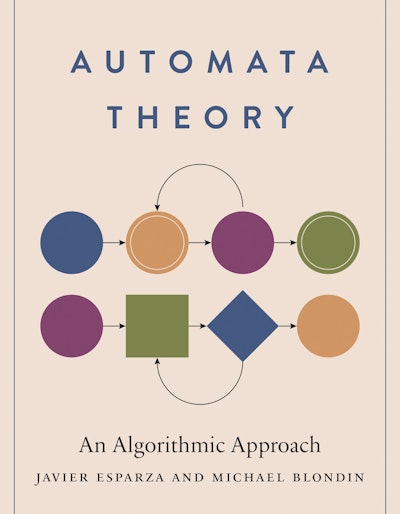
Automata Theory by Javier Esparza
A comprehensive introduction to automata theory that uses the novel approach of viewing automata as data structures.
Microsoft offers devs a better way to control AI agent behavior | TechCrunch
The specification lets developer, compliance, and security teams define their own policies for agents to follow in portable policy files.

Theory of Constraints - The Decision Lab
The theory of constraints is a systems-based methodology that identifies and addresses the weakest link in a process or system.

Dynamical Systems Group | Complex Systems, Engineered
Systems engineering firm that operationalizes emerging technology for high-reliability organizations. Scientific Computing, MBSE, Systems Integration.
The Complete Power Automate Functions List - Matthew Devaney
A cheat sheet with 140+ Power Automate functions, links to the official documentation and an easy to follow visual guide.