

In the contemporary online interaction, digital iden- tity is central, but most systems follow a centralized provider like Google or Facebook. Although convenient, these models pose ma- jor risks to data breach, surveillance, and single point of failure. The proposed paper proposes a privacy-sensitive decentralized identity verification system that uses Zero-Knowledge Proofs (ZKPs) to allow users to make it through claims (e.g., age, citizen- ship, or enrollment) without any personal data being provided, thereby solving the challenges outlined in the paper. Our architecture integrates verifiable credentials, zero-knowledge-SNARKs and an issuer trust registry that is maintained on blockchain smart contracts to guarantee trustless verification and eliminate dependence on centralized authorities. Its system gives its users full control over credentials, allows reuse across applications, and does not expose data.A proof-of-concept implementation has shown the approach to be feasible with Circom and SnarkJS to generate proof, Solidity smart contracts to verify them, and a user interface implemented in React. Results of the evaluations showed that determination of the verification latency is low, the overhead to generate proofs is moderate, and no privacy leakage occurs. It can be used in potential applications such as education, e-governance, healthcare, finance, and online voting.
google/longfellow-zk
Implementation of the Google Zero-Knowledge library for Identity Protocols.
ANNEX B - Zero Knowledge Proofs for the Age Verification Solution - European Age Verification Solution
Zero-knowledge proofs (ZKPs) are cryptographic techniques that enable one party (the User) to prove to another party (the Relying Party) that a statement is true without disclosing any additional information beyond the statement’s validity. This allows the User to demonstrate knowledge without revealing the knowledge itself.
The limits of zero-knowledge for age-verification | Brave
ZKPs are often advanced as a technical remedy, promising privacy-preserving attestations of age or eligibility. Yet their deployment in practice exposes both conceptual and practical limits.
SyRA: Sybil-Resilient Anonymous Signatures with Applications to Decentralized Identity
We study Sybil-Resilient Anonymous (SyRA) signatures, a cryptographic primitive that enables credentialed users to generate, on demand, unlinkable pseudonyms tied to any given context, and issue signatures on behalf of these pseudonyms. Concretely, SyRA allows a distributed issuer to turn any legacy identity or personhood identifier, possibly of low entropy, into a unique associated cryptographic key of high pseudoentropy, for use in generating signatures for any given context. Sybil-resilient anonymous signatures achieve three main objectives: 1) Sybil resilience: every user is entitled to at most one digital identity, 2) anonymity: no information about the user’s real identity is leaked, and 3) non-interactive context switching: users can create on their own at most one credential for any given context in a manner that is unlinkable across contexts. We conceptualize the SyRA primitive as an ideal functionality in the Universal Composition (UC) setting and put forth SASSI, an efficient, pairing-based construction that realizes it by utilizing two levels of verifiable random functions (VRFs), a design which may be of independent interest. The first level consists of threshold VRF issuance of a user’s unique secret key tied to their real-world identifier. The second level allows a user to create signatures for each context, under a unique pseudonym per context. Compared to prior cryptographic tools capable of realizing SyRA, SASSI has the unique feature that issuers are stateless and hence do not need to retain any information about past user interactions, a relevant property for a decentralized implementation. We overview various applications of SASSI in multiparty systems, such as cryptocurrency account management and airdrops, e-voting (e.g., for decentralized governance), and privacy-preserving regulatory compliance (e.g., AML/CFT checks). In the context of creating addresses for digital assets, SyRA signatures enable users to embed their legacy identity into their address in a manner that protects their privacy for each application with which they interact. We demonstrate the practicality of SASSI by providing an implementation and performance evaluation of our construction.
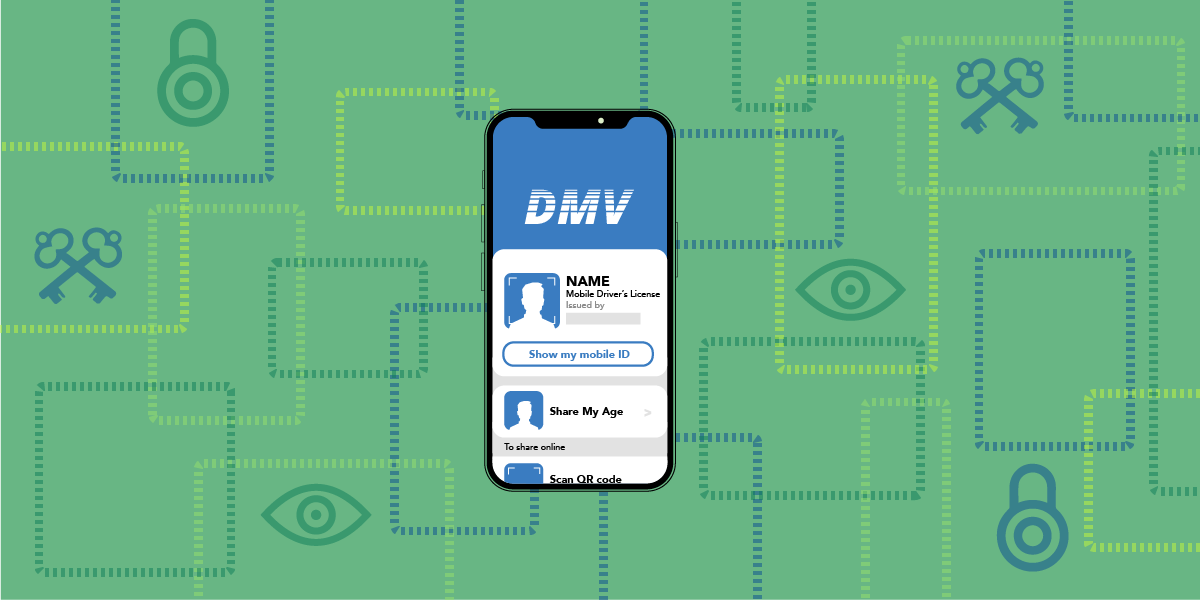
Exploring Privacy-Preserving Age Verification: A Close Look at Zero-Knowledge Proofs
A path toward protecting young people online that doesn’t sacrifice their privacy or data security, amid persistent concerns about screen time.

ZKPROV: A Zero-Knowledge Approach to Dataset Provenance for Large Language Models
As large language models (LLMs) are used in sensitive fields, accurately verifying their computational provenance without disclosing their training datasets poses a significant challenge, particularly in regulated sectors such as healthcare, which have strict requirements for dataset use. Traditional approaches either incur substantial computational cost to fully verify the entire training process or leak unauthorized information to the verifier. Therefore, we introduce ZKPROV, a novel cryptographic framework allowing users to verify that the LLM's responses to their prompts are trained on datasets certified by the authorities that own them. Additionally, it ensures that the dataset's content is relevant to the users' queries without revealing sensitive information about the datasets or the model parameters. ZKPROV offers a unique balance between privacy and efficiency by binding training datasets, model parameters, and responses, while also attaching zero-knowledge proofs to the responses generated by the LLM to validate these claims. Our experimental results demonstrate sublinear scaling for generating and verifying these proofs, with end-to-end overhead under 3.3 seconds for models up to 8B parameters, presenting a practical solution for real-world applications. We also provide formal security guarantees, proving that our approach preserves dataset confidentiality while ensuring trustworthy dataset provenance.

Building Software for a Zero Trust World
How we are helping to build Zero Trust architectures that safeguard the most protected data in the world
Beyond DNS: Unlocking the Internet of AI Agents via the NANDA Index and Verified AgentFacts
The Internet is poised to host billions to trillions of autonomous AI agents that negotiate, delegate, and migrate in milliseconds and workloads that will strain DNS-centred identity and discovery. In this paper, we describe the NANDA index architecture, which we envision as a means for discoverability, identifiability and authentication in the internet of AI agents. We present an architecture where a minimal lean index resolves to dynamic, cryptographically verifiable AgentFacts that supports multi-endpoint routing, load balancing, privacy-preserving access, and credentialed capability assertions. Our architecture design delivers five concrete guarantees: (1) A quilt-like index proposal that supports both NANDA-native agents as well as third party agents being discoverable via the index, (2) rapid global resolution for newly spawned AI agents, (3) sub-second revocation and key rotation, (4) schema-validated capability assertions, and (5) privacy-preserving discovery across organisational boundaries via verifiable, least-disclosure queries. We formalize the AgentFacts schema, specify a CRDT-based update protocol, and prototype adaptive resolvers. The result is a lightweight, horizontally scalable foundation that unlocks secure, trust-aware collaboration for the next generation of the Internet of AI agents, without abandoning existing web infrastructure.
Zero Knowledge Proofs Alone Are Not a Digital ID Solution to
In the past few years, governments across the world have rolled out digital identification options, and now there are efforts encouraging online companies to implement identity and age verification
Age verification needs better privacy protections, report says
New America’s Open Technology Institute called for the use of zero-knowledge proofs, which verify a user’s age without disclosing any personal information.

Age Verification in the Context of the EUDI Wallet: Balancing Privacy and Security
As digital identity solutions become increasingly prevalent, the necessity for robust age verification mechanisms has emerged as a critical concern for a range of services, from online transactions to access to age-restricted content. Current age verification methods often fall short of accommodating the diverse standards across jurisdictions, leading to vulnerabilities and inconsistencies in user experience. One of the main objectives of this study is to identify and analyze in a systematic way existing age verification methods and the main relevant international regulatory frameworks. The Age Verification Profile by the European Commission is including and exploring Zero-Knowledge Proof-based solutions for age verification, which are also considered in the EUDI Wallet Architecture and Reference Framework. This approach not only minimizes data privacy risks but also facilitates seamless digital interactions across the European Union. This paper primarily aims to explore the critical role of the European Digital Identity Wallet Architecture and Reference Framework in age verification and demonstrate that the EUDI Wallet seeks to enhance the security and efficiency of online transactions by introducing robust age verification mechanisms that effectively balance user privacy, security, and compliance with various regulatory requirements while preventing unauthorized access to services with age restrictions, which is in line with the broader objectives of the European Digital Identity initiative. Furthermore, we examine the European Union's age verification approach via the EUDI Wallet and the U.S. framework approach, conducting a comparative analysis between them that highlights key differences in architectural design and legal underpinnings and emphasizes their advantages.
An End-to-End Encrypted Peer-to-Peer Chat System with Self-Sovereign Identity
Today, messaging applications are the most popular medium of communication over the Internet. As their use has grown, different security and privacy concerns have received the attention of users. Users consider what they send with others to be private, tamper-proof and secure without getting exposed to unintended entities. Furthermore, users are concerned whether their data is exposed if the service provider encounters any cyber attack. In this paper, we propose a Self-Sovereign Identity (SSI)-based End-to-End Encrypted Peer-to-Peer (E2EE P2P) chat system that does not rely on any specific provider, enhancing user privacy and security. The system leverages decentralized identifiers (DIDs) to establish secure communication channels using the DIDcomm (DID Communications) protocol, which ensures the privacy of user data. We also introduce a secure file sharing mechanism that ensures that all data, including messages, are stored solely on the user's device, further safeguarding user privacy. The system is developed following the Design Science Methodology, addressing probable threats and satisfying different functional and security requirements. The architecture and its implementation details are discussed with the subsequent use cases and protocol flow. Finally, we analyze different aspects of the system.
BeeKEM: Decentralized, Secure and Efficient Group Key Agreement
Group key agreement protocols are essential for modern secure messaging. Most existing group key agreement protocols assume a centralized model with a semi-trusted service that mediates the communication. This is efficient, but problematic for some important applications, since a central service can be a choke point for surveillance and censorship. There is a nascent literature on decentralized group key agreement that avoids such reliance, but existing proposals either do not scale, with update costs linear or quadratic in the group size, or lack proofs of security. Centralized protocols can offer much lower (logarithmic) cost. We present BeeKEM, the first decentralized group key agreement protocol with logarithmic update cost in the common case (degrading to linear in the worst case) and proofs of security. We provide an open-source implementation and demonstrate that it is competitive with OpenMLS. BeeKEM opens the door for a range of communication and collaboration applications offering not only end-to-end encryption, but also metadata privacy and censorship resistance.
IACIS 2026 - OpenConf Abstract Submission, Peer Review, and Event Management System
As lawmakers across the United States move to require age verification for access to adult content online, new questions are emerging about the unintended risks these laws create. While intended to protect minors, many of these policies rely on systems that collect and store overly sensitive personal information such as government-issued IDs or biometric data without adequate safeguards. This introduces serious cybersecurity vulnerabilities, privacy concerns, and potential legal liability for platforms and users alike. Some major platforms have already withdrawn from certain states rather than comply, raising questions about the real-world feasibility of these laws. This study examines the intersection of digital privacy, cybersecurity, and legal compliance in the context of mandatory age verification. It analyzes the risks posed by identity-based and biometric systems, the role of third-party vendors, and the inconsistencies in how states define and enforce these requirements. The paper evaluates several age verification models and concludes that attribute-based verification systems that confirm age eligibility without revealing full identities offers the most secure and privacy-conscious path forward. The findings underscore a critical need for better-designed legislation that balances child protection with digital rights and security. This research provides targeted recommendations for policymakers, platform operators, and cybersecurity professionals, urging a shift toward transparent, accountable, and technically sound solutions before flawed systems become entrenched.
Evolution of AI Agent Registry Solutions: Centralized, Enterprise, and Distributed Approaches
Autonomous AI agents now operate across cloud, enterprise, and decentralized domains, creating demand for registry infrastructures that enable trustworthy discovery, capability negotiation, and identity assurance. We analyze five prominent approaches: (1) MCP Registry (centralized publication of mcp.json descriptors), (2) A2A Agent Cards (decentralized self-describing JSON capability manifests), (3) AGNTCY Agent Directory Service (IPFS Kademlia DHT content routing extended for semantic taxonomy-based content discovery, OCI artifact storage, and Sigstore-backed integrity), (4) Microsoft Entra Agent ID (enterprise SaaS directory with policy and zero-trust integration), and (5) NANDA Index AgentFacts (cryptographically verifiable, privacy-preserving fact model with credentialed assertions). Using four evaluation dimensions: security, authentication, scalability, and maintainability, we surface architectural trade-offs between centralized control, enterprise governance, and distributed resilience. We conclude with design recommendations for an emerging Internet of AI Agents requiring verifiable identity, adaptive discovery flows, and interoperable capability semantics.
Sirraya One | Enterprise Decentralized Identity Platform
NIST-certified quantum-resistant identity with zero-knowledge proofs. Government & military-grade verifiable credentials.
