

Geared toward educators, administrators, and policymakers, this guide provides recommendations that focus on reducing high school dropout rates.
WWC | Find What Works!
As an initiative of the U.S. Department of Education's Institute of Education Sciences (IES), the What Works Clearinghouse (WWC) was created in 2002 to be a central and trusted source of scientific evidence for what works in education.
Phone-Free Schools Movement | Protecting Student Well-Being
Join the Phone-Free Schools Movement to create healthier, more focused school days. We help schools implement bell-to-bell phone-free policies that boost learning, safety, and student well-being.
Wisconsin School Board May Silence High School Band Performance Of Trans-Linked Piece
The board of Watertown United School District in Wisconsin may require the high school band to pull one piece from its spring concert because of an LGBTQ connection.

More than Half of Public School Leaders Say Cell Phones Hurt Academic Performance | IES
Most schools have policies that restrict cell phone use during class, with many citing negative impacts on attention and performance.
Internet Filtering: An Interpretation of the Library Bill of Rights
In the span of a single generation the Internet has revolutionized the basic functions and operations of libraries and schools and expanded exponentially both the opportunities and challenges these institutions face in serving their users. During this time many schools and libraries in the United States have installed content filters on their Internet access. They have done so for a variety of reasons, not least of which is the requirement to comply with the Children’s Internet Protection Act (CIPA) in order to be eligible to receive federal funding or discounts through the Library Services and Technology Act, Title III of the Elementary and Secondary Education Act, and the Universal Service discount program (E-rate), or to comply with state filtering requirements that may also be tied to state funding. Their rationale for filtering is that it is better to have filtered access than no access.

NYC school system to ban AI for elementary, middle school students
The Department of Education is unveiling new guidelines following backlash.

Evidence toolkit: Student access, success and progression - TASO
Our toolkit summarises the existing evidence on approaches to widening participation and student success for disadvantaged and underrepresented groups.

Childhood and Education #21: Grades and Standards
First you get to college via the wrong metrics, as previously discussed in #12. Then things get easier.

What Will It Take to Get A.I. Out of Schools?
“I find myself speaking with my kids about A.I. in the same terms that we might discuss a creepy neighbor who lives down the block,” Jessica Winter writes. Read her report on the push for A.I. in education.

Lower Ed: The Troubling Rise of For-Profit Colleges
Lower Ed: The Troubling Rise of For-Profit Colleges in the New Economy by Tressie McMillan Cottom (2017, The New Press) is simply excellent. Here's an excerpt, here's Dr. McMillan Cottom's page about the book, here's … | Cogito, Ergo Sumana | Blog by Sumana Harihareswara, Changeset founder
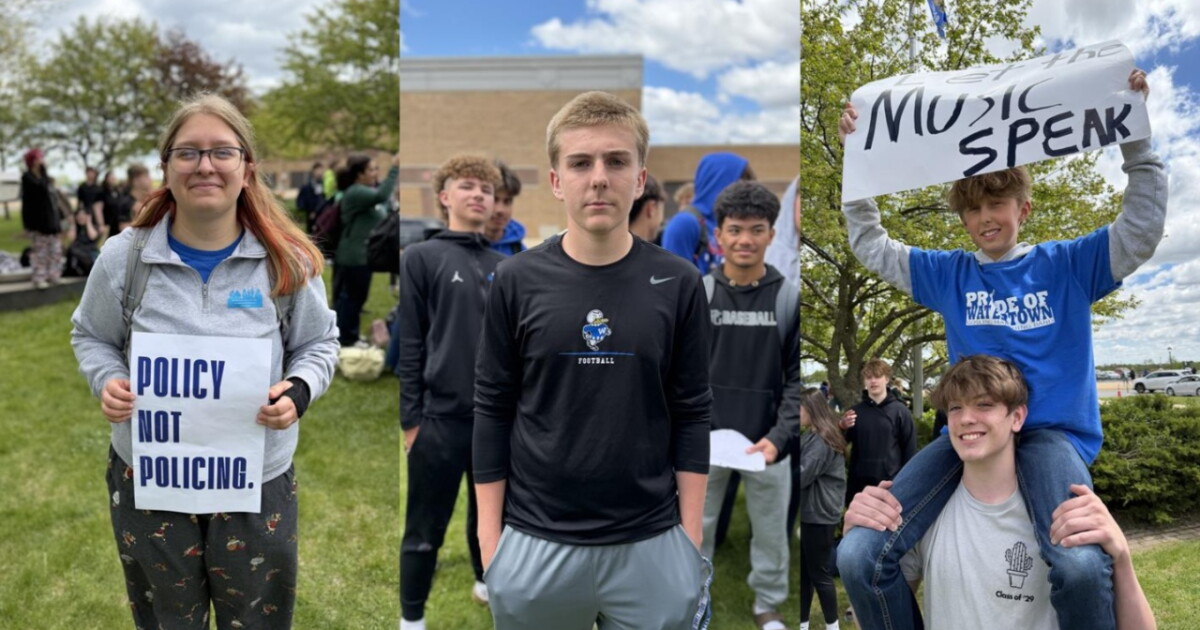
Watertown High School students walk out to protest school board's decision to ban song tied to Stonewall
Hundreds of Watertown High School students walked out of class Wednesday to protest the school board's decision to ban the Wind Symphony from performing "A Mother of A Revolution!"
'Life needs to be more like this': Some bars and restaurants are going phone free
It's not just schools that are banning cellphones. Some bars and restaurants are joining the offline trend.

What 10,000 students taught us about combating LGBTphobia in schools
School-based interventions can help, but repeated exposure and the ability to engage resistant groups are key to shifting social norms

Discord Launches Teen-by-Default Settings Globally
Discord is announcing enhanced teen safety features rolling out globally that reinforce its long-standing commitment to creating a safer and more inclusive experience for users over the age of 13.

UI/UX Guidelines - User Experience Design & Technology
The Web Content Accessibility Guidelines (WCAG) are a set of internationally recognized standards for making web content accessible to people with disabilities. Created by the Web Accessibility Initiative (WAI) of the World Wide Web Consortium (W3C), WCAG provides a framework for designing inclusive digital platforms that cater to diverse user needs, including those with visual, auditory, cognitive, and physical impairments.
Watertown student, parent speak out as board considers removing song linked to LGBTQ+ history from concert
A Watertown High School student is speaking out after the school board began considering whether to pull a piece of music from an upcoming spring concert over its connection to LGBTQ history.
