


How block-grant labs can generate the real-world data AI needs to do science
AI for science needs reasoning, not just data
AI agents that can model the human process of research will accelerate discoveries in science.

AI for science: What can it do? Can it do things? Let’s find out!
A what we’re reading spotlight
Using X-Labs to Unleash AI-Driven Scientific Breakthroughs | IFP
How to adapt our science funding mechanisms to the unique infrastructure needs of large-scale AI projects

No. 009: AI agents p-hacking, submission surge data, Gemini for Science - The Hallway Track
The Hallway Track No. 009 - How AI is affecting the practice of science
OpenScience.ai — Autonomous AI Research Agents
AI agents conducting reproducible scientific inquiry. Full provenance, executable notebooks, peer validation.

How to build an AI scientist: first peer-reviewed paper spills the secrets
AI Scientist, an autonomous research tool, first released in 2024, has now undergone peer review, highlighting its strengths and limitations.
Deep Research, information vs. insight, and the nature of science
What AI will accelerate in the scientific process, what it cannot do, and how we can prepare for new manners of scientific investigation.
No. 008: AI co-mathematician, compiler-verified protocols, open infrastructure bets - The Hallway Track
The Hallway Track No. 008 - How AI is affecting the practice of science
No. 029: OpenAI math manuscripts, inquiry narrowing, virtual biology initiative - The Hallway Track
The Hallway Track No. 029 - How AI is affecting the practice of science
Where does the rigor go? Research software and the future of trustworthy science.
Generative AI now makes it dramatically easier to produce something that looks like research: analysis code, figures, literature reviews, even whole pap…
No. 017: Science EIC contra AI hype, data poisoning of research agents, Vancouver Standard for AI disclosure - The Hallway Track
The Hallway Track No. 017 - How AI is affecting the practice of science
AI scientists are changing research — institutions, funders and publishers must respond
The ability to automate the discovery process in some areas of scientific inquiry raises unanswered questions about how research should be conducted.
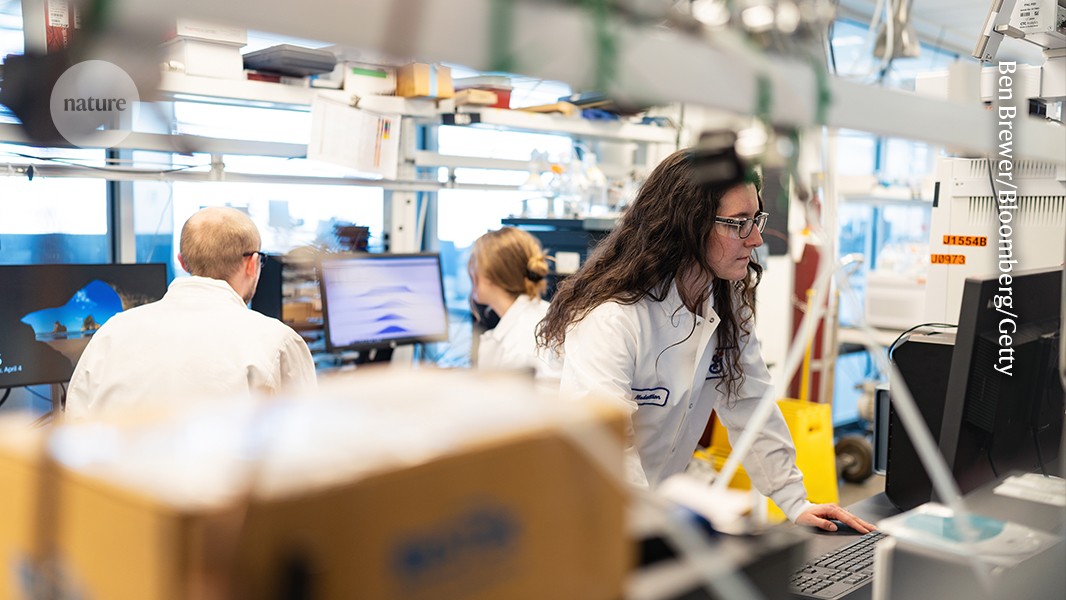
Verification in the Age of AI Scientists
AI Scientists now operate at a scale that outpaces human capacity for manual review. Systems such as Sakana’s AI Scientist write entire workshop papers end-to-end. Lila Sciences runs autonomous ``AI Science Factories’’ that hypothesize, experiment, and iterate without human guidance. FutureHouse’s Kosmos and Robin generate thousands of candidate hypotheses in a single run, and Google’s Co-Scientist proposes testable experiments at a rate no laboratory can fully evaluate. Each of these systems emphasizes verified results, yet that standard ranges from near-perfect formal proof in mathematics to decade-long clinical trials in medicine, with no shared framework for judging sufficiency across domains. As outputs scale beyond what humans can manually inspect, the question of which results to trust becomes as hard as generating them. The bottleneck for AI for Science is no longer hypothesis generation, it is verification.
No. 011: Sum-product conjecture disproof, AI-generated authorship fraud, OMB grant-cost rules - The Hallway Track
The Hallway Track No. 011 - How AI is affecting the practice of science
Science that Compounds: The Need for A New Substrate for Research in the Age of AI
This paper is a perspective from Lightcone Research, an open-source initiative building tooling for scientific research in the age of agentic AI.
The AI Chemist: To be trustworthy, LLMs need to show their work
Good scientists reveal how they do their experiments and report their results; so should any machine-driven research
