


In 1989, Tim Berners-Lee, a young scientist working at CERN, wrote a proposal for an information management system based on the Internet. At the time, few people really understood the significance of his seemingly abstract idea. Luckily, however, his supervisor and a few colleagues had the foresight to let him work on an invention that would change the world.
Sir Tim Berners-Lee on Building AI That Benefits Everyone
In a recent Financial Times op-ed, World Wide Web inventor Sir Tim Berners-Lee discusses how to ensure a future of AI that benefits and protects all.

How the Web Was Lost – James Gleick
This Is for Everyone: The Unfinished Story of the World Wide Webby Tim Berners-Lee with Stephen WittFarrar, Straus and Giroux, 389 pp., $30

This Is for Everyone ebook by Tim Berners-Lee - Rakuten Kobo
Read "This Is for Everyone The Unfinished Story of the World Wide Web" by Tim Berners-Lee available from Rakuten Kobo. A Sunday Times Bestseller The inventor of the World Wide Web explores his vision’s promise—and how it can be redeemed fo...

Solid (web decentralization project)
Solid is a web decentralization project led by Tim Berners-Lee, the inventor of the World Wide Web, originally developed collaboratively at the Massachusetts Institute of Technology (MIT). The project "aims to radically change the way Web applications work today, resulting in true data ownership as well as improved privacy" by developing a platform for linked-data applications that are completely decentralized and fully under users' control rather than controlled by other entities. The ultimate goal of Solid is to allow users to have full control of their own data, including access control and storage location. To that end, Tim Berners-Lee formed a company called Inrupt to help build a commercial ecosystem to fuel Solid.

All you need is links
When Tim Berners Lee talks about how he designed the web, he uses an analogy from physics, describing his process as a quest to find “fundamental laws” which can generate a desired system:

All you need is links
When Tim Berners Lee talks about how he designed the web, he uses an analogy from physics, describing his process as a quest to find “fundamental laws” which can generate a desired system:
All you need is links
When Tim Berners Lee talks about how he designed the web, he uses an analogy from physics, describing his process as a quest to find “fundamental laws” which can generate a desired system:
The Oxymoron of “Data-Driven Innovation”
Once upon a time, in the dawn of the internet era, web products came from college dudes. The dudes were almost always wealthy and well-connected, but they weren’t usually market-savvy. These …

Tim Berners-Lee Warns A.I. Could Kill the Web Economy as No One Visits Sites Anymore
As A.I. chatbots replace human readers, Tim Berners-Lee warns the World Wide Web’s ad-driven business model could collapse without reform.

The Future of the Internet | Jonathan Zittrain | Talks at Google
My journey to the heart of the forgotten internet
Slowly but surely, huge swaths of the internet are vanishing. But the artefacts of the early web are still out there, and they have lessons for the future.

Dan Shipper 📧 on Twitter / X
The smallest technical decisions become humanity's biggest pivots:The same-origin policy—a well-intentioned browser security rule from the 1990s—accidentally created Facebook, Google, and every data monopoly since. It locks your data in silos—and you stayed where your stuff… pic.twitter.com/G87qsuPHxN— Dan Shipper 📧 (@danshipper) July 9, 2025

Stephen Haney on Twitter / X
I'm very excited about WebMCPHere's Paper in an iframe, being controlled by an external agent that wraps it, all in the browserWebMCP opens up cool embedded flows pic.twitter.com/YtbsQYbUQT— Stephen Haney (@stephenhaney) September 2, 2026

Becoming the Product - Set Margins'
€24.00 In stock Becoming the Product quantity Add to cart Category: Books Tags: #designwriting, #institutionalcritique, #internetcritique Description Additional information Description In Becoming the Product: The Critical Internet Researcher as a Virtual Intellectual, the evolution of critical internet research takes center stage. By examining the pioneering work of early net critic Geert Lovink and the influencer-style […]

Welcome to the Post-Naive Internet Era
The grand idealism of the free and open internet might be over for now, but in its place falls a more practical mindset. Just like Silicon Valley’s entrepreneurs are entering their “Hard Tech” era, the people building web alternatives are also entering their Post-Naive Era. Here are the names to know.
Technological

Posts about the future of the internet, AI, and anything technological. Hence the name.
Commentary: Cory Doctorow: Technopolitics
Field Notes: The Architecture of Rationalization - Aaron Ross Powell

And Then the Networks Started Talking | Jason G. Butterfield | Offprint
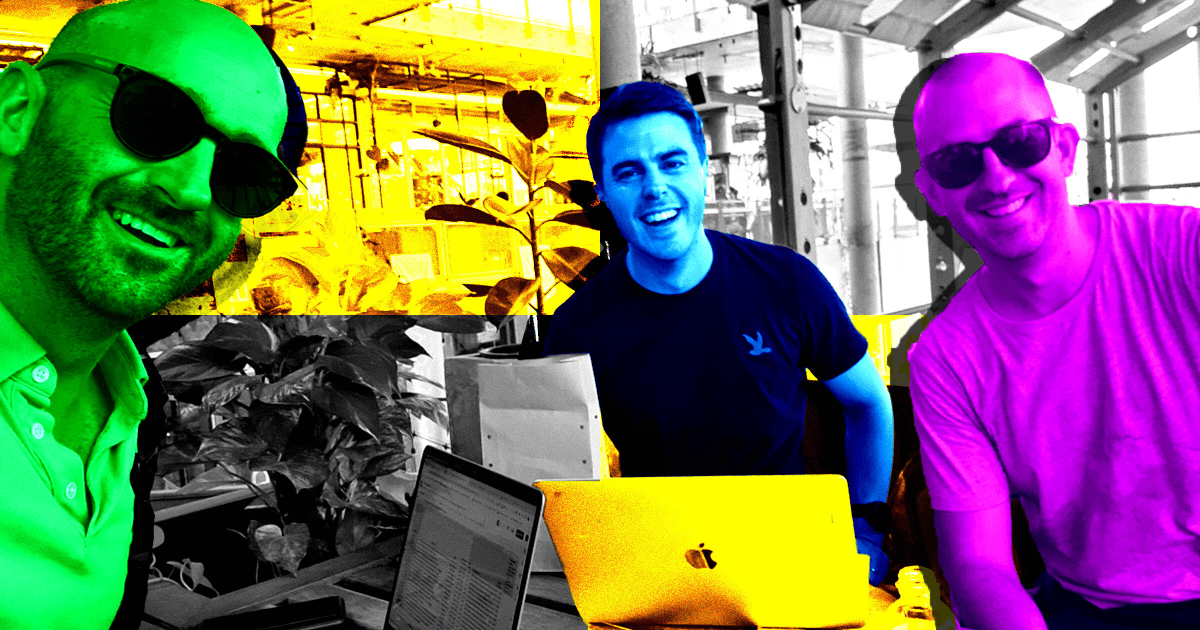
How Three Brothers Built an AI Slop Empire by Buying Legitimate News Sites and Turning Them Into Zombie Content Farms That They Say Get 50 Million Page Views per Month

AI Doomsday Panic Is Completely Out Of Control

Behind the AI ‘Extinction’ Power Bid: Soaring Costs Could Hit 10% of World GDP