


This paper argues that retrocomputing constitutes a conceptually productive model for rethinking sustainability in contemporary computing. Early computing systems operated under strict hardware constr
Redefining our needs: Permacomputing and Vernacular computing
How to ensure an increasing focus on sustainability in computing?

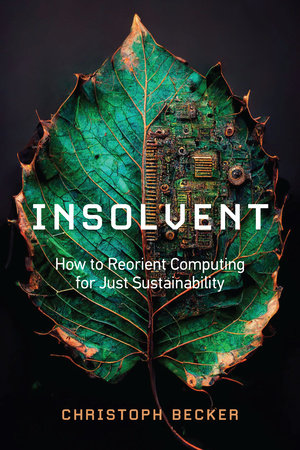
Insolvent: How to Reorient Computing for Just Sustainability
How we can enact meaningful change in computing to meet the urgent need for sustainability and justice.The deep entanglement of information technology with
LIMITS 2026 -- Workshop on Computing within Limits
LIMITS concerns the role of computing in human societies situated in a world of planetary boundaries and limits, such as limits of extractive logics, limits to a biosphere’s ability to recover, limits to our knowledge, or limits of technological solutions to societal issues. As an interdisciplinary group of researchers, practitioners, and scholars, we seek to reshape and orient the broader computing research agenda, grounded by an awareness that contemporary computing research is embedded in finite socio-ecological conditions and must reckon with with ecological limits in general, and climate- and climate justice-related limits in particular. LIMITS 2026 solicits submissions that move us closer towards computing that supports ecological and just futures for diverse human and non-human lifeforms and thriving biospheres.
Sustainable software manifesto
The systems we build are never neutral. They can magnify harm or support a just and sustainable society. How we build today shapes tomorrow’s possibilities.
FF26 – This is not the tech I signed up for! – An approach to permacomputing - Darío Gutiérrez Mori
Permacomputing
Permacomputing is a computing design philosophy which aims to improve resilience by using regenerative design in computer and network technology. It is inspired by permaculture.[1] Permacomputing approaches to computing often involve paying more attention to the life-cycle of hardware (including re-use and designing for older hardware),[1] using low-level languages such as FORTH that have greater operability with older hardware, and fostering a more mindful relationship with technology.[2]
Feeling of Computing — Conversations
Caring for the Chips: Repair and Reuse as Permacomputing – Michelle Kaczmarek
Digital Degrowth: Radically Rethinking our Digital Futures
We are fast approaching the point of “peak digital”, with the continued mass production and excessive consumption of digital technologies set to become a key driver of climate crisis, ecological breakdown and ongoing societal instability.<br /> <br /><i>Digital Degrowth</i> is a call to completely rethink our digital futures in these fast-changing times. It explores how degrowth thinking and alternate forms of “radically sustainable computing” might support ambitions of sustainable, scaled-down and equitable ways of living with digital technologies. Neil Selwyn proposes a rebalancing of digital technology use: digital degrowth is not a call for simply making reduced use of the digital technologies that we already have – rather it is an argument to reimagine digital practices that maximise societal benefits with minimal environmental and social impact. Drawing on illustrative examples from across computer science, hacker and environmental activist communities, this book examines how core degrowth principles of conviviality, autonomy and care are already being used to reimagine alternate forms of digital technology.<br /> <br />Original and stimulating, this is essential reading for students and scholars of media and communication, sustainability studies, political ecology, computer/data sciences, and across the social sciences.

Retrofuturism
As I’ve mentioned before, I’m an avid reader of L.M. Sacasas’s Convivial Society which I feel offers some of the best thinking on technology while always remaining clear and accessible, with no sensationalism and an abiding humanity. So when Mike wrote in the latest instalment (III.9) that he was offering seven theses “less cautiously formulated” with the thought that they might elicit some responses, I found jumping in hard to resist.

Permacomputing
Permacomputing is a term originating from the demoscene, known for squeezing the most out of very restricted computing resources, such as the 4k intro with a maximum executable file size of 4096 bytes. Artist programmer Ville-Matias Heikkilä, aka Viznut, coined the term in a text he published on his website in 2020 1. What stands out in this writing is the holistic approach to computing and sustainability by taking inspiration from permaculture. In both computing and agriculture, problems are usually solved by increasing control over a process, which often goes hand in hand with an increase in resource use. Permaculture uses methods that lets nature do the work, minimizing the reliance on artificial energy. Heikkilä sees similarities between how both permaculture practitioners and hackers find clever solutions to problems. He writes that the existence of computers can only be justified by their ability to augment the potential of humans to have a strengthening effect on ecosystems.
Telepath: building a new kind of computer
So, we made a thing: Let’s back up: for as long as I can remember, I’ve been obsessed with computers, fascinated not just by what they can do but what they could become. Like many, I took my early inspiration from science fiction. I dreamed of someday having something like the Enterprise’s computer. And why not? Science fiction has always driven scientists, engineers, and inventors to create real things that change the world.
Humanities in the Machine - Blain Smith
There is something quietly remarkable about the people who built the foundations of modern computing. Not their technical achievements, though those are extraordinary. What is remarkable is where they came from before they ever touched a machine.
Defining the Dimensions of the “Space” of Computing
The first computing machines were so large they filled entire rooms. Today they are ubiquitous, built invisibly into our environments. While it's tempting to view this change within a predetermined space of progress, we can still shape the future on our own terms.

LIMITS 2025 -- Workshop on Computing within Limits
The LIMITS workshop concerns the role of computing in human societies situated in a world of limits, such as limits of extractive logics, limits to a biosphere’s ability to recover, limits to our knowledge, or limits to technological solutions to societal issues. As an interdisciplinary group of researchers, practitioners, and scholars, we seek to reshape the computing research agenda, grounded by an awareness that contemporary computing research is intertwined with ecological limits in general, and climate- and climate justice-related limits in particular. LIMITS 2025 solicits submissions that move us closer towards computing that supports diverse human and non-human lifeforms and thriving biospheres.
The future of programming and computing

Trends and adjacent possibles for the future of how computers are used and programmed
LIMITS 2026 -- Workshop on Computing within Limits
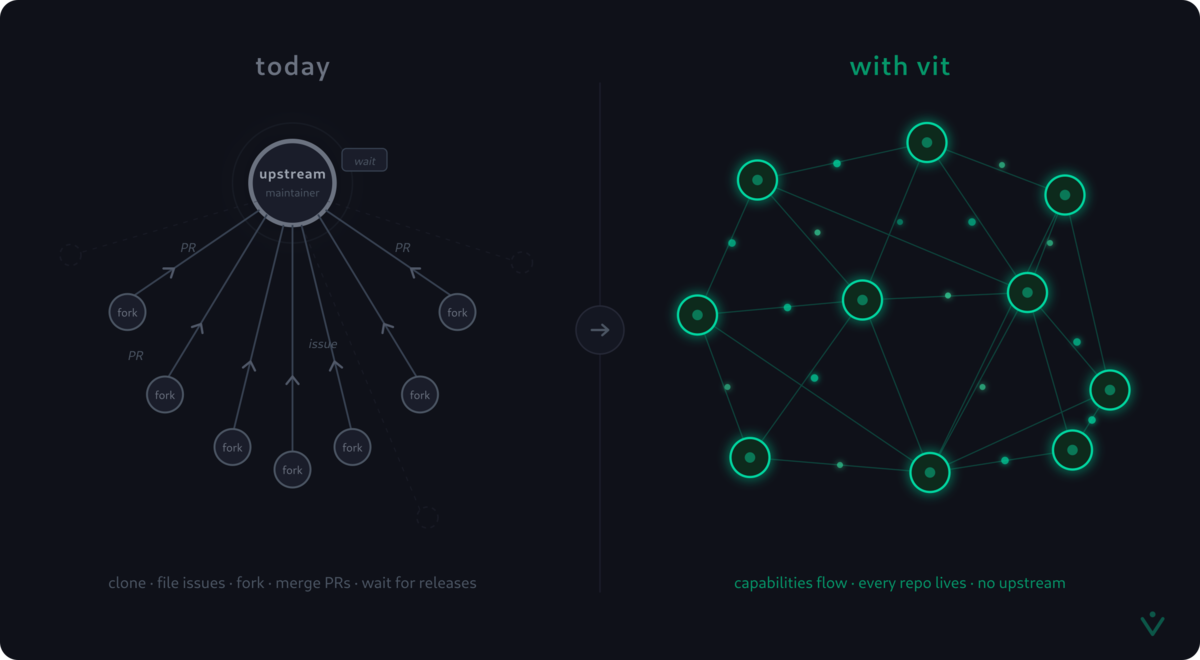
vit — open source is social

Humans approve intent, machines prove conformance

Introducing System One Models and Jev - TypeSafe AI Blog

Message from our CEO: After co-inventing ChatGPT, I kept asking myself: why have superhuman chat models not led to AGI? I’ve spent the last…
On-device intelligence for every product