


What do LLMs think about vision models?
ImportAI 449: LLMs training other LLMs; 72B distributed training run; computer vision is harder than generative text
Will AI cause a political interregnum

LLM Leaderboard - Comparison of over 100 AI models from OpenAI, Google, DeepSeek & others
Comparison and ranking the performance of over 100 AI models (LLMs) across key metrics including intelligence, price, performance and speed (output speed - tokens per second & latency - TTFT), context window & others.

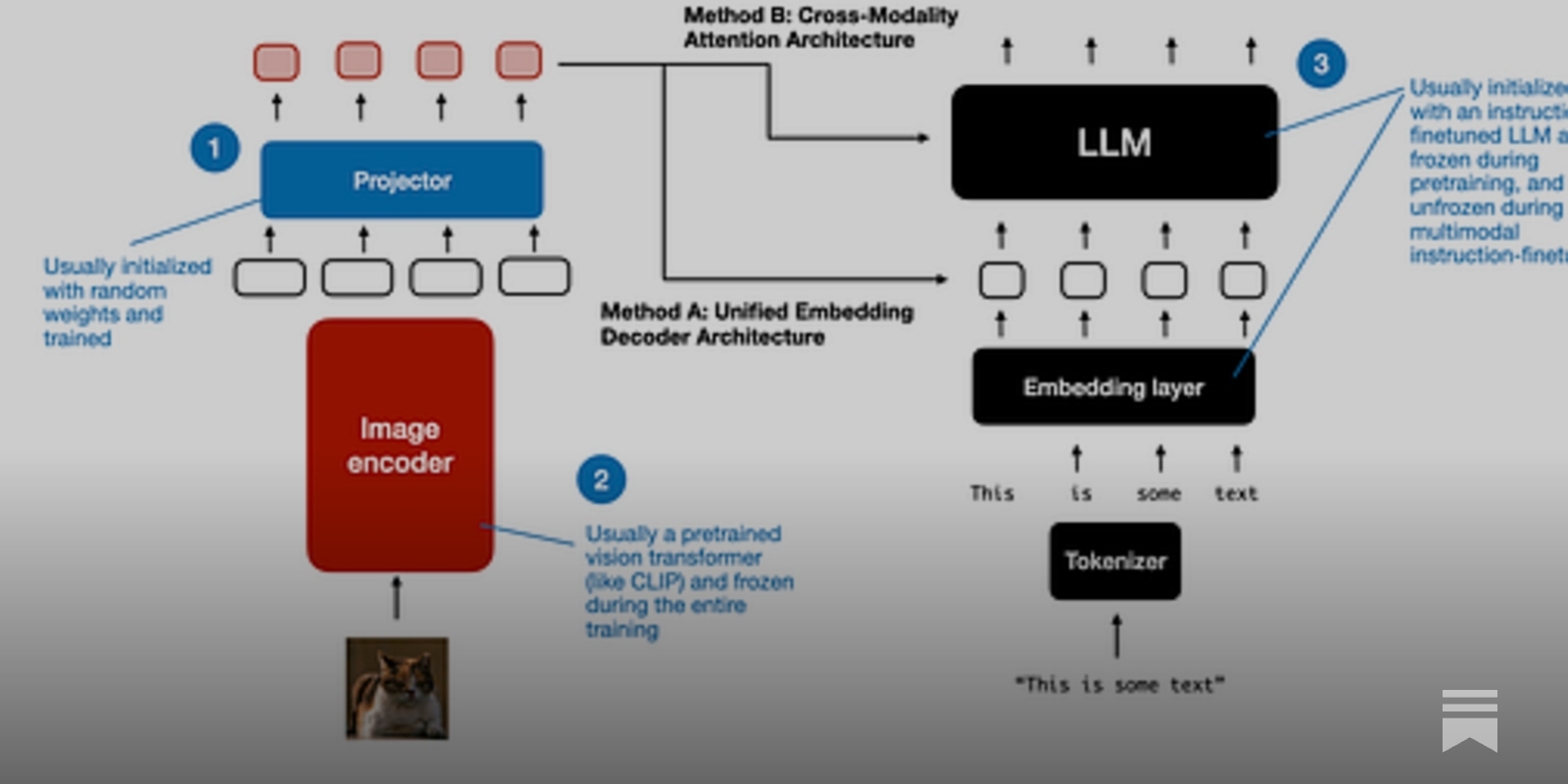
Understanding Multimodal LLMs
An introduction to the main techniques and latest models

Your Laptop Isn’t Ready for LLMs. That’s About to Change
The quest to run large AI models locally on an individual's machine are driving the biggest change in laptop architecture in decades.

LLM Daydreaming
Proposal & discussion of how default mode networks for LLMs are an example of missing capabilities for search and novelty in contemporary AI systems.


AI Image & Video Models, LoRAs & Checkpoints | Civitai
Download AI image and video models from the largest community library: checkpoints and LoRAs for Illustrious, Pony, SDXL, Flux, Wan and more.
Solving a Million-Step LLM Task with Zero Errors
LLMs have achieved remarkable breakthroughs in reasoning, insights, and tool use, but chaining these abilities into extended processes at the scale of those routinely executed by humans,...

kshitijgetsac/Comparative-Analysis-of-Vision-Language-Connectors
Trying to study the effect of different connectors , (linear, MLP and Cross Attention) to analyze what paradigms do LLM'S use or make a best guess
MCP servers vs. skills: Choosing the right context for your AI | Red Hat Developer
Large language models (LLMs) are efficient general-purpose tools, but they work much better when you give them the right context

I Built an LLM From Scratch
Lincoln Michel on Twitter / X
This was my read on AI from the beginning and it proved very true. Whatever hypothetical benefits LLMs have (and they have some), their main use is to waste everyone's time wading through slop. Longer colleague powerpoints. More spam emails. More slop clogging up all the systems. https://t.co/2gtGfqf7KF— Lincoln Michel (@TheLincoln) September 21, 2026
Assisting blind people with AI and audio using smart glasses: system design with YOLOv8 variants comparisons
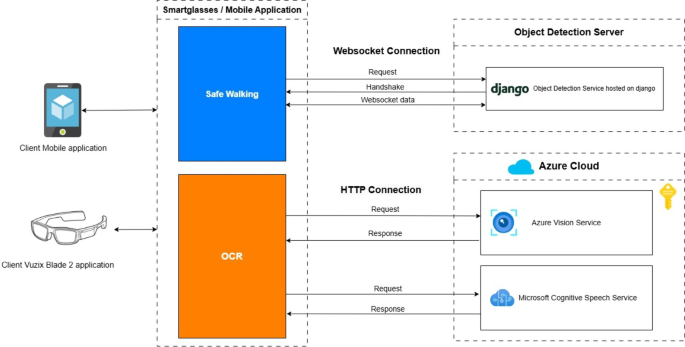
This paper introduces a novel system design leveraging Vuzix Blade 2 smart glasses to enhance the mobility and independence of visually impaired individuals. The study critically examines existing assistive navigation and object detection technologies, identifying their limitations and gaps. The designed system integrates real-time object detection, distance estimation, and OCR functionalities, providing auditory feedback through a robust and efficient pipeline. The designed application enhances the independence and safety of visually impaired individuals, particularly in navigating university campuses. A dataset comprising 15,951 annotated images from the university campus was used for training and evaluation. A comparative analysis of three YOLOv8 models (YOLOv8-N, YOLOv8-S, and YOLOv8-M) was conducted, balancing accuracy and computational efficiency to optimise system performance. The pipeline also offers a comprehensive framework for developers and researchers to build inclusive systems combining AR, computer vision, and AI. Results show high object detection accuracy (precision: 0.90, recall: 0.83) and reliable distance estimation with a minor error of 0.33 m. Results demonstrate the system’s capability to detect obstacles within one meter, provide precise distance estimation, and convert textual information into speech, validating its potential for real-world applications. This study emphasises the significant role of AI-driven solutions in advancing assistive technologies, paving the way for more accessible and inclusive navigation systems. Compared with recent assistive systems such as Smart Cane (He in CCF Trans. Pervasive Comput. Interact. 5:382–395, 2023), OrCam MyEye (Amore in J. Med. Syst. 47:11, 2023), and IrisVision (Gopalakrishnan in Comparison of visual function analysis of people with low vision using three different models of augmented reality devices, 2024), the proposed system demonstrates superior integration of detection, text recognition, and real-time feedback within a lightweight wearable device.
Sitting on a log, Being Normal about AI
1/4 Do LLMs understand? "They understand in a way that’s very different from how humans understand," Dileep George, @dileeplearning.bsky.social, of Google DeepMind at the Simons Institute workshop on The Future of Language Models and Transformers. Video: simons.berkeley.edu/talks/dileep-george-google-de…
