


Universal Ambient Intelligence
ambientROOM
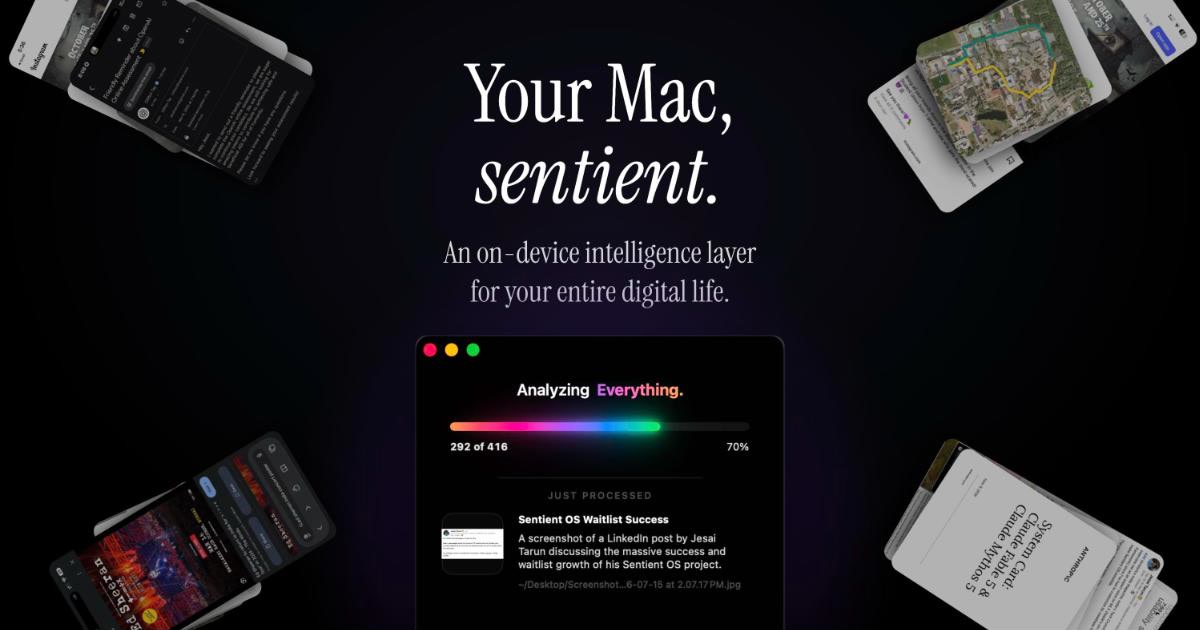
Sentient OS - Proactive Intelligence with on-device AI
An on-device LLM understands your entire life, then proactively offers to get your work done through computer use. Private by design. Free and open source.

Anthropomorphism Is Breaking Our Ability to Judge AI
Tech Policy Press fellow James Ball asks, how should we interact with a technology designed to ‘speak’ with us on what appear to be human terms?
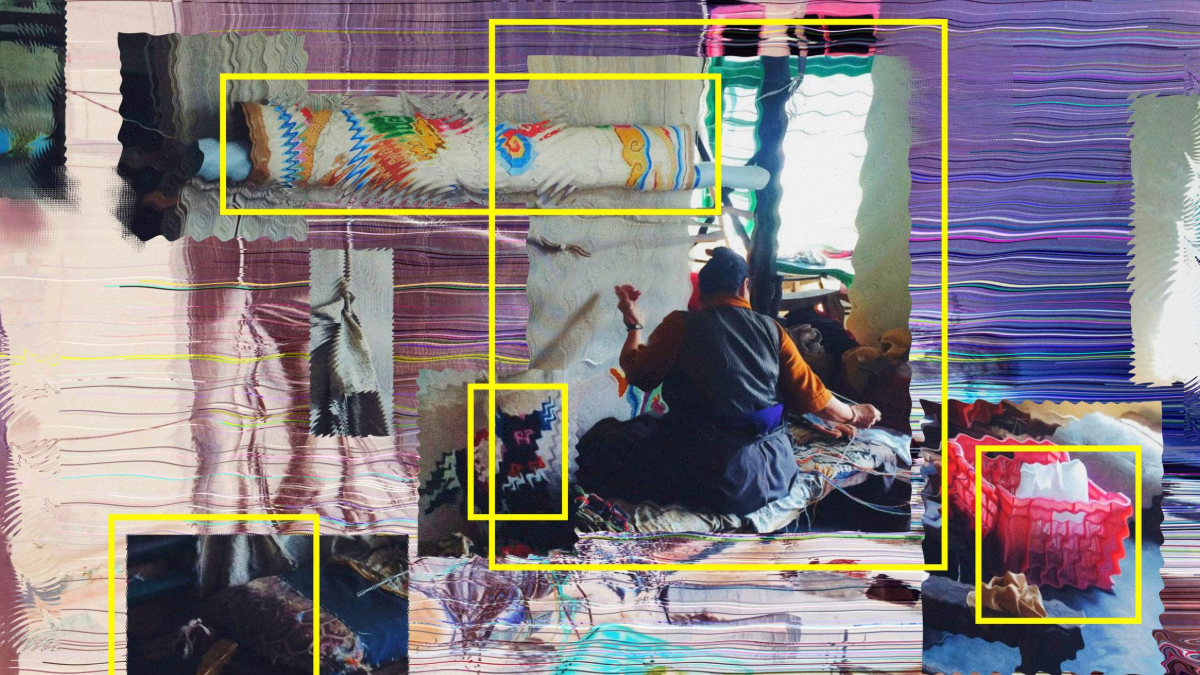
Ambient Agoras: Dynamic Information Clouds in a Hybrid World
One project in the new proactive initiative
Extending Our Perception
The world is rich with information hidden from human senses and not captured by our algorithms. The next era of AI will require Hypersensory Intelligence — AI and novel sensors engineered together to perceive reality in fundamentally new ways, catalysing breakthroughs across disciplines.
Mirai Labs: Frontier On-Device AI Lab
Models, runtime & infrastructure to make on-device AI interactive, ambient & continuous.

The path to ubiquitous AI | Taalas
By Ljubisa Bajic Many believe AI is the real deal. In narrow domains, it already surpasses human performance. Used well, it is an unprecedented amplifier of human ingenuity and productivity. Its widespread adoption is hindered by two key barriers: high latency and astronomical cost. Interactions with language models lag far...

AI as a Tool for the Mental Load | Brittany Ellich | Offprint
AI didn't make me faster at tasks. It took over the tracking, the invisible remembering that runs a household, and gave me back creative energy I forgot I had

Beautiful UI — Crafted primitives for AI-native interfaces
A small library of extremely crafted, copy-paste components for chat agents, thinking states, human-in-the-loop approvals, and everything agents need to talk to humans beautifully.
HUGE — AI Without Giving Up Your Privacy
We're building an Agentic AI Platform running on your Device that lives with YOU, isolated from the cloud, fundamentally reimagining the relationship between humans and artificial intelligence through ownership, privacy, and massive context. In an age of capture and control, HUGE sells independence and sovereignty.
Where the flower grows
Air gapped intelligence, local LLMs, and the case for private AI

Socially Minded Intelligence: How Individuals, Groups, and Artificial Intelligence Can Make Each Other Smarter (or Not)
A core part of human intelligence is the ability to work flexibly with others to achieve goals. The incorporation of artificial agents into human spaces is making increasing demands on artificial intelligence (AI) to demonstrate and facilitate this ability. However, this kind of flexibility is not well understood because existing approaches to intelligence typically construe this either as an individual-difference trait or as a property of groups. We argue that by focusing either on individual or collective intelligence without considering their dynamic interaction, existing conceptualizations of intelligence limit the potential of people and AI systems. To address this impasse, we propose a new kind of intelligence, 'socially minded intelligence', that can be applied to both individuals and collectives. We outline how socially minded intelligence might be measured and cultivated within people, how it might be modelled in AI agents, and how it might be applied to other intelligent systems.

Environments Hub: A Community Hub To Scale RL To Open AGI
RL environments are the playgrounds where agents learn. Until now, they’ve been fragmented, closed, and hard to share. We are launching the Environments Hub to change that: an open, community-powered platform that gives environments a true home.Environments define the world, rules and feedback loop of state, action and reward. From games to coding tasks to dialogue, they’re the contexts where AI learns, without them, RL is just an algorithm with nothing to act on.
