


What it looks like when opportunity becomes programmable.
Dark Factories: Rise of the Trycycle – Dan Shapiro's Blog
Companies are now producing Dark Factories – engines that turn specs into shipping software. The implementations can be complex and sometimes involve Mad Max metaphors. But they don’t have to be like…
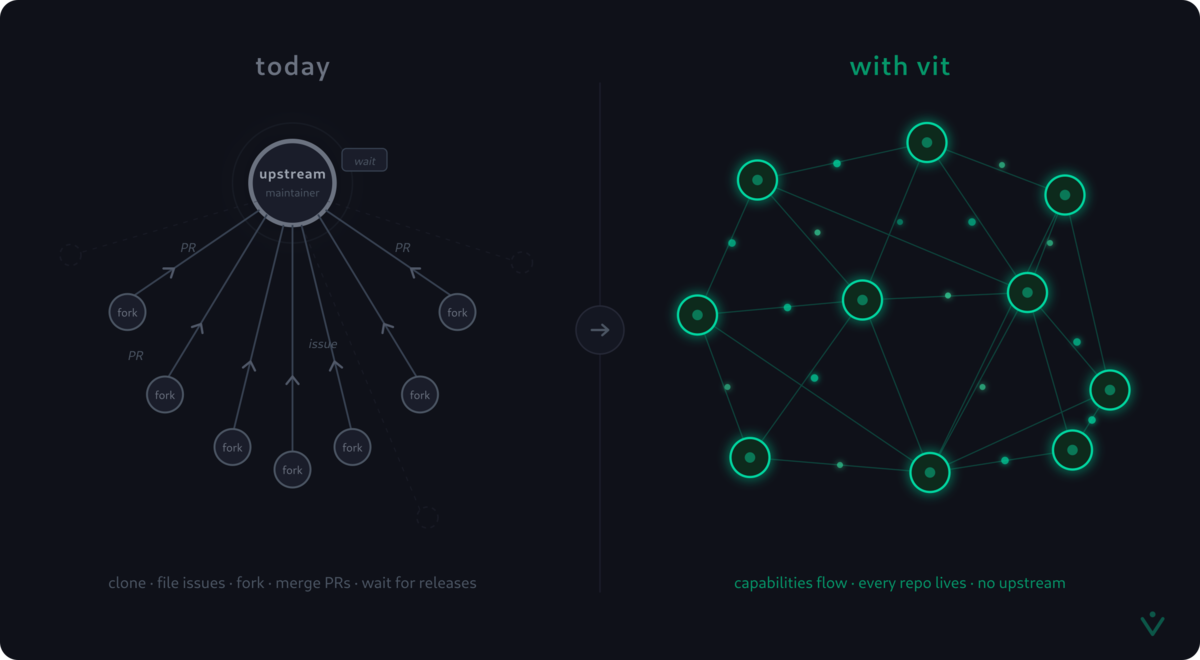
Seize the Means of Computation - ProMarket
To regain internet autonomy from Big Tech companies, lower switching costs with legislation that allows new services to subvert network effects and encourage adversarial interoperability. Too often, our discussion of Big Tech’s dominance starts and ends with a simplistic account of network-effects-driven inevitability, as though the winner-take-all market we have today could not have been […]

Build to think - gordonbrander.com
It's best to explore new opportunity spaces through prototyping. To try to model an opportunity space in your head is to explore that opportunity space in your imagination. You'll only find what you already know.
AI's Trillion-Dollar Opportunity: Sequoia AI Ascent 2025 Keynote
Self-driving infrastructure
At Vercel, we’re building self-driving infrastructure, a system that autonomously manages production operations, improves application code using real-world insights, and learns from the unpredictable nature of production itself.

Opportunity Solution Tree: A Visual Tool for Product Discovery
Learn how to use the Opportunity Solution Tree framework to create products customers crave and generate more revenue.
Everything is ugly, so go build something that isn't — Raiza Martin, Huxe (ex NotebookLM)
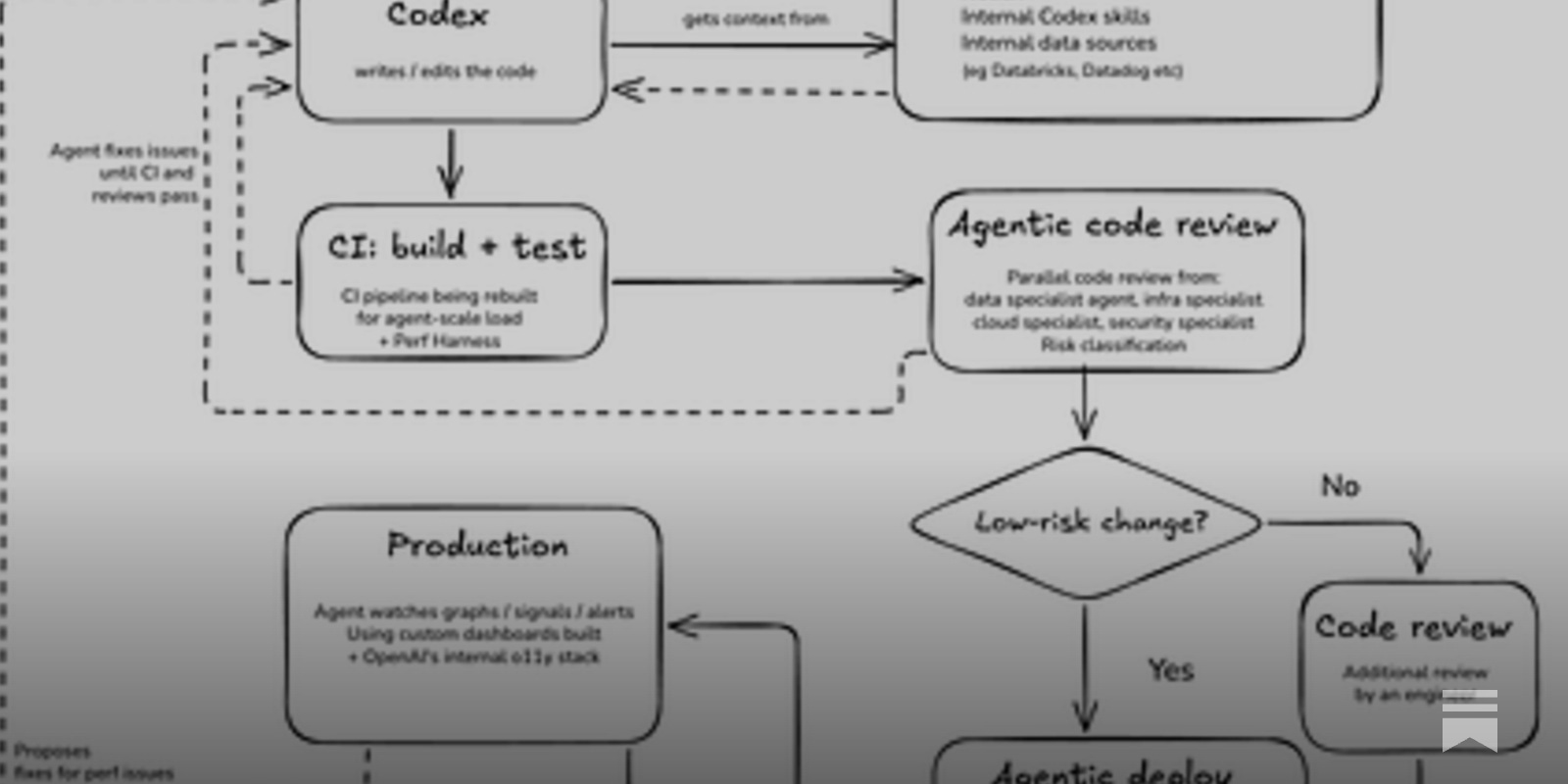
Inside OpenAI’s agentic software factory
A deepdive into how Codex has “taken over” OpenAI, how the frontier lab builds its agentic software factory, and the engineering challenges of one billion users. Details from inside OpenAI
Modelling the viability of opportunity networks
How big should a peer-to-peer network be before it generates a steady stream of deals?

Mini-Conference on Open Source, AI and Entrepreneurship · Luma
Co-create the Future Now Join us at our Mini-Conference on Open Source, AI and Entrepreneurship. Connect with thought leaders, innovators, founders, investors,…

Helping Build Canada’s AI Workforce with a $13 Million AI Opportunity Fund
Canada stands at an exciting inflection point. Artificial intelligence (AI) is rapidly reshaping our world, offering opportunities to transform how we work and empower p…

AI Was Made for RevOps
A new wave of GenAI and AI agents opens the door to faster, smarter, more scalable revenue teams—and higher revenue growth.

The New Software Lifecycle
I co-wrote a Google whitepaper about how AI is changing the software lifecycle. I'm not going to summarize the whole thing. Instead, here are the handful of ...

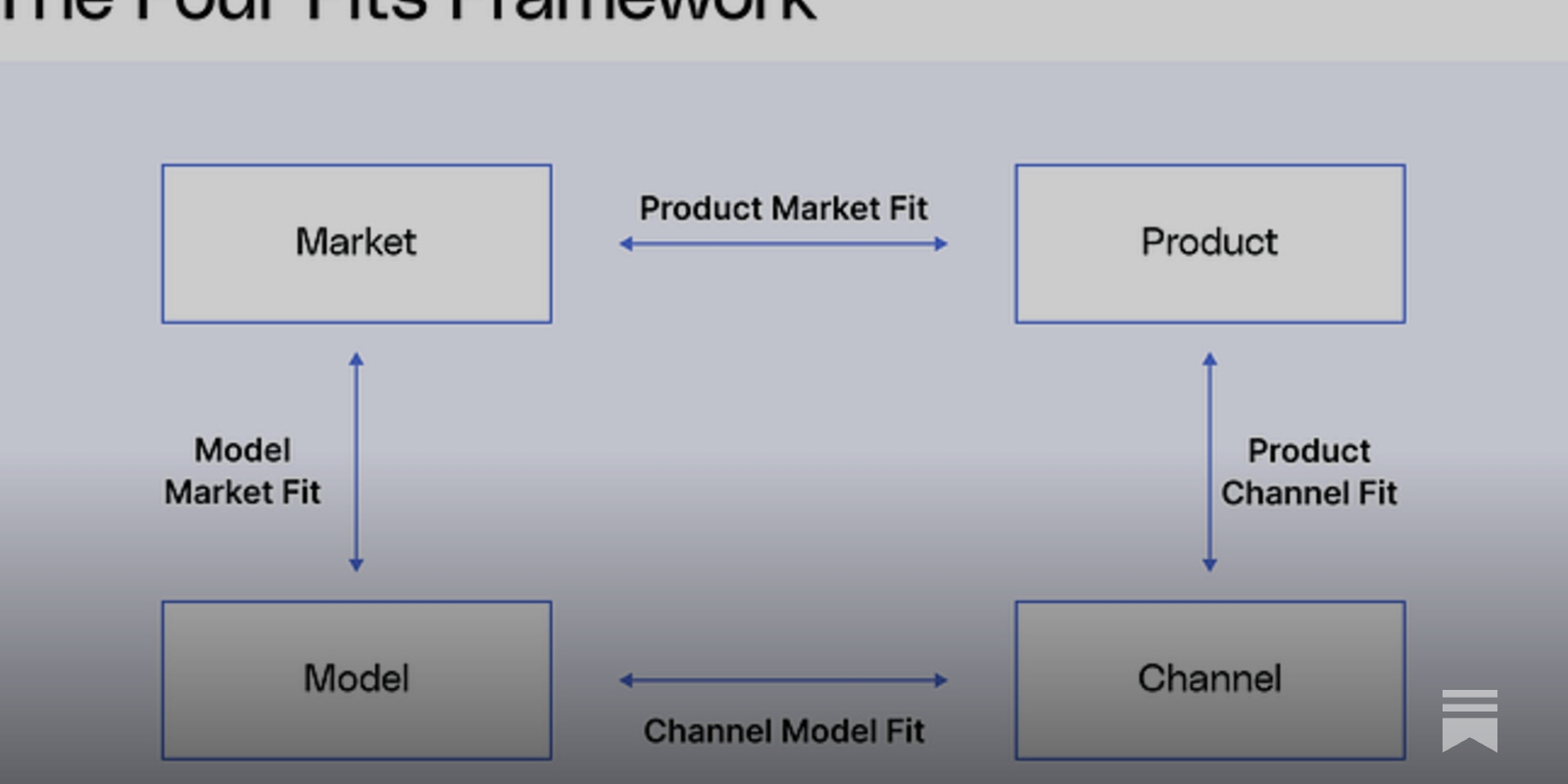
The Four Fits: A Growth Framework for the AI Era
Everything's changed. Here's how to reach $100m at venture speed.
CEO-Bench: Can Agents Play the Long Game?
Language model agents are becoming proficient executors at isolated, short-horizon tasks such as software engineering and customer service. Yet real-world challenges require a combination of sophisticated skills that remain largely untested in agents: (1) navigating long horizons amid uncertainty; (2) acquiring information in noisy environments; (3) adapting to a changing world; (4) orchestrating multiple moving parts toward a coherent goal. We introduce CEO-Bench, which evaluates these capabilities together by simulating a representative real-world task: operating a startup for 500 days. An agent manages pricing, marketing, budgeting, and many other aspects of a fictional company through a programmable Python interface, operating in the same environment and facing the same challenges as a human CEO. Success demands analyzing noisy, interconnected business databases, translating signals into sound strategy, and coordinating many decisions with programming. The strongest agents write sophisticated code that simulates customer cohorts to forecast future cash and mines negotiation history to uncover hidden customer preferences. Even so, most state-of-the-art models struggle in this environment. Only Claude Opus 4.8 and GPT-5.5 finish above the $1M starting balance, and neither consistently turns a profit. CEO-Bench takes a first step toward measuring the intelligence required to drive sustained, adaptive progress over time.

The future of programming and computing

Trends and adjacent possibles for the future of how computers are used and programmed
LIMITS 2026 -- Workshop on Computing within Limits
vit — open source is social

Humans approve intent, machines prove conformance
Introducing System One Models and Jev - TypeSafe AI Blog

Message from our CEO: After co-inventing ChatGPT, I kept asking myself: why have superhuman chat models not led to AGI? I’ve spent the last…
On-device intelligence for every product