

There are some crucial areas where computer technology needs major improvement to genuinely benefit users. Unfortunately, most are not feasible to pursue using current generation software technologies. No mere collection of apps would suffice. An architectural solution is needed to move forward. This has been the goal of my research into infocentric data and software architecture, a superset of "decentralized" and cryptography-oriented designs.
Encrypted Spaces — Research preview
An architecture for collaborative applications where data is encrypted and operations are cryptographically verifiable.

Building Software for a Zero Trust World
How we are helping to build Zero Trust architectures that safeguard the most protected data in the world
The Decentralized Internet Is Here, With Some Glitches
Privacy advocates and venture capitalists want to circumvent the tech giants with apps using encrypted data stored on networks of computers.
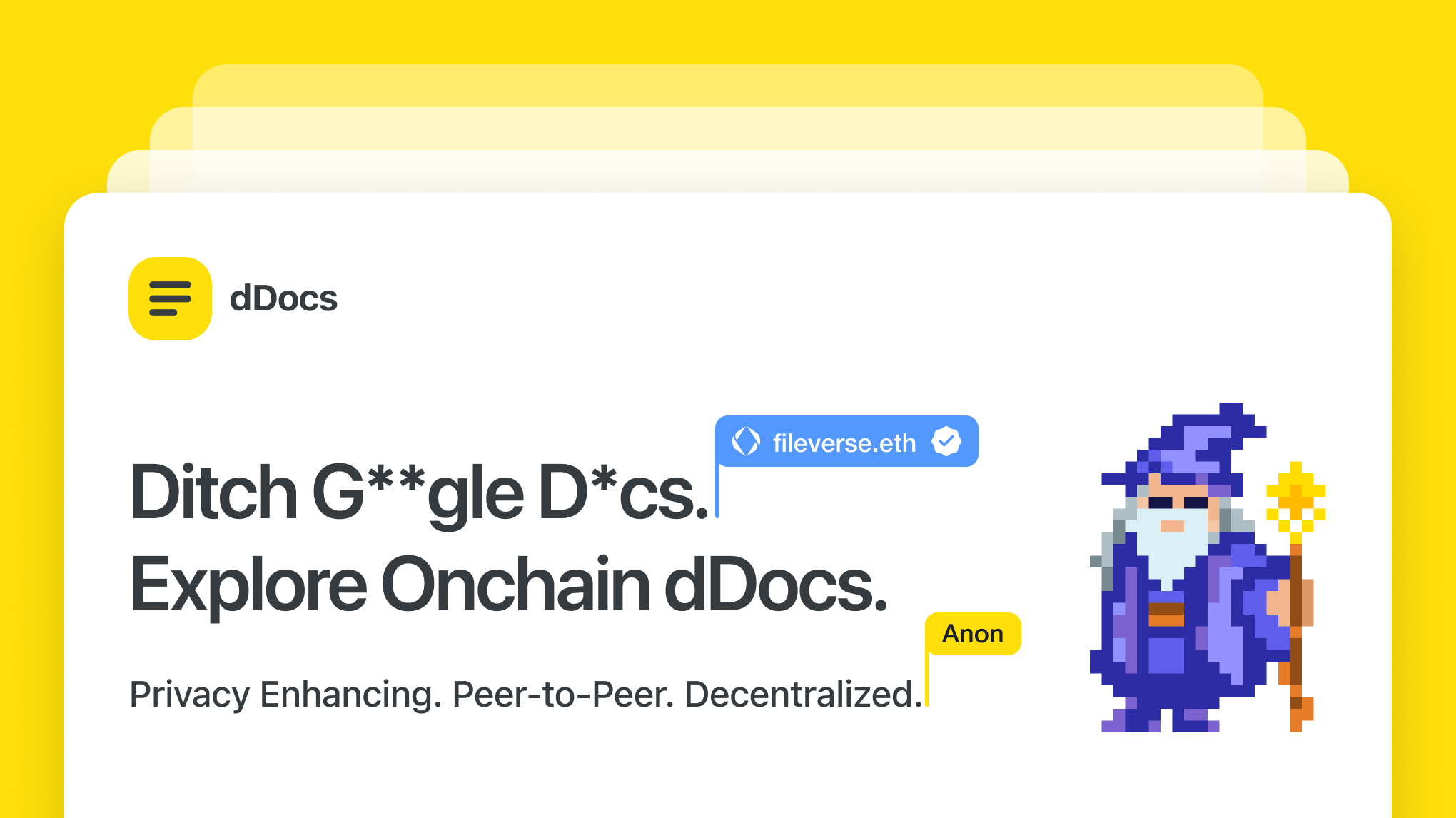
Your decentralised & privacy enhancing alternative to google docs
Decentralised Docs: peer-to-peer document editor that keeps your data secure with end-to-end encryption. Real-time collaboration, onchain.
Room to grow: Building collaborative, open software
We examine one approach to collaborative, open software by building on Matrix, a secure, decentralised, real-time communication protocol with generic database capabilities hiding beneath its current focus on chat.
Decentralizability
What makes software decentralizable? Immutable data, universal IDs, user-controlled keys.

Local-first Software
Exploring software architecture that returns data to users and enables collaboration in every tool.
A data minimization model for embedding privacy into software systems
Modern software systems (social networking, banking and shopping applications) are becoming increasingly dependent on our data. These systems need data to provide various economic and social benefits to users as well as businesses. However, the extensive use of personal data in systems poses a threat to user privacy. Therefore, privacy laws expect software systems to practice Data Minimization (DM), to minimize data in software systems. This has put software developers in a dilemma to minimize user data to provide user privacy and maximize user data for enhanced system functionality. Following the design science research approach, in this research we propose and evaluate a methodology that enables developers to make their decisions to minimize user data in software systems through understanding data. The methodology encourage developers to think of the ways they would use data in a system design focusing on the storage and sharing of data. Developers in the three experiments conducted to evaluate the methodology agreed that it enables them to think of the ways they use data in system designs and it helps them to make decisions to minimize using data in a system design. Developers also showed positive intention to use the proposed methodology within system development activities.
Designing Data-Intensive Applications
Data is at the center of many challenges in system design today. Difficult issues need to be figured out, such as scalability, consistency, reliability, efficiency, and... - Selection from Designing Data-Intensive Applications [Book]
NextGraph - Decentralized, encrypted and local-first platform and framework, towards the better internet we all deserve!
Features a social network, shared documents, productivity tools, an app store, and more! You can use NextGraph for free : resilient, secure, private and encrypted. You own your data and software! Developers can build new web3.0 local-first apps with our open source framework, based on open standards, with CRDTs, E2EE, Linked Data, JSON, Markdown...
Research | Tiles Book
Progressive experiments exploring decentralized software technologies for privacy adoption at scale.
LLM Agents Are the Antidote to Walled Gardens
While the Internet's core infrastructure was designed to be open and universal, today's application layer is dominated by closed, proprietary platforms. Open and interoperable APIs require significant investment, and market leaders have little incentive to enable data exchange that could erode their user lock-in. We argue that LLM-based agents fundamentally disrupt this status quo. Agents can automatically translate between data formats and interact with interfaces designed for humans: this makes interoperability dramatically cheaper and effectively unavoidable. We name this shift universal interoperability: the ability for any two digital services to exchange data seamlessly using AI-mediated adapters. Universal interoperability undermines monopolistic behaviours and promotes data portability. However, it can also lead to new security risks and technical debt. Our position is that the ML community should embrace this development while building the appropriate frameworks to mitigate the downsides. By acting now, we can harness AI to restore user freedom and competitive markets without sacrificing security.

Privacy by design: a formal framework for the analysis of architectural choices
The privacy by design approach has already been applied in different areas. We believe that the next challenge in this area today is to go beyond individual cases and to provide methodologies to explore the design space in a systematic way. As a first step in this direction, we focus in this paper on the data minimization principle and consider different options using decentralized architectures in which actors do not necessarily trust each other. We propose a framework to express the parameters to be taken into account (the service to be performed, the actors involved, their respective requirements, etc.) and an inference system to derive properties such as the possibility for an actor to detect potential errors (or frauds) in the computation of a variable. This inference system can be used in the design phase to check if an architecture meets the requirements of the parties or to point out conflicting requirements.

Decentralized Information and the Future of Software - Draft
This work is licensed under a Creative Commons Attribution-NonCommercial-ShareAlike 4.0 International License.
What is Malleable Software Now | Bryan Min (02-27-2026)
There are a lot of architectural bits, but if I had to pick one design feature it's Lexicons. Lexicons allow for new shared data types and structures in a way that are immediately available on network for any other service provider to adopt. Getting shared agreement in ActivityPub is hard.

Pedro Vezza
Why did you decide to bet on atproto over Mastodon or similar?
