Computational thinking courses are no longer exclusive to engineering and computer science students in higher education but have become a requirement in other fields, as well as for students in secondary, primary, and even early childhood education. Computational notebooks, such as Jupyter, are popular solutions to develop the programming skills typically introduced in these courses. However, these solutions often require technical infrastructure and lack support for rich educational experiences that integrate discussion, active feedback, and learning analytics. In this paper, we introduce a web application designed to address these challenges. We present blended learning scenarios supported by this application and evaluate them in an eight-week computational thinking course comprising 67 students pursuing a Bachelor in Business and Economics. We include in our results the impact of the disruption caused by the COVID-19 pandemic, which forced a move from blended to online distance learning for the second half of our evaluation.
Computational Thinking for All Students
Posted by Maggie Johnson, Director of Education and University Relations, Google(Crossposted on the Google for Education Blog, and the the Huffingt...

Callysto: Bringing Jupyter and Computational Thinking to the K-12 Curriculum
Cybera and the Pacific Institute for Mathematical Sciences are participating in the new national CanCode program, to develop coding and digital skills from kindergarten to grade 12. With the launch of the Callysto project, we are creating tools and frameworks that help teachers bring computational thinking into their math, science, social sciences, and humanities courses - giving students the analytical skills needed to comprehend the digital world. Leveraging the Jupyter 'All-in-One' Science Platform to put friendly yet powerful compute tools in classroom settings, we are creating showcase modules and workshop training for K-12 teachers to incorporate data and computing into the broad curriculum. At this presentation, you will learn about how Callysto will: Bring computational thinking to classrooms through K-12 teacher training Create opportunities to participate in free workshop training sessions and content creation Help K-12 teachers gain public recognition for participating in this educational training project Note: This presentation is related to our 2017 BCNET presentation on "Bringing The Thunder: Deploying Jupyter Notebooks For Research, Education, And Innovation." View Slidedeck
Interleaving Computational and Inferential Thinking: Data Science for Undergraduates at Berkeley · Issue 3.2, Spring 2021
The undergraduate data science curriculum at the University of California, Berkeley is anchored in five new courses that emphasize computational thinking, inferential thinking, and the perspective gained by working on real-world problems. We believe that interleaving these elements within our core courses is essential to preparing students to engage in data-driven inquiry at the scale that contemporary scientific and industrial applications demand. This new curriculum is already reshaping the undergraduate experience at Berkeley, where these courses have become some of the most popular on campus and have led to a surging interest in a new undergraduate major and minor program in data science.

Keynote: Bridging Gaps with Code: Transforming K12 Education with Jupyter Everywhere - I. Martinez
Undergraduate Computational Science and Engineering Education
It is widely acknowledged that computational science and engineering (CSE) will play a critical role in the future of the scientific discovery process and engineering design. However, in recent years computational skills have been deemphasized in the curricula of many undergraduate programs in science and engineering. There is a clear need to provide training in CSE fundamentals at the undergraduate level. An undergraduate CSE program can train students for careers in industry, education, and for graduate CSE study. The courses developed for such a program will have an impact throughout the science, technology, engineering, and mathematics (STEM) undergraduate curriculum. This paper outlines the content of a CSE curriculum, the skills needed by successful graduates, the structure and experiences of some recently developed CSE undergraduate programs, and the potential career paths following a CSE undergraduate education.

Why Computing Students Should Contribute to Open Source Software Projects
Learning to program is—for many practical, historical, as well as some vacuous reasons—a rite of passage in probably all computer science, informatics, software engineering, and computer engineering courses. For many decades, this skill would reliably set computing graduates apart from their peers in other disciplines. In this Viewpoint, I argue that in the 21st century programming proficiency on its own is neither representative of the skills that the marketplace requires from computing graduates, nor does it offer the strong vocational qualifications it once did. Accordingly, I propose that computing students should be encouraged to contribute code to open source software projects through their curricular activities. I have been practicing and honing this approach for more than 15 years in a software engineering course where open source contributions are an assessed compulsory requirement.2 Based on this experience, I explain why the ability to make such contributions is the modern generalization of coding skills acquisition, outline what students can learn from such activities, describe how an open source contribution exercise is embedded in the course, and conclude with practices that have underpinned the assignment's success.

Nicolas Poulain Capytale: a case of large scale use of jupyter notebooks in education | JupyterCon
Math Academy Wants To Supercharge Your Learning
A review of the online learning program
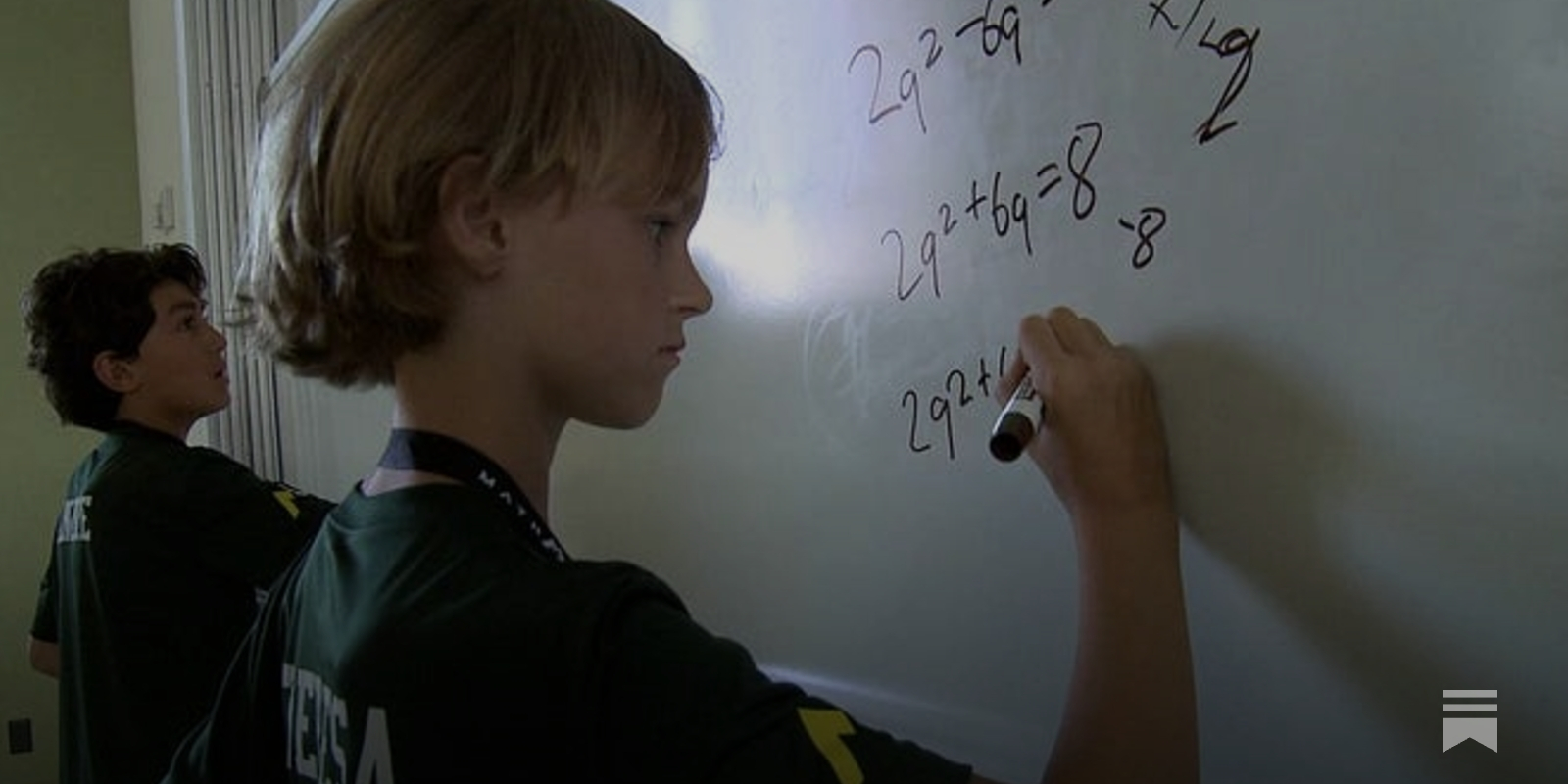
Broadening Access to Data Science Education in High School and Higher Education through Open Source Tools and Training
As data plays a more integral part to our daily lives, there is a growing need for data science education. However, access to curriculum, tooling, and infrastructure is not readily available to many students in the U.S. We review the current state of data science education tools and implementations as well as highlight a set of emerging tools and technologies. We conclude that broadening data science education requires a multifaceted approach, involving technological accessibility, instructional equity, curricular relevance, and long-term sustainability.
The education of a computer
Announcing CodeCombat Classroom Curriculum, Seed Round from 3KVC, a16z, and Allen & Co
I remember when I wrote my first lines of code. I was a freshman in college, and I had signed up for the introductory computer science course on a whim after choosing my practical career-advancing courses: writing, chemistry, poetry, and go [https://en.wikipedia.org/wiki/Go_(game)]. I
CUNY’s Computer Science Growing Pains
After a decade-long enrollment boom, CUNY faces faculty shortages and pressure to prepare students in the field for an AI-driven job market.

Easy-to-Use Cloud Computing for Teaching Data Science
One of the biggest hurdles of teaching data science and programming techniques to beginners is simply getting started with the technology. With multiple versions of the same coding language availab...

Broadening Access to Data Science Education: Open Source Tools and Training in High School and Higher Education · Issue 8.3, Summer 2026
As data play a more integral part to our daily lives, there is a growing need for data science education. However, access to curriculum, tooling, and infrastructure is not readily available to many students in the United States. We review the current state of data science education tools and implementations as well as highlight a set of emerging tools and technologies. We conclude that broadening data science education requires a multifaceted approach, involving technological accessibility, instructional equity, curricular relevance, and long-term sustainability.

Developing Competencies for the Future of Data and Computing: The Role of K-12
Skills in computing and data are critical for students to thrive in a data-driven world. While efforts to expand learning in these areas have grown, opportunities to participate are unevenly distributed and lack coherence across grades and subjects. Our new report identifies seven shared competencies for data and computing and how they align with existing STEM standards and classroom practice. Through addressing curriculum, teacher preparation, professional learning, technology access, assessment, and system-level coordination, the report calls for sustained, coordinated action to ensure that all students have meaningful opportunities to develop literacy in data and computing.

Scratch is a big deal
While none of us were paying attention, Scratch has transformed from a programming language for kids to a massive online community of self-guided, student-pr...