
Despite advances in browser tooling, automated evaluation, lab tools, guidance, and runtimes, modern teams struggle to deliver even decent performance with today's popular frameworks. This is not a technical problem per se. It's a management issue, and one that teams can conquer with the right frame of mind and support.
A Guide to Measuring Engineering Team Performance
“You can’t manage what you can’t measure.” While software development practices constantly change, there will always be a tier of truly top engineering teams who stand above…

Is Project Management Killing Good Products, Teams and Software? - Slashdot
New submitter mikeatTB writes: "For software development, no significant developer activity is predictable or repetitive; if it were, the developers would have automated it already," writes Steven A. Lowe, Principal Consultant Developer at ThoughtWorks, via TechBeacon. "In addition, learning is esse...

Adopt and scale Team Topologies: platform-as-a-product, templates, more. — Team Topologies - Organizing for fast flow of value
Accelerate value with Team Topologies: measure cognitive load, define team boundaries, apply inverse Conway, readiness assessments, and more for fast delivery.

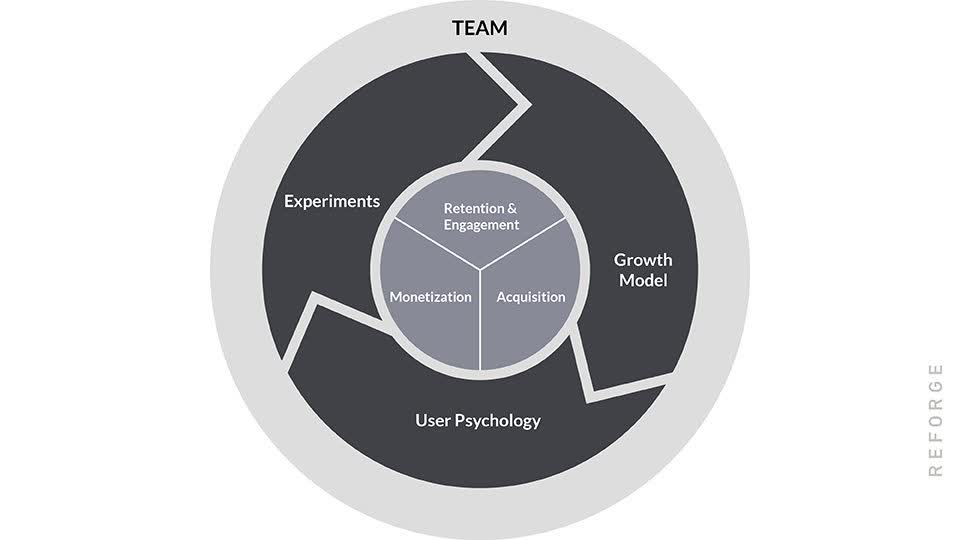
Building Growth: Product, Process, and Team | Reforge Blog
Reforge drives team performance, with the most actionable learning from vetted operators that your team will actually use and apply.
Habits of High-Functioning Teams
I often struggle to explain what it means to be part of a high-functioning software team. Sure, there are mountains of literature, and an entire genre of LinkedIn thought leadership that professes all kinds of guidelines and heuristics about what makes teams work, but in my experience, it’s hard to internalize these ideas and follow someone else’s model if you’ve never seen what good looks like.
Growth Wins When Built On A Solid Foundation of Retention & Engagement | Reforge Blog
Reforge drives team performance, with the most actionable learning from vetted operators that your team will actually use and apply.

What Is Strategy?
Today’s dynamic markets and technologies have called into question the sustainability of competitive advantage. Under pressure to improve productivity, quality, and speed, managers have embraced tools such as TQM, benchmarking, and re-engineering. Dramatic operational improvements have resulted, but rarely have these gains translated into sustainable profitability. And gradually, the tools have taken the place of strategy. In his five-part article, Michael Porter explores how that shift has led to the rise of mutually destructive competitive battles that damage the profitability of many companies. As managers push to improve on all fronts, they move further away from viable competitive positions. Porter argues that operational effectiveness, although necessary to superior performance, is not sufficient, because its techniques are easy to imitate. In contrast, the essence of strategy is choosing a unique and valuable position rooted in systems of activities that are much more difficult to match. Porter thus traces the economic basis of competitive advantage down to the level of the specific activities a company performs. Using cases such as Ikea and Vanguard, he shows how making trade-offs among activities is critical to the sustainability of a strategy. Whereas managers often focus on individual components of success such as core competencies or critical resources, Porter shows how managing fit across all of a company’s activities enhances both competitive advantage and sustainability. While stressing the role of leadership in making and enforcing clear strategic choices, Porter also offers advice on how companies can reconnect with strategies that have become blurred over time.

Mozilla Corporation org changes to accelerate our path to the future | The Mozilla Blog
Over the past few months, we’ve been accelerating our ability to execute outstandingly, make faster decisions, and realize our multi-product ambition


Complexity and Strategy | HackerNoon
I struggled with how to think about complexity through much of my career, especially during the ten years I spent leading Office development. Modeling complexity impacted how we planned major releases, our technical strategy as we moved to new platforms, how we thought about the impact of new technologies, how we competed with Google Apps, how we thought about open source and throughout “frank and open” discussions with Bill Gates on our long term technical strategy for building the Office applications.
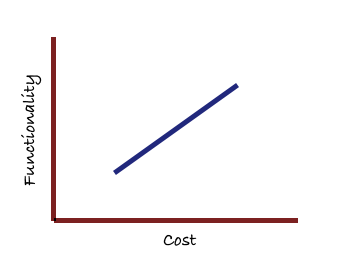
Complexity and Strategy | HackerNoon
I struggled with how to think about complexity through much of my career, especially during the ten years I spent leading Office development. Modeling complexity impacted how we planned major releases, our technical strategy as we moved to new platforms, how we thought about the impact of new technologies, how we competed with Google Apps, how we thought about open source and throughout “frank and open” discussions with Bill Gates on our long term technical strategy for building the Office applications.
Random Thoughts on Engineering Management
I have ended up managing people at the last three places I’ve worked, over the last 18 years. I can honestly say that only in the last few years have I really started to embrace the job of managing. Here’s a collection of thoughts and observations: Growth: Ideas and Opinions and Failures Expose your team to new ideas and help them create their own voice. When people get bored or feel they aren’t growing, they’ll look elsewhere. Give people time to explore new concepts, while trying to keep results and outcomes relevant to the project.
The 10 Best Practices for Remote Software Engineering
At face value, when we think of developer productivity we might think of effectiveness in time management, communication, and task completion.14 Although we are drawn to personal workflow or time management tools, and learning secrets to improving our productivity, ironically this quest for the holy grail can sometimes take us off course and be a detriment to our productivity. The problem is that accomplishing tasks or having a filled up schedule does not necessarily equate to productivity. Creating a formulaic working strategy, as was common in the last century, does not either.a,8,13 Productivity is less a quality that can be easily measured,b controlled, or improved directly with tools, but instead is a human element that manifests from developer happiness.

Reckoning: Frontend's Lost Decade | Alex Russell | performance.now() 2024
The Market for Lemons - Infrequently Noted
New web services are being built to a self-defeatingly low UX and performance standard, and existing experiences are now pervasively re-developed on unspeakably slow, JS-taxed stacks. At a business level, this is a disaster, raising the question: why are new teams buying into stacks that have failed so often before?