

Frameworkism is now the dominant creed of today's frontend discourse, and it's bullshit. We owe it to ourselves and to our users to reject dogma and embrace engineering as a discipline that strives to serve users first and foremost.
Do Frameworks Matter Anymore?
I'm not trying to be facetious. I want to really want consider whether or not, in 2026, in the age of vibe coding, agentic programming, loop or graph or whatever diagrammatic metaphor-based engineering is most popular, does it matters what web framework you use? More importantly (to me and my particular interests), and at the risk of Betteridge-ing myself: should we make new frameworks?
What is a framework? Understanding their purpose, value, development and use
Many frameworks exist across the sciences and science-policy interface, but it is not always clear how they are developed or can be applied. It is also often vague how new or existing frameworks are positioned in a theory of science to advance a specific theory or paradigm. This article examines these questions and positions the role of frameworks as integral but often vague scientific tools, highlighting benefits and critiques. While frameworks can be useful for synthesizing and communicating core concepts in a field, they often lack transparency in how they were developed and how they can be applied. Positioning frameworks within a theory of science can aid in knowing the purpose and value of framework use. This article provides a meta-framework for visualizing and engaging the four mediating processes for framework development and application: (1) empirical generalization, (2) theoretical fitting, (3) application, and (4) hypothesizing. Guiding points for scholars and policymakers using or developing frameworks in their research are provided in closing.

Frontend Without the Browser–WTH?!?
What is the state of frontend frameworks and libraries in 2026? This is a question many frontend developers today are wrestling with, and it appears one answer is that frontend has moved deeper into the stack. Take gpuix-svelte, an experimental project built by Stanislav Khromov, a Svelte core team member, that renders the JavaScript framework
It’s Time to Rethink the Assumptions That Guide the Design of Tech Platforms
Victoria Sgarro and Madhav Tipu Ramachandran argue that the current state of platforms is a consequence of philosophical assumptions that need to be challenged.
The Unbearable Brightness of Seeing
Is “frame architecture” our escape route from the dogma trap of endless culture wars?

Stop learning frameworks
We are developers. We need to stay up to date with technology. Every day, we learn programming languages, frameworks, and libraries. The more modern tools we know — the better. Keeping up to date with Angular, React, Vue, Riot, Ember, Knockout is fun. But we are wasting our time.
The Cost of Frameworks
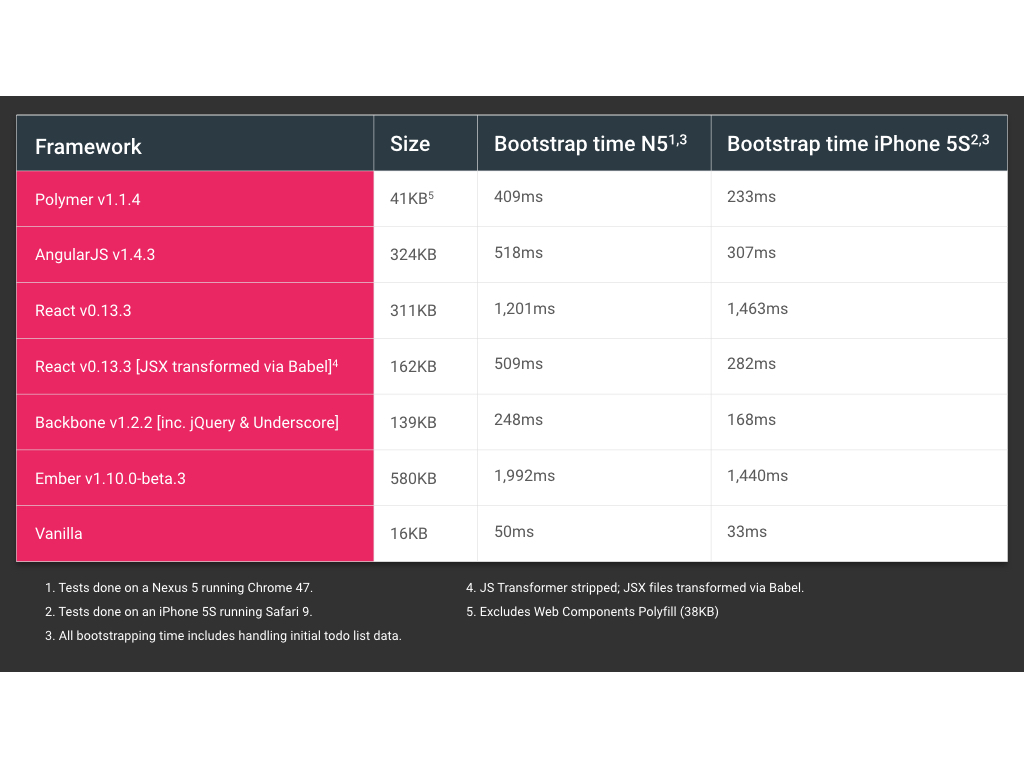
I recently delivered a talk at FFConf in Brighton, called "You should use <insert library / framework here>, it's the bestestest!". I wanted to do a write-up of the presentation's content here, hopefully so it can start a broader conversation that I think we need to have, mainly around the cost of modern frameworks on mobile devices.
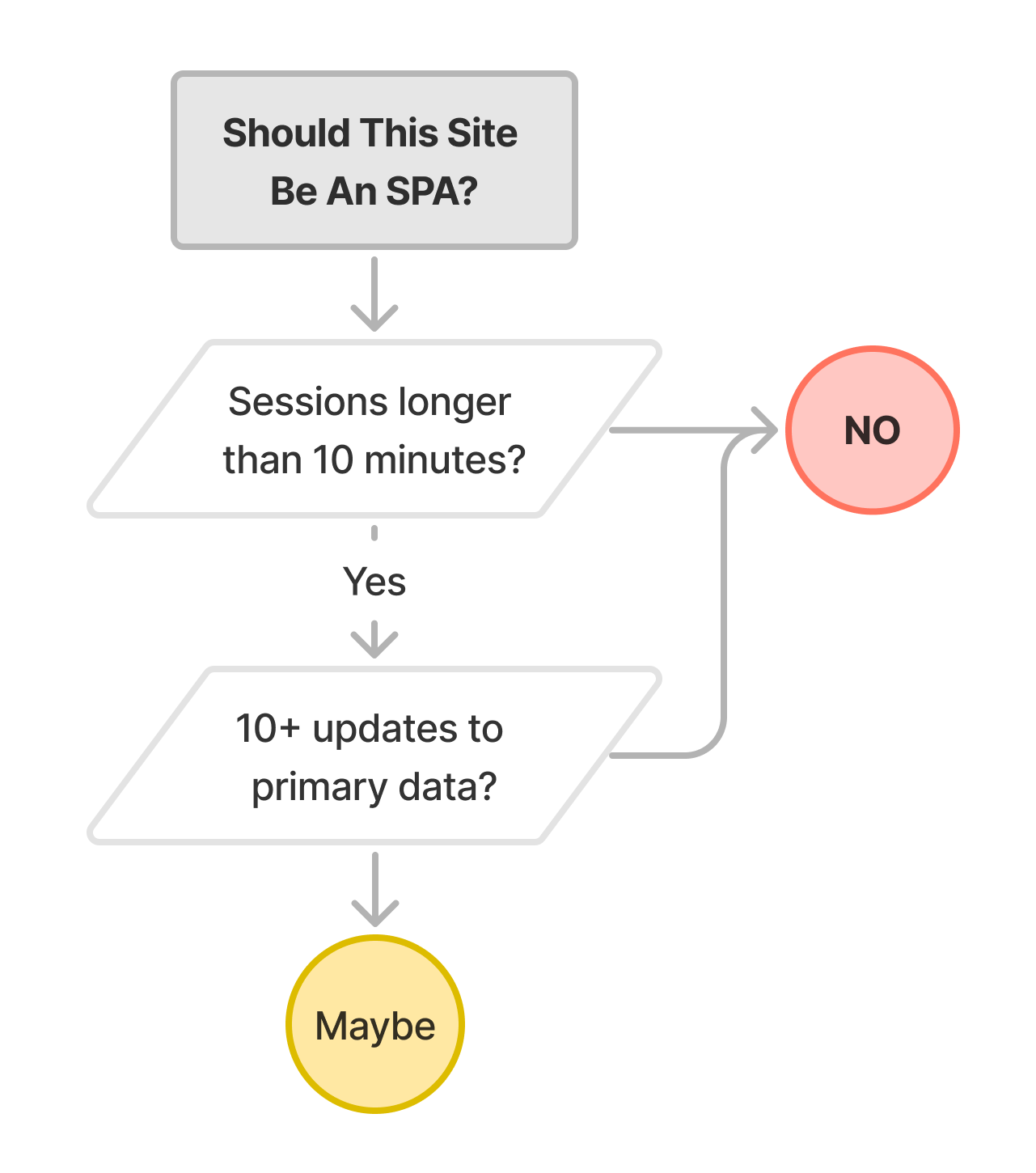
Do you really want an SPA framework?
First, sell your soul to the framework maintainer…
progression.fyi
A collection of open source frameworks for helping designers and engineers to grow at work

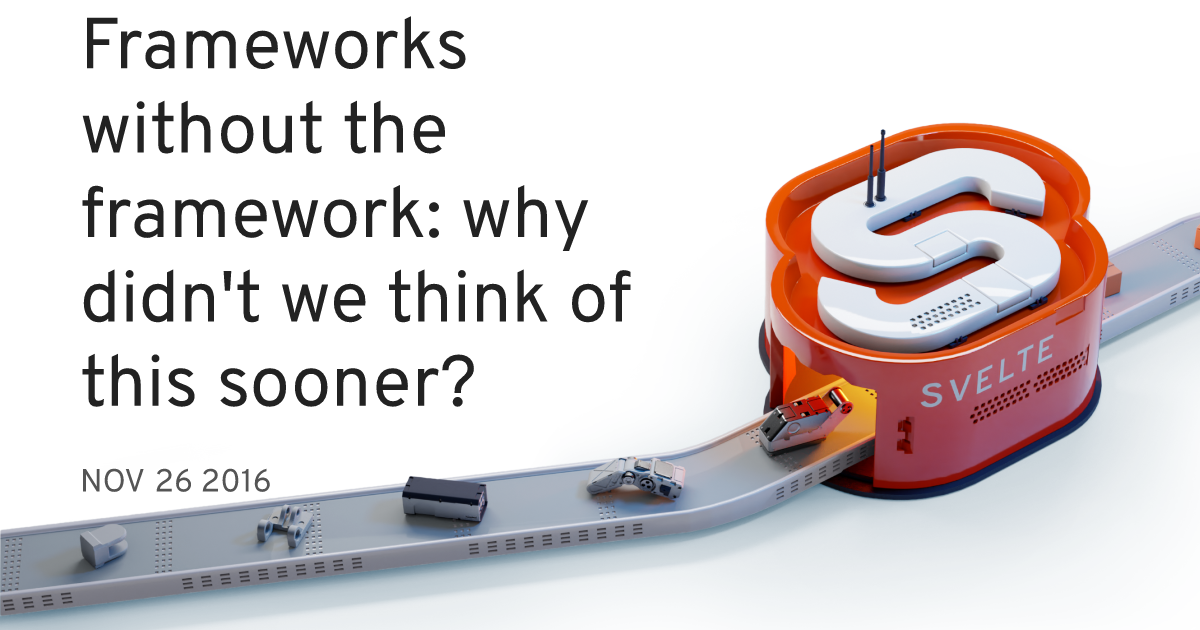
Frameworks without the framework: why didn’t we think of this sooner?
You can’t write serious applications in vanilla JavaScript without hitting a complexity wall. But a compiler can do it for you.
AT Protocol builder manifesto - WIP, comments wanted!
working title: "Why AT Protocol Will Win: A Manifesto for Building in the Atmosphere"
Cognitive Autonomous Zones: against “framework fundamentalism” — Belshaw Brain Archive
In my previous post on the “cash value” of truth, I explored how Pragmatist philosophy offers a way to test beliefs through their practical consequences. Is something, as William James would put it, “
OSF Changes: A Note to Users
The Center for Open Science announced a significant change to the Open Science Framework (OSF). This post shares what led to the change, implications, and what's next.
Alex Russell | Web Components and Model Driven Views | Fronteers 2011
There's a lot of tension between today's markup and the semantics we're trying to express in our apps. HTML5 adds a few new types to help describe common cases, but what about when there's no allegory in markup for what you're building? What we need now is infrastructure, not guilt about being "non-semantic". This talk explores new standards-track work in WebKit that's going to enable say-what-you-mean development in completely new ways.

