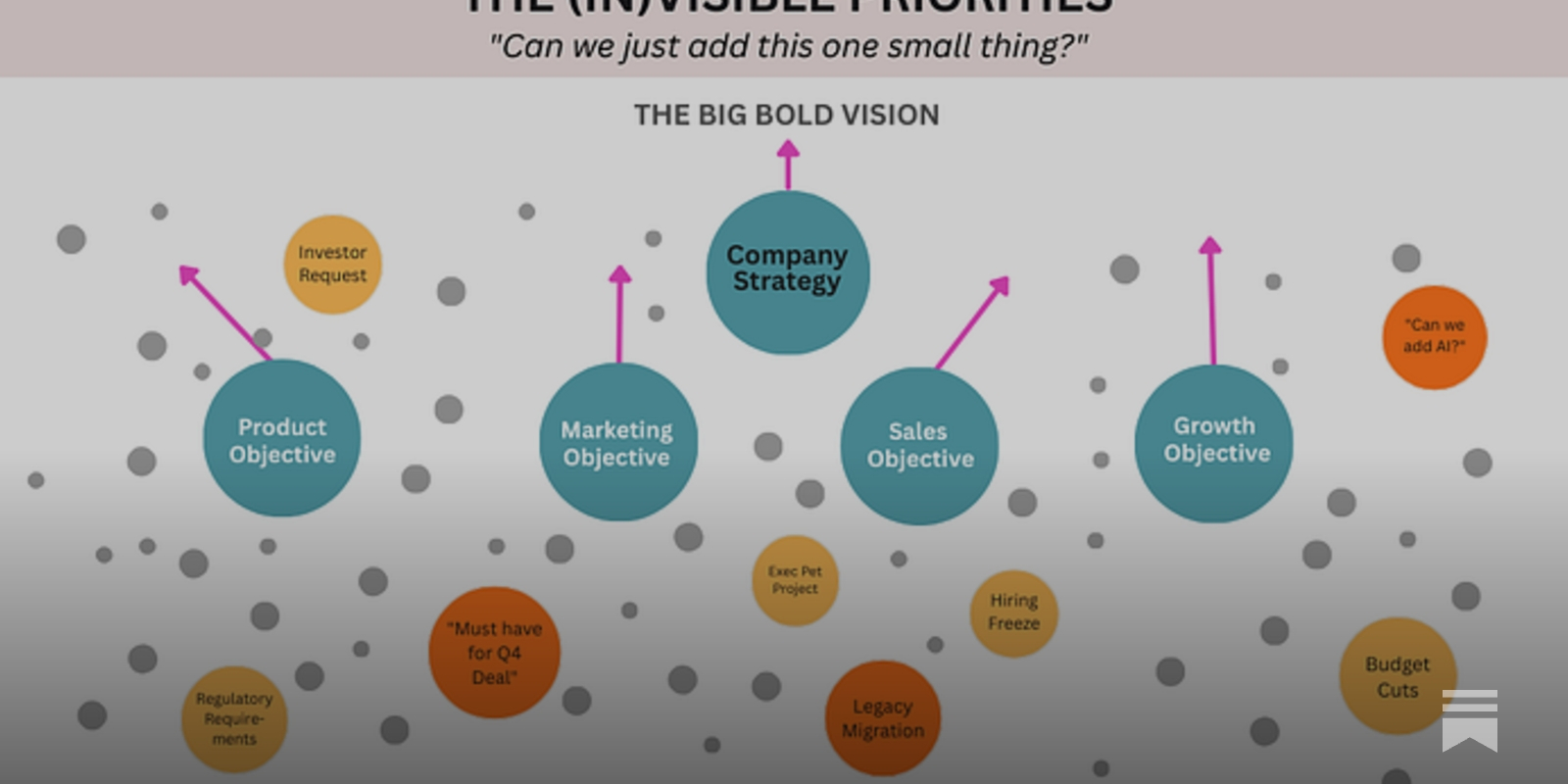
Why product teams spin in chaos despite a "clear" strategy
How to not screw up your product strategy | Jade Rubick - Engineering Leadership
An overview of common mistakes people make while developing a product strategy, tips for creating a successful strategy, and how to communicate and execute on a product strategy.

Don’t Create Chaos
A guide to scaling product & engineering teams from $0 to past $100M ARR

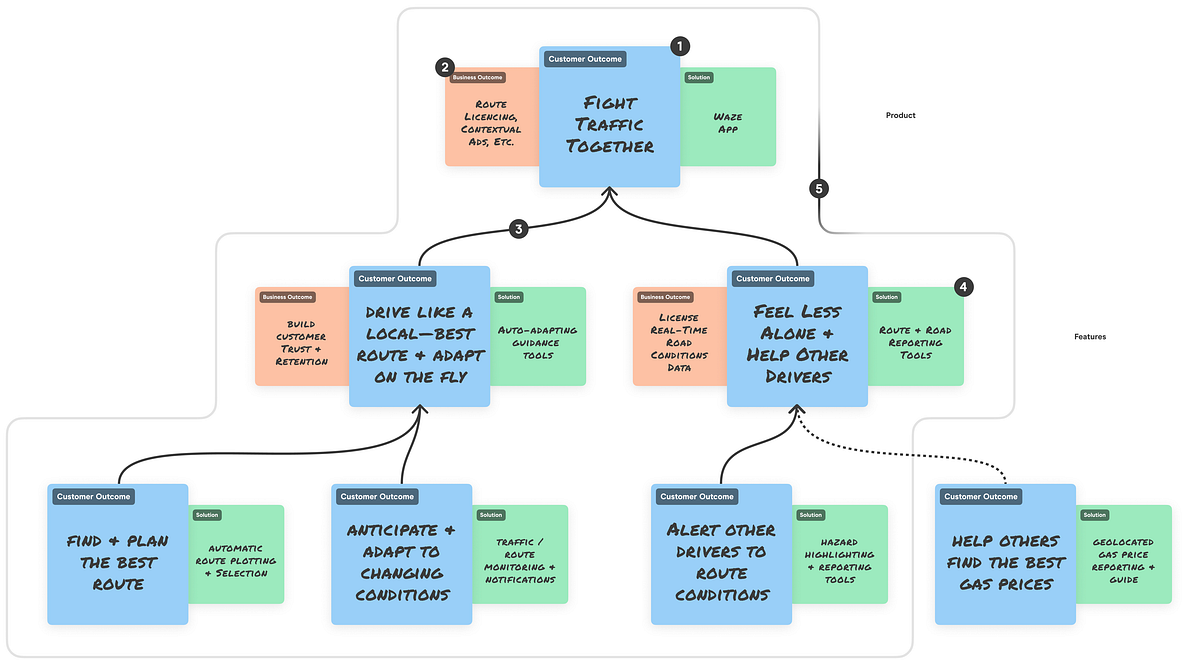

Making Sense of Chaos
From a pioneer in the field of complexity science and chaos theory, a plan for solving the world’s most pressing problems “Farmer convincingly argues t...
The emergence of consensus: a primer
The origin of population-scale coordination has puzzled philosophers and scientists for centuries. Recently, game theory, evolutionary approaches and complex systems science have provided quantitative insights on the mechanisms of social consensus. However, the literature is vast and widely scattered across fields, making it hard for the single researcher to navigate it. This short review aims to provide a compact overview of the main dimensions over which the debate has unfolded and to discuss some representative examples. It focuses on those situations in which consensus emerges ‘spontaneously’ in the absence of centralized institutions and covers topics that include the macroscopic consequences of the different microscopic rules of behavioural contagion, the role of social networks and the mechanisms that prevent the formation of a consensus or alter it after it has emerged. Special attention is devoted to the recent wave of experiments on the emergence of consensus in social systems.

The Product Strategy Stack | Reforge Blog
Reforge drives team performance, with the most actionable learning from vetted operators that your team will actually use and apply.

3 tactics for leading a team through uncertainty
Lessons learned leading a team through a bumpy acquisition.

Review: Team Topologies
Many organizations are struggling with their business agility transformation. One of the reasons is the way they have organized their teams. The focus was probably on efficiency and if these teams …

Habits of High-Functioning Teams
I often struggle to explain what it means to be part of a high-functioning software team. Sure, there are mountains of literature, and an entire genre of LinkedIn thought leadership that professes all kinds of guidelines and heuristics about what makes teams work, but in my experience, it’s hard to internalize these ideas and follow someone else’s model if you’ve never seen what good looks like.
Evolving and explaining how we run our company
As we write in “It Doesn’t Have to Be Crazy at Work”, you should treat your company as a product too. To improve a product, you listen, learn, (re)consider, concept, and iterate. …

Many Strategies Fail Because They’re Not Actually Strategies
Many strategy execution processes fail because “new strategies” are often not strategies at all. A real strategy involves a clear set of choices that define what the firm is going to do and what it’s not going to do. Many strategies fail to get implemented because they do not represent such a set of clear choices. And many so-called strategies are in fact goals. “We want to be the number one or number two in all the markets in which we operate” is one of those. It does not tell you what you are going to do; all it does is tell you what you hope the outcome will be. But you’ll still need a strategy to achieve it. Another reason why many implementation efforts fail is that executives see it as a pure top-down, two-step process: “The strategy is made; now we implement it.” That’s unlikely to work. A successful strategy execution process is seldom a one-way trickle-down cascade of decisions.

Against optimization
One of the most inescapable edicts when leading a team is the order to optimize the system towards the organization’s goals.

The Phases Product Teams Go Through, From Product/Market Fit to Hypergrowth
Former Credit Karma CPO Nikhyl Singhal shares the phases a product org goes through as a startup matures — and his tips for transitioning between them gracefully. From the mistakes that are too easy to make to what to look for when hiring, his playbook helps founders and product leaders build teams capable of finding product/market fit and handling hypergrowth.