Social change networks are complex, compared with other human organizational forms; they are not so easily controlled, directed or predicted. And that is as it should be, especially when dealing with real life diversity and uncertainty. This can cause some anxiety on the part of those who would like to be able to better control... Read More
How Networks Can Change Systems - Interaction Institute for Social Change
At this point a couple of networks with which I am working have reached or are reaching the three year mark in their formalized existence. By many accounts, this is a milestone and inflection point worth noting, as these initiatives have built significant connectivity (depth and breadth) and alignment (shared sense of common identity and direction)... Read More

Why Equitable Networks? - Interaction Institute for Social Change
Readers of this blog know how much promise we at IISC see in networks to bring about greater depth and breadth of change in our country and communities. At the same time, we do not see networks as a panacea. In fact, there are good reasons to be vigilant about “net work” to ensure that... Read More
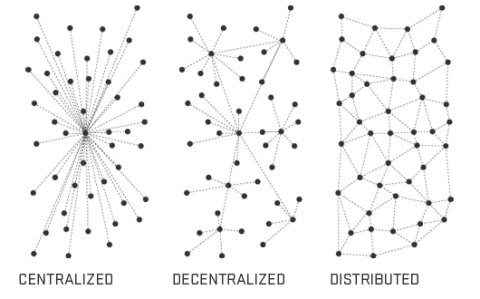
Network Behaviors to Leverage Network Effects - Interaction Institute for Social Change
Think like a network, act like a node. At IISC, we continue to emphasize that networks, not organizations, are the unit of social change. Part of the reason for this is that networks at their best are able to leverage what are known as “network effects.” These effects, as described by Madeleine Taylor and Peter Plastrik, include... Read More

Evolution of a Network Leadership Institute: Third Time’s the Charm - Interaction Institute for Social Change
“We are the living conduit to all life. When we contemplate the vastness of the interwoven network that we are tied to, our individual threads of life seem far less fragile.” – Sherri Mitchell, from Sacred Instructions Last week, we wrapped up the third annual Food Solutions New England Network Leadership Institute. For three... Read More

Culture Change and Conflict at Twitter (Published 2021)
Two years ago, the company brought in a blunt executive to make things move faster and to promote diversity. Then the problems began.

Announcing: Communities of Practice for Workshop Participants - Interaction Institute for Social Change
IISC is delighted to announce the launch of our online networks for participants of any one of our three workshops: Facilitative Leadership for Social Change, Fundamentals of Facilitation for Racial Justice Work, and Advancing Racial Justice in Organizations. All past workshop participants are invited to join a facilitated LinkedIn group to connect with others. The... Read More

An Introduction to Self-Organization - Interaction Institute for Social Change
“The ideas of self-organization are very important to understand the autonomy, the authenticity and basic humanity of people.” -Fritjof Capra One principle of “thinking like a network” that I like to highlight is the notion of moving from permission and perfection (looking for the one right answer) to self-organization and emergence. Self-organization is a defining... Read More
Why Linking Matters: Network Effects and Other Benefits - Interaction Institute for Social Change
“We cannot live for ourselves alone. Our lives are connected by a thousand invisible threads, and along those sympathetic fibers, our actions run as causes and return to us as results.” – Herman Melville In an earlier post in this series on networks and education, we explored the underlying vitality of connection and flow in... Read More
On Relational Infrastructure
Exploring the role of relationships, trust and mutualistic approaches to change.
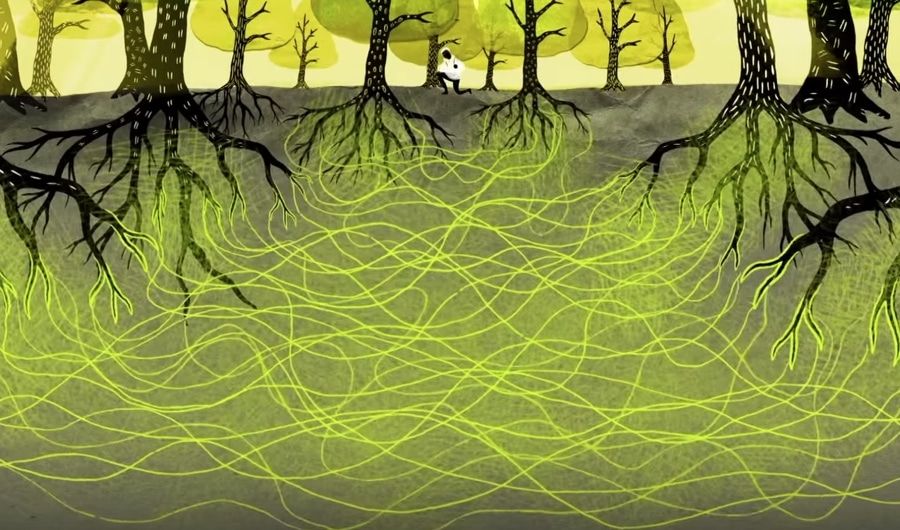
Welcome to the Relational Design Lab | LX Cast | 19 comments
Today I am VERY excited to share with all of you about my new home, Relational Design Lab! This R&D studio brings together a number of projects and will, I hope, grow to encompass many more. I imagine this lab as a gathering place for curious people who want to think about systems, and not in the typical mechanistic way they are described and implemented in technology. Instead, we'll feel into living systems, fractal ways of being, where the how is as important as the what. Over time, I hope the Lab will be a home or a waypoint for designers, researchers, community organizations, artists, storytellers, and technologists to explore togetherness together. Our 'theory of change' focuses on paradigm shift. Big change takes practice and possibility. Paradoxically, paradigm shift is a result of many small changes and repetitions in our behaviour and belief systems. We embrace emergence, mutual support, collective practice, and storytelling. One thing feels pretty clear, we need technology that is designed in solidarity with mutual care, does not depend on the whims of big corporations or its surveillance, and is joyful to use. To live in this reality, we also need to consider how business, funding, governance, scale, and context affect our work. We need embodied ways of knowing and sharing knowledge alongside our technical reasoning. And we need to face the reality of the consequences of our actions and those of our ancestors. This is not a project that aims to solve all the world's problems, but instead, to nurture the capacity for doing things together. We support and practice responding with curiosity and care, not with answers or attachment to ideals that no longer make sense amid collapsing systems. We are not "hiring" for this project now but there are many ways to get involved and would welcome opportunities to collaborate. Some of the projects we're holding include Folk Tech, Spacious, SEED Founding, and Relational Source License. We're also developing a very cool workshop process to help other organizations explore relational design through a community-driven futurism process. As ecosystem supporters, we are developing relationships with many aligned groups and projects as well. There will be more communications coming! If this all sounds like something you would like to support, contribute to, keep track of, or develop relationship with, for now you can subscribe to our calendar here https://lnkd.in/gPRFW7zC and message me directly! | 19 comments on LinkedIn

The year social networks were no longer social | TechCrunch
The term “social network” has become a meaningless association of words. Pair those two words and it becomes a tech category, the equivalent of a single

The Silent Majorities: six groups across society whose views point to systemic change
Expressing our shared concerns can drive public confidence in systems change.

Why I care about social networks
I care so much about social networks is because I view social networks as collective sense-making tools. And different social networks have different views

Introduction to Movement Ecology
The Social Media Sea Change
What happens when the thing that structured so much of our lives loses its utility?