


Today marks my last day at the Interaction Institute for Social Change. This has been my professional home for the last 10 years. IISC is the community that has shaped me and my capacity to fulfill my life’s purpose. I am eternally indebted to this place. This is the platform that has allowed me to... Read More
Evolution of a Network Leadership Institute: Third Time’s the Charm - Interaction Institute for Social Change
“We are the living conduit to all life. When we contemplate the vastness of the interwoven network that we are tied to, our individual threads of life seem far less fragile.” – Sherri Mitchell, from Sacred Instructions Last week, we wrapped up the third annual Food Solutions New England Network Leadership Institute. For three... Read More

How Networks Can Change Systems - Interaction Institute for Social Change
At this point a couple of networks with which I am working have reached or are reaching the three year mark in their formalized existence. By many accounts, this is a milestone and inflection point worth noting, as these initiatives have built significant connectivity (depth and breadth) and alignment (shared sense of common identity and direction)... Read More

Holding the Roots: Resourcing the Infrastructure Behind Movements - Interaction Institute for Social Change
There’s a quiet revolution underway. You can see it in church gatherings and small-town meetings, on Zoom calls between elders and young organizers, in community art projects, healing circles, and protest planning sessions. Across the country, IISC has had the deep honor of supporting and witnessing this movement: the call for food justice in Mississippi,... Read More

Social Change Networks: Keep Telling the Evolving Story - Interaction Institute for Social Change
Social change networks are complex, compared with other human organizational forms; they are not so easily controlled, directed or predicted. And that is as it should be, especially when dealing with real life diversity and uncertainty. This can cause some anxiety on the part of those who would like to be able to better control... Read More
Why Linking Matters: Network Effects and Other Benefits - Interaction Institute for Social Change
“We cannot live for ourselves alone. Our lives are connected by a thousand invisible threads, and along those sympathetic fibers, our actions run as causes and return to us as results.” – Herman Melville In an earlier post in this series on networks and education, we explored the underlying vitality of connection and flow in... Read More
Why Equitable Networks? - Interaction Institute for Social Change
Readers of this blog know how much promise we at IISC see in networks to bring about greater depth and breadth of change in our country and communities. At the same time, we do not see networks as a panacea. In fact, there are good reasons to be vigilant about “net work” to ensure that... Read More
Network Behaviors to Leverage Network Effects - Interaction Institute for Social Change
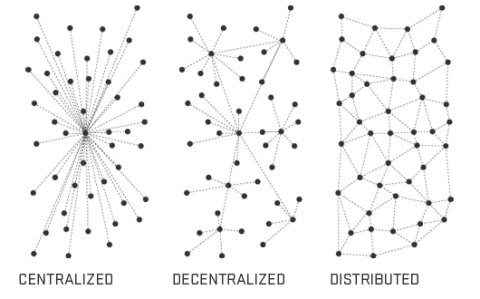
Think like a network, act like a node. At IISC, we continue to emphasize that networks, not organizations, are the unit of social change. Part of the reason for this is that networks at their best are able to leverage what are known as “network effects.” These effects, as described by Madeleine Taylor and Peter Plastrik, include... Read More

Announcing: Communities of Practice for Workshop Participants - Interaction Institute for Social Change
IISC is delighted to announce the launch of our online networks for participants of any one of our three workshops: Facilitative Leadership for Social Change, Fundamentals of Facilitation for Racial Justice Work, and Advancing Racial Justice in Organizations. All past workshop participants are invited to join a facilitated LinkedIn group to connect with others. The... Read More


An Introduction to Self-Organization - Interaction Institute for Social Change
“The ideas of self-organization are very important to understand the autonomy, the authenticity and basic humanity of people.” -Fritjof Capra One principle of “thinking like a network” that I like to highlight is the notion of moving from permission and perfection (looking for the one right answer) to self-organization and emergence. Self-organization is a defining... Read More
About Networked Improvement Communities (NICs)
Visit the Doug Engelbart Institute to explore his remarkable legacy and all it inspires (official site)

Goodbye, forever, probably.
I’m leaving developer relations and developer education. Rather than disappear completely unannounced, I wanted to tell you why.

Farewell Ai2
This was my last week at the Allen Institute for AI (Ai2), where I got the great privilege to work on the Olmo models, to grow, to learn, and to have broad lasting impacts.
Why you’ll leave X (as well as Instagram and all the other private platforms)
(translated from Catalan by Alain Gertrand) You too will leave X, Instagram and all the other big platforms that, for now, seem like irreplaceable components of our lives. The golden age of these social networks is behind us. And yes, that means for you, too. The 2.0 boom lasted a good ten yea

I’ll be at #IC2S2 this week! I will be presenting two papers from my lab, led by my amazing students @laylab.bsky.social & @elhamagk.bsky.social. If you’re interested in narratives,mental health, stigma, or NLP, let’s connect! Looking forward to catching up with old friends, and meeting new people.
I got into tech six years ago because I figured I could have an outsized impact on making a less harmful, more empowering world for workers and marginalised people. Only this year, I started connecting IRL with people who think this way. Here I tried to write about the ways that's transformed me.

DWeb, Culture and Resistance
meri.garden
