


There’s a quiet revolution underway. You can see it in church gatherings and small-town meetings, on Zoom calls between elders and young organizers, in community art projects, healing circles, and protest planning sessions. Across the country, IISC has had the deep honor of supporting and witnessing this movement: the call for food justice in Mississippi,... Read More
Introduction to Movement Ecology
Metrics for Building, Scaling, and Funding Social Movements
Investing in movements or networks for social change is a strategy that some funders are using. But, how do you measure the results? Marino Morino, who wrote “Leap of Reason: Managing to Outcomes in an Era of Scarcity” pointed me to this recent report, “Transactions, Transformations, Translations: Metrics That Matter for Building, Scaling and Funding Social Movements” by Manual Paster, Jennifer Ito, and Rachel Rosner with the USC Program for Environmental and Regional Equity and funded by the Ford Foundation. The report addresses metrics for success for investing in broad field social movements or networked approaches to social change. The report is written for funders and those on the ground doing the work in the context of networks, although it doesn’t go deep into practice. The report captures a conundrum in measuring social change movements or networked approaches. Outcomes for “wicked problems” can be easily counted – policies passed, housing the homeless, educating children. But there are less tangible results such as “we changed the frame” or “we shifted members’ consciousness” which for grassroots organizers on the ground view as the vibrancy of the network . The report lays out some new metrics for movement building – that are paths to the more easily counted tangible results and where the unit of analysis is the movement or network, not an organization. As the report points out, movement organizers are grappling with big questions. It is less about how to raise funds for their organizations (although that’s important) but focused on the big picture: What is the long-term change that we want to see? What is needed to achieve it? What roles do different organizations play? The report identifies metrics to measure progress around this these questions – it asks and answers – “What exactly are the right metrics for today?

PARA
Civic social infrastructure for communities, governance, and public participation.
Bridging Social Movements and the New Social Web (working draft) - Variable Context with @CaptainCalliope.blue
On connecting movements, media, and new protocol ecosystems to rebuild the civic, cultural, and technical foundations of a freer, more self-determining society.
RadicalxChange
We are a community of activists, artists, entrepreneurs, and scholars committed to using mechanism design to inspire radical social change.

We Are Civic Media
A discipline-crossing introduction to civic media via accounts from grassroots practitioners “Civic media” is the use of contemporary technologies to connect communities, inspire action, build civic capacity, and sustain social change efforts. Written by artists, creators, storytellers, organizers, and others working at the intersections of technology, social justice, and culture, this book summons civic media through the lived experiences of its contributors. Latoya Peterson delves into the therapeutic power of gaming; Akilah Hughes discusses identity and community through the lens of her campaign to change her high school's racist mascot; and Tyree Boyd-Pates emphasizes the potential power of museum curation to challenge power dynamics and bridge digital and physical realms. Through the experiences of these grassroots practitioners and many others, We Are Civic Media offers accessible insights for those interested in understanding, respecting, and practicing civic media.
Find Protests Near You - Updated Daily | find a protest
Find protests and solidarity events near you — updated daily. Discover local rallies, vigils, teach-ins and justice actions happening this week and weekend.
Ten Elements of Movement Building - WKKF Community Leadership Network
What defines a social movement? How does a movement gain power?

Connecting Research with Community - Civic Innovation Lab
Welcome to Civic Innovation Lab, where we drive social impact through collaborative solutions and empower communities. Join us in fostering sustainable development, co-creating initiatives, and advancing inclusive governance for a better future.

Civic, Citizen and Grassroots Science: Towards a Transformative Scientific Research Model | Request PDF
Request PDF | On Jan 1, 2013, Jessica McCallum Breen and others published Civic, Citizen and Grassroots Science: Towards a Transformative Scientific Research Model | Find, read and cite all the research you need on ResearchGate

Activist Handbook | Campaigning guides for activists ✊
We write guides for activists. Learn how to become a social activist, plan a political campaign strategy, and start a grassroots movement.
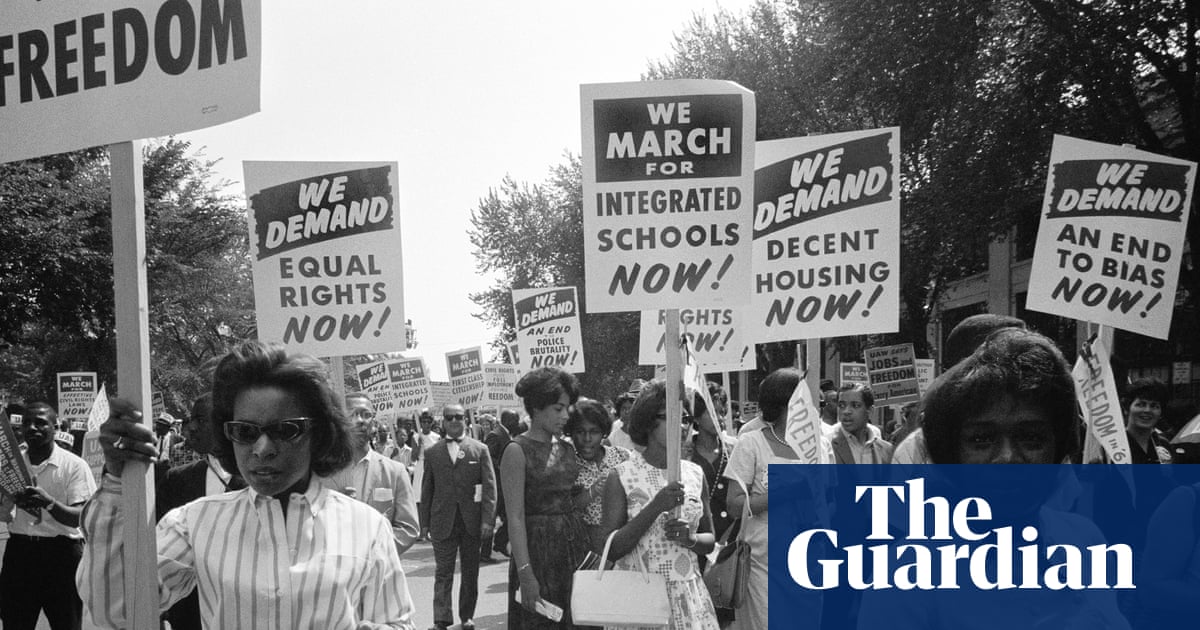
How effective is protesting? According to historians and political scientists: very
From emancipation to women’s suffrage, civil rights and BLM, mass movement has shaped the arc of US history
Motivating The Case for Decentralized Social Identity: Part One
RadicalxChange Foundation is an international nonprofit advancing participatory governance for the age of AI, championing Plurality to keep human agency and democratic participation at the wheel.
Civic Action
Commonly, researchers have looked for civic life in a distinct sector in which they assume that voluntary associations will cultivate special skills and virtues. Gathering together many challenges to this approach, and using ethnographic cases of housing advocacy and youth civic engagement projects, the authors reconceptualize “the civic” as civic action and show how patterned scene styles shape it. Doing so reveals patterns of action in complex organizations that may span institutional sectors. The authors show how researchers can locate scene styles, and with an extensive literature review, they portray several common styles and suggest that different civic styles often lead to different outcomes.
Tiny Publics: Small Groups and Civil Society
It has been conventional to conceptualize civic life through one of two core images: the citizen as lone individualist or the citizen as joiner. Drawing on analyses of the historical development of the public sphere, we propose an alternative analytical framework for civic engagement based on small-group interaction. By embracing this micro-level approach, we contribute to the debate on civil society in three ways. By emphasizing local interaction contexts-the microfoundations of civil society-we treat small groups as a cause, context, and consequence of civic engagement. First, through framing and motivating, groups encourage individuals to participate in public discourse and civic projects. Second, they provide the place and support for that involvement. Third, civic engagement feeds back into the creation of additional groups. A small-groups perspective suggests how civil society can thrive even if formal and institutional associations decline. Instead of indicating a decline in civil society, a proliferation of small groups represents a healthy development in democratic societies, creating cross-cutting networks of affiliation.
May First Movement Technology
Digital infrastructure for liberation. Member-run, movement-rooted.