


“Open Source Drug Discovery? How does that work?” I am asked this quite a lot. There are some principles and core practices that are involved, embodied in the Six Laws, but those are qu…
Home | Drug Science
Drug Science works to provide an evidence base free from political or commercial influence, creating the foundation for sensible and effective drug laws, and equipping the public, media and policy makers with the knowledge and resources to enact positive change.
AI for Drug Discovery Needs Trustworthy Biological Data
To unleash the potential of AI in life sciences and drug discovery, biological datasets must be authenticated, validated, and supported by standardized metadata.
The Drug Revolution That No One Can Stop
Designing your own narcotics online isn’t just easy—it can be legal too. How do we know? We did it.

Introducing GPT-Rosalind for life sciences research
OpenAI introduces GPT-Rosalind, a frontier reasoning model built to accelerate drug discovery, genomics analysis, protein reasoning, and scientific research workflows.
What comes after open source
In a previous post, I discussed the history of open source, and ended with this claim:
Elicit: AI for research & decision-making
Elicit helps you synthesize evidence, understand the landscape, design programs and experiments, draft proposals, and weigh tradeoffs. Trusted by over 7 million researchers and 8 of the top 20 pharmaceutical companies
Why open source: 25 reasons to embrace it | Ben Balter
Open source isn't a fad. Here are twenty-five economic, moral, and personal reasons your organization should embrace it.
Ten Simple Rules for the Open Development of Scientific Software
Citation: Prlić A, Procter JB (2012) Ten Simple Rules for the Open Development of Scientific Software. PLoS Comput Biol 8(12): e1002802. https://doi.org/10.1371/journal.pcbi.1002802
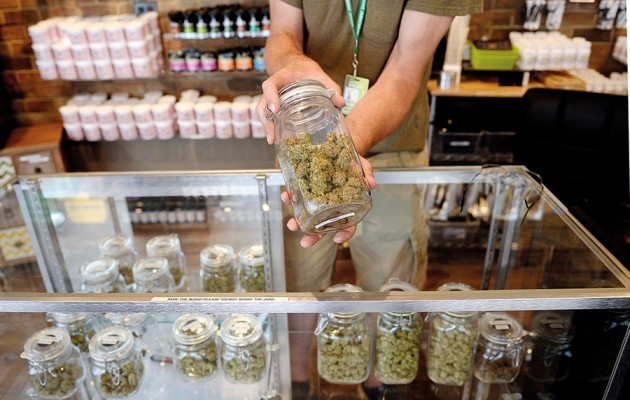
The cannabis experiment
As marijuana use becomes more acceptable, researchers are scrambling to answer key questions about the drug.
Patents in Open Source
The relationship between the patent system and software hasn’t always been clear. Software is a unique construction, incorporating both creative and functional aspects. While creative aspects of software are protected under copyright law, the functional aspects of software may be protectable via patent law.1 The interaction between patent law and open source licenses is the focus of this chapter.
What is open source?
Why the idealistic promise of collaborative software often falls short of its potential.

OpenAI debuts a life sciences AI model, entering crowd of tech giants selling to pharma
OpenAI became the latest tech giant to launch a life sciences-focused AI offering, aiming to build a biopharma business.

Introduction to Open Science
This course introduces the principles and practices of open science, with an emphasis on reproducible research workflows, transparent reporting, and collaborative scholarship. Students will critically examine reproducibility, explore tools that support openness (such as Git, GitHub, and Quarto), and apply these tools in hands-on assignments and a final open project. Students will also explore how open science practices vary across disciplines, including education, humanities, social sciences, industry and government, and STEM contexts. This course emphasizes applying open science principles to real-world data problems in alignment with the principles of producing reproducible research.