


The fights over AI scraping and encrypted browsing are being settled in obscure standards bodies, and advocates need to be in the room, Mallory Knodel argues.
Meeting where AI eyes can't follow
I applied to the Community Privacy Residency, and the past projects reminded me of a cryptographic exploration I come back to every once in a while, just for...

AI Wants Your Life: Tech Boss Meredith Whittaker Says No | The Mishal Husain Show
SimPolitics
For more than six decades, the public has been promised that computers will revolutionize politics, both nationally and internationally. In SimPolitics, Fenw...

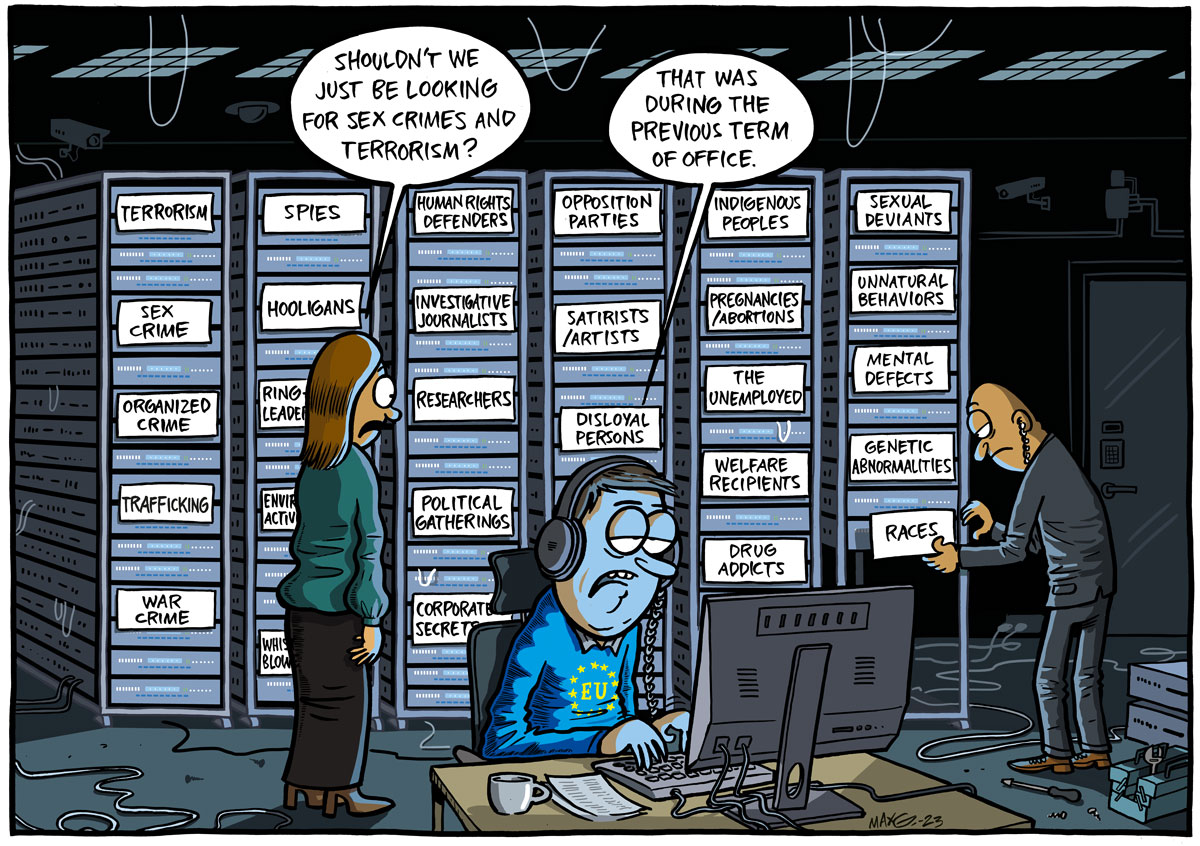
Chat Control & Going Dark: The war on encryption is on the rise. Through a shady collaboration between the US and the EU.
After Snowden’s whistleblowing in 2013, large parts of the internet became encrypted, enabling private and secure communication. Not everyone has welcomed this change. Most notably, the FBI and other U.S. government agencies have fought what is often called the “crypto wars”, the war on encryption. In recent years, they have been joined by the European Commission. Under the slogan “what about the children,” they try to introduce total mass surveillance of all EU citizens — first through the proposed Chat Control legislation, and later via the Going Dark and ProtectEU initiatives. The goal is to legally mandate spy tools on every European smartphone and computer. The forces behind these efforts have turned out to be American tech companies and intelligence agencies.
The rise of AI ‘civilizations’ and the fall of corporate responsibility
The internet fights over anthropomorphism around the Hugging Face hack.

Signal President Meredith Whittaker calls out agentic AI as having 'profound' security and privacy issues | TechCrunch
Signal President Meredith Whittaker warned Friday that agentic AI could come with a risk to user privacy. Speaking onstage at the SXSW conference in

The fight over downloadable AI is not really about a ban - Sensemaker
Companies want access, Anthropic wants testing, and Washington and Beijing are arguing over alleged copying.
The Web Is Being Made Accessible for AI, Not People
Jonathan Zong and Frank Elavsky critique how AI-driven infrastructure changes obscure accessibility and reveal whose needs society chooses to prioritize.

Privacy under attack: the NSA files revealed new threats to democracy
We now know the apparatus of repression has been attached to the democratic state, but our struggle for privacy is far from hopeless. By Eben Moglen

Copy of Digital Masquerade
The Digital Masquerade: Unmasking AI’s Phantom Journalists By Tony Eastin and Sandeep Abraham, CAMS

The Tor Project | Privacy & Freedom Online
Defend yourself against tracking and surveillance. Circumvent censorship.

Stewarding the stories that power tries to silence
"2026 will mark the rise of algorithmic witnessing — a movement that uses AI not to replace journalists, but to extend the reach of the communities they serve."

Web Crypto’s SubtleCrypto: A Masterclass in Developer Hostility and How It Strangles the Modern Web
Not Subtle, Just Sabotage — An API Against the Web

The Invisible Protocol Thesis: Tomorrow's Crypto Unicorns
Following the introduction of any new disruptive innovation, there is always a speculative phase to a technology cycle as the market tries to size and time the market opportunity.

"The forces that are now shaping AI are the same forces that turned the open internet into monopolistic platforms, converted peer-to-peer participation into precarious labor, and enclosed the digital commons. They are now threatening to capture and enclose thought itself." osf.io/preprints/socarxiv/qahd3_v1/
