


The aim of this article is to elucidate the anthropological conditions of possibility for computing. I will first show how symbolic manipulation is constitutive of hominization. Secondly, I will ex…
Tools for Thought as Cultural Practices, not Computational Objects
On seeing tools for thought through a historical and anthropological lens
Deconstructing the algorithmic sublime
This special theme contextualizes, examines, and ultimately works to dispel the feelings of “sublime”—of awe and terror that overrides rational thought—that much of the contemporary public discourse on algorithms encourages. Employing critical, reflexive, and ethnographic techniques, these authors show that while algorithms can take on a multiplicity of different cultural meanings, they ultimately remain closely connected to the people who define and deploy them, and the institutions and power relations in which they are embedded. Building on a conversation we began at the Algorithms in Culture conference at U.C. Berkeley in December 2016, we collectively study algorithms as culture (Seaver, this special theme), fetish (Thomas et al.), imaginary (Christin), bureaucratic logic (Caplan and boyd), method of governance (Coletta and Kitchin; Lee; Geiger), mode of inquiry (Baumer), and mode of power (Kubler). [Box: see text]

The Triadic Mind: How Language Reveals the Limits of Human Cognition
Languages are the most complex symbolic systems humans have ever created. Yet children acquire them effortlessly, without formal…

Anthropology and ableism
Abstract This article continues the tradition of writing about embodied knowledge production to highlight the underanalyzed issue of ableism, providing an opening for a disciplinary reckoning with oppressive legacies towards creating collective access in anthropology and academia. Building on the creative and collaborative labor of disabled and allied anthropologists, I argue that ableism is inherent to anthropology's disciplinary formations—especially expectations pertaining to fieldwork. I make a series of claims related to this argument: The continuation of fieldwork practices from the colonial model naturalizes able bodyminds, and without intervention, reproduces ableist anthropology. The normate anthropologist has always had a “nondisabled” bodymind, but once disability became a proper object for anthropology, a line was solidified between “anthropologist” and “the disabled,” thereby making disabled anthropologist a seemingly conceptual impossibility. The effect of the anthropological gaze turning towards disability introduced a “corporeal unconscious” in the discipline; the specter of becoming disabled (becoming subject to the anthropological gaze rather than being its source) haunts fieldwork and heightens the anxious relation of anthropology to disability. Illuminating the normative underpinnings of anthropology and embracing the unbearable possibility that we all might be(come) disabled should move us to collectively consider what anthropology might be otherwise. , Resumen Este artículo continúa la tradición de escribir acerca de la producción de conocimiento corporeizado para enfatizar la cuestión insuficientemente analizada de la discriminación o prejuicio contra los discapacitados, capacitismo, proveyendo una apertura para un lidiar disciplinario con legados opresivos hacia la creación de acceso colectivo en antropología y la academia. Construyendo sobre la labor creativa y colaborativa de antropólogos discapacitados y aliados, argumento que el capacitismo es inherente a las formaciones disciplinarias de la antropología –especialmente las expectativas pertenecientes al trabajo de campo–. Realizo una serie de aseveraciones relacionadas con este argumento: la continuación de las prácticas de trabajo de campo del modelo colonial naturaliza los cuerposmentes capaces, y sin intervención, reproduce una antropología capacitista. El antropólogo normate ha sido siempre un cuerpomente “no discapacitado”, pero una vez la discapacidad se convirtió en un objeto propio para la antropología, una línea fue solidificada entre “el antropólogo” y “el discapacitado”, haciendo de este modo al antropólogo discapacitado aparentemente una imposibilidad conceptual. El efecto de la mirada antropológica dirigiéndose hacia la discapacidad introdujo un “inconsciente corporal” en la disciplina; el espectro de llegar a ser discapacitado (llegar a estar sujeto a la mirada antropológica en vez de ser su fuente) ronda el trabajo de campo y realza la relación ansiosa de la antropología con la discapacidad. Iluminar los fundamentos normativos de la antropología y aceptar la insoportable posibilidad que todos podemos (llegar) a ser discapacitados debería movernos a considerar colectivamente lo que podría ser la antropología de otra manera. [ capacitismo, discapacidad, trabajo de campo, ethnograph, accesibilidad ]

Social Physics in the Age of Generative AI: How, Exactly, Is Society Complex?
The aspiration for a social physics — a science that would reveal universal laws of social life analogous to those governing the natural world—has haunted the social sciences since Comte. Each new wave of quantitative and computational methods breathes fresh life into this vision. The current moment is no exception: advances in artificial intelligence and large language models have reinvigorated attempts to model society through the methods of social physics. This essay argues that these ambitions rest on a confusion about the nature of social complexity. Drawing a distinction between systems complexity and anthropological complexity, we identify the limitations of analyzing society as a complex system akin to natural systems. One crucial obstacle for social physics is the analysis of meaning and interpretation. Generative artificial intelligence (GenAI) offers important opportunities to model language and reflexivity, inviting and perhaps compelling social physics to confront meaning and interpretation as constitutive features of the social world. At the same time, GenAI leaves untouched and may even aggravate social physics’ failure to grasp power, institutions, and inequality.
High-Tech Anthropology® Process Tour
Come learn about the benefits of observing end users, creating and mapping personas, and assessing iterative designs. Additionally, see the other tools we use and visuals we create to capture and distill information that will help us mitigate the risk of a failed end product. These steps build the foundation for user-friendly designs tailored to target persona(s) – for products that are actually adopted (and even enJOYed!) rather than tossed to the side or treated like paperweights.

Orion Reed
My research investigates the intersection of computing, human-system interfaces, and emancipatory politics. I am interested in the potential of computing as a medium for thought, as a tool for collective action, and as a means of emancipation.

The brain is a computer is a brain: neuroscience's internal debate and the social significance of the Computational Metaphor
The Computational Metaphor, comparing the brain to the computer and vice versa, is the most prominent metaphor in neuroscience and artificial intelligence (AI). Its appropriateness is highly debated in both fields, particularly with regards to whether it is useful for the advancement of science and technology. Considerably less attention, however, has been devoted to how the Computational Metaphor is used outside of the lab, and particularly how it may shape society's interactions with AI. As such, recently publicized concerns over AI's role in perpetuating racism, genderism, and ableism suggest that the term "artificial intelligence" is misplaced, and that a new lexicon is needed to describe these computational systems. Thus, there is an essential question about the Computational Metaphor that is rarely asked by neuroscientists: whom does it help and whom does it harm? This essay invites the neuroscience community to consider the social implications of the field's most controversial metaphor.

Culture on the Ground - Tim Ingold, 2004
Classical accounts of human evolution posit a progressive differentiation between the hands as instruments of rational intelligence and feet as ...
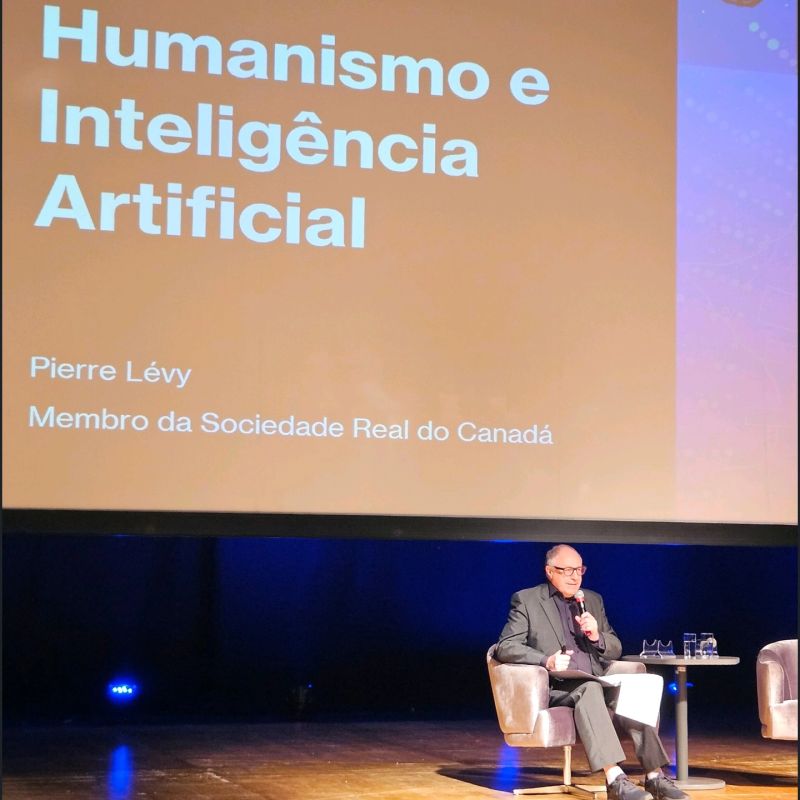
Humanism and artificial intelligence
If humanism was born with the alphabet in a literate environment and was reborn with the printing press, what becomes of it when digital technology becomes the dominant symbolic technology?
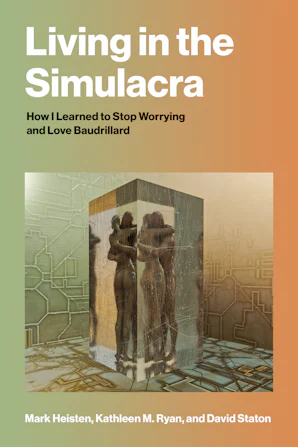
Living in the Simulacra
Despite a twenty-first-century plethora of images and our collective understanding that digital tools may alter the truth, human beings have a strong belief ...
Abeba Birhane on Twitter / X
a classic case of “the human mind is afforded less complexity than is owed, and the computer is afforded more wisdom than is due.” Baria and Cross (2021)that "vibe" is at the core of what makes us human. it defies formalization and datafication https://t.co/AXELAqlYcq— Abeba Birhane (@Abebab) February 17, 2024
Thoughts on thinking | Hacker News
The process of forming expressions just is the process of conceptual and rational articulation (as per Brandom). Those who misunderstand this -- believing that concepts are ready made, then encoded and decoded from permutations of tokens, or, worse, who have no room to think of reasoning or conceptualization at all -- they will be automated away.

The fetish of the click: a small history of the computer mouse as vulva
This paper examines the fetish of the click through a technofeminist history of the computer mouse as vulva. It argues that this material turn is a necessary corrective to abstractions of the click...

W Social and the ancient art of neighbourliness - We Can Just Do Things
Good behaviour matters more than good code