

Deep learning-based electroencephalography analysis: a systematic review, Roy, Yannick, Banville, Hubert, Albuquerque, Isabela, Gramfort, Alexandre, Falk, Tiago H, Faubert, Jocelyn
Deep learning-based electroencephalography analysis: a systematic review
CONTEXT: Electroencephalography (EEG) is a complex signal and can require several years of training, as well as advanced signal processing and feature extraction methodologies to be correctly interpreted. Recently, deep learning (DL) has shown great promise in helping make sense of EEG signals due to its capacity to learn good feature representations from raw data. Whether DL truly presents advantages as compared to more traditional EEG processing approaches, however, remains an open question. OBJECTIVE: In this work, we review 154 papers that apply DL to EEG, published between January 2010 and July 2018, and spanning different application domains such as epilepsy, sleep, brain-computer interfacing, and cognitive and affective monitoring. We extract trends and highlight interesting approaches from this large body of literature in order to inform future research and formulate recommendations. METHODS: Major databases spanning the fields of science and engineering were queried to identify relevant studies published in scientific journals, conferences, and electronic preprint repositories. Various data items were extracted for each study pertaining to (1) the data, (2) the preprocessing methodology, (3) the DL design choices, (4) the results, and (5) the reproducibility of the experiments. These items were then analyzed one by one to uncover trends. RESULTS: Our analysis reveals that the amount of EEG data used across studies varies from less than ten minutes to thousands of hours, while the number of samples seen during training by a network varies from a few dozens to several millions, depending on how epochs are extracted. Interestingly, we saw that more than half the studies used publicly available data and that there has also been a clear shift from intra-subject to inter-subject approaches over the last few years. About [Formula: see text] of the studies used convolutional neural networks (CNNs), while [Formula: see text] used recurrent neural networks (RNNs), most often with a total of 3-10 layers. Moreover, almost one-half of the studies trained their models on raw or preprocessed EEG time series. Finally, the median gain in accuracy of DL approaches over traditional baselines was [Formula: see text] across all relevant studies. More importantly, however, we noticed studies often suffer from poor reproducibility: a majority of papers would be hard or impossible to reproduce given the unavailability of their data and code. SIGNIFICANCE: To help the community progress and share work more effectively, we provide a list of recommendations for future studies and emphasize the need for more reproducible research. We also make our summary table of DL and EEG papers available and invite authors of published work to contribute to it directly. A planned follow-up to this work will be an online public benchmarking portal listing reproducible results.
Deep learning with convolutional neural networks for EEG decoding and visualization
Deep learning with convolutional neural networks (deep ConvNets) has revolutionized computer vision through end-to-end learning, that is, learning from the raw data. There is increasing interest in u...

#brainfoundationmodels #neuroai #eeg #meg #fmri #neuroscience #machinelearning #opensource #fair | Jarod Lévy
Today, the Brain&AI team announces a new release with NeuralBench. 📊📊📊 A unified framework for benchmarking foundation models of brain activity. This wouldn’t have been possible without the tremendous work of Hubert Banville 🎉 🎉 🎉 - 🧠 36 EEG tasks - 🗄️ 94 public datasets. - 💻 Code: https://lnkd.in/dPDMwja3 - 📄 Paper: https://lnkd.in/ddDU2p6d This package allows systematic evaluation of any foundation models. NeuralBench addresses this by defining each task end-to-end with config files (data source, preprocessing, splits, optimizer, metrics, architecture) so all models can be evaluated on the same footing. We invite the community to contribute new tasks, datasets, and models, especially for fMRI, MEG, and iEEG. The long-term goal is a fully unified benchmark across neuroimaging tasks and modalities. What's in the first release, NeuralBench-EEG v1.0: - 36 EEG tasks across 94 public datasets, spanning motor imagery, clinical classification, cognitive decoding, and phenotype prediction. - Task-specific deep learning architectures (EEGNet, Deep4, EEGConformer, CTNet, ...) benchmarked side-by-side with recent EEG foundation models (BENDR, LaBraM, BIOT, CBraMod, LUNA, REVE). - Extensible to other neuroimaging modalities: the framework already runs MEG and fMRI tasks, leveraging our NeuralSet ecosystem for accessing brain imaging data and the broader neuroscientific software stack. - Released under the MIT license. Big team effort with Stéphane d'Ascoli, Simon Dahan, Jérémy RAPIN, Marlène Careil, Yohann Benchetrit, Saarang P., Antoine Ratouchniak, Lucy (Mingfang) Zhang, Elisa Cascardi, Katie Begany Teon Brooks, and Jean-Rémi King. And special thanks: Alexandre Gramfort Thomas Moreau Arnaud Delorme Bruno A. Pierre Guetschel #BrainFoundationModels #NeuroAI #EEG #MEG #fMRI #Neuroscience #MachineLearning #OpenSource #FAIR

#neuroscience #ai #python #opensource #neuroai | Jean-Rémi King
⚡ We're happy to release NeuralSet: a fast, simple, and scalable Python framework for Neuro-AI. Already supports: 🧠 fMRI, EEG, MEG, iEEG, spikes… recordings 💬 text, 🔊 audio, ▶️ video, 🏞️ image… embeddings 📦 `pip install neuralset` 💻 Code: https://lnkd.in/eamwxBUY 📄 Paper: https://lnkd.in/epbreyDy Made possible thanks to: Hubert Banville, Katie Begany, Corentin Bel, Yohann Benchetrit, Teon Brooks, Marlène Careil, Simon Dahan, Stéphane d'Ascoli, Alexandre Défossez, Linnea Evanson, PhD, Pablo J. Diego Simón, Julien Gadonneix, Sophia Houhamdi, Shubh Khanna, Jarod Lévy, Pierre Orhan, Antoine Ratouchniak, Joséphine Raugel, Andrea Elena Santos Revilla, Alexis Thual, Lucy (Mingfang) Zhang, Jérémy RAPIN #Neuroscience #AI #Python #OpenSource #NeuroAI
NeuralBench: A Unifying Framework to Benchmark NeuroAI Models | Hubert Banville
🧠 NeuralBench is now open source. Today we're releasing NeuralBench, a unified framework for benchmarking foundation models of brain activity, developed by the Brain & AI team at FAIR, Meta. 💻 Code: https://lnkd.in/dNJsgBgM 📄 White paper: https://lnkd.in/dvWMg7rx Brain foundation models are starting to show positive transfer to a range of downstream tasks, from brain-computer interfacing to clinical classification. But systematically evaluating them is hard: heterogeneous preprocessing pipelines, input structures, and adaptation methodologies make results difficult to compare. Most prior work also focuses on a narrow set of downstream tasks. NeuralBench addresses this by defining each task end-to-end with config files (data source, preprocessing, splits, optimiser, metrics, architecture) so all models can be evaluated on the same footing. What's in our first release, NeuralBench-EEG v1.0: ⚡ 36 EEG tasks across 94 public datasets, spanning motor imagery, clinical classification, cognitive decoding, and phenotype prediction. 🤖 Task-specific deep learning architectures (EEGNet, Deep4, EEGConformer, CTNet, ...) benchmarked side-by-side with recent EEG foundation models (BENDR, LaBraM, BIOT, CBraMod, LUNA, REVE). 🧩 Extensible to other neuroimaging modalities: the framework already runs MEG and fMRI tasks, leveraging our NeuralSet ecosystem for accessing brain imaging data and the broader neuroscientific software stack. 📜 Released under the MIT license. Help us make it better. Through our white paper, we invite the community to contribute new tasks, datasets, and models, especially for fMRI, MEG, and iEEG. The long-term goal is a fully unified benchmark across neuroimaging tasks and modalities. 🙏🙏🙏 This was a big team effort with Stéphane d'Ascoli, Simon Dahan, Jérémy RAPIN, Marlène Careil, Yohann Benchetrit, Jarod Lévy, Saarang P., Antoine Ratouchniak, Lucy (Mingfang) Zhang, Elisa Cascardi, Katie Begany, Teon Brooks, and Jean-Rémi King. Special thanks to Alexandre Gramfort, Thomas Moreau, Arnaud Delorme, Bruno A. and Pierre Guetschel for feedback and support. #Neuroscience #AI #NeuroAI #Python #OpenSource

#neuroscience #ai #python #opensource #neuroai | Jean-Rémi King | 34 comments
⚡ We're happy to release NeuralSet: a fast, simple, and scalable Python framework for Neuro-AI. Already supports: 🧠 fMRI, EEG, MEG, iEEG, spikes… recordings 💬 text, 🔊 audio, ▶️ video, 🏞️ image… embeddings 📦 `pip install neuralset` 💻 Code: https://lnkd.in/eamwxBUY 📄 Paper: https://lnkd.in/epbreyDy Made possible thanks to: Hubert Banville, Katie Begany, Corentin Bel, Yohann Benchetrit, Teon Brooks, Marlène Careil, Simon Dahan, Stéphane d'Ascoli, Alexandre Défossez, Linnea Evanson, PhD, Pablo J. Diego Simón, Julien Gadonneix, Sophia Houhamdi, Shubh Khanna, Jarod Lévy, Pierre Orhan, Antoine Ratouchniak, Joséphine Raugel, Andrea Elena Santos Revilla, Alexis Thual, Lucy (Mingfang) Zhang, Jérémy RAPIN #Neuroscience #AI #Python #OpenSource #NeuroAI | 34 comments on LinkedIn
#neuroscience #ai #python #opensource #neuroai | Jean-Rémi King | 34 comments
⚡ We're happy to release NeuralSet: a fast, simple, and scalable Python framework for Neuro-AI. Already supports: 🧠 fMRI, EEG, MEG, iEEG, spikes… recordings 💬 text, 🔊 audio, ▶️ video, 🏞️ image… embeddings 📦 `pip install neuralset` 💻 Code: https://lnkd.in/eamwxBUY 📄 Paper: https://lnkd.in/epbreyDy Made possible thanks to: Hubert Banville, Katie Begany, Corentin Bel, Yohann Benchetrit, Teon Brooks, Marlène Careil, Simon Dahan, Stéphane d'Ascoli, Alexandre Défossez, Linnea Evanson, PhD, Pablo J. Diego Simón, Julien Gadonneix, Sophia Houhamdi, Shubh Khanna, Jarod Lévy, Pierre Orhan, Antoine Ratouchniak, Joséphine Raugel, Andrea Elena Santos Revilla, Alexis Thual, Lucy (Mingfang) Zhang, Jérémy RAPIN #Neuroscience #AI #Python #OpenSource #NeuroAI | 34 comments on LinkedIn
Deep learning gets the glory, deep fact checking gets ignored – Rachel Thomas, PhD
AI, science, education, & ethics
Karavela
Using next-gen magnetic resonance, Karavela is collecting the largest dataset of the human brain's dynamics to enhance clinical trials with AI and crack brain decoding.
What the Studies Say About How AI Affects Your Brain: A (Very Big) Compilation
The entire literature clearly points to a single surprising finding
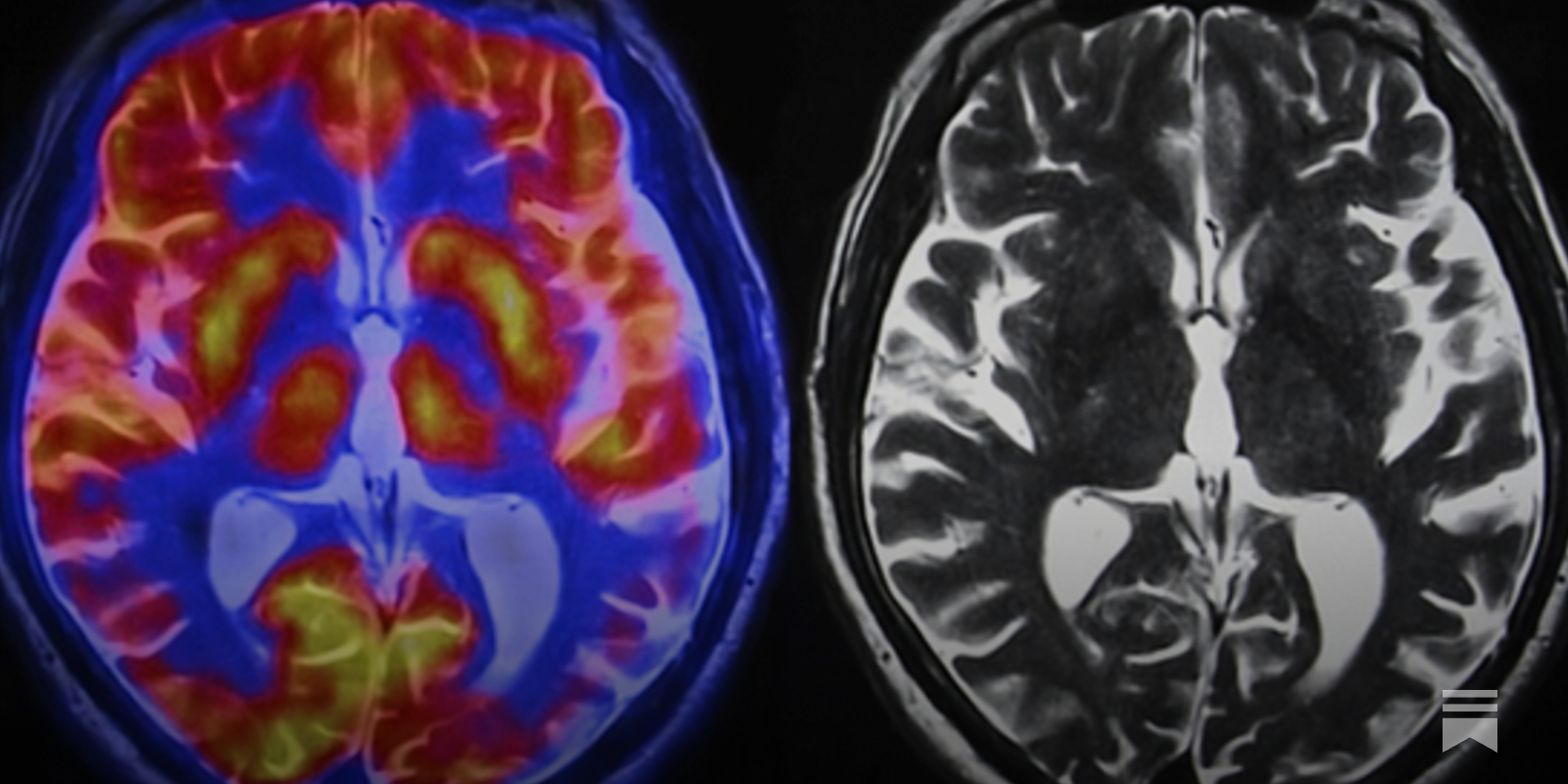
The brain in the machine: How AI could help explain how we think | IBM
Scientists are using large AI models to predict patterns of brain activity at scale, a development that researchers say is pushing neuroscience toward a new kind of digital imaging.

Neuropeek — Accelerating the Neuro-AI convergence
Where brain data becomes shared knowledge. A community-driven platform federating neuroscience datasets, models, and tools to accelerate discovery.

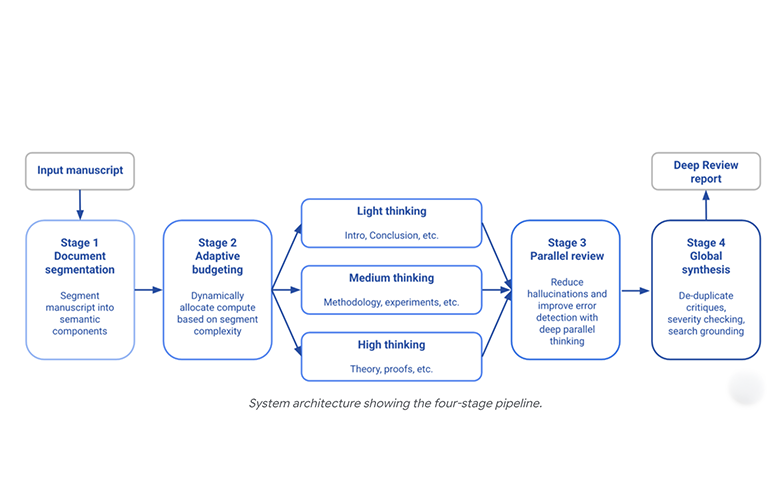
Google opens Deep Review AI tool to help researchers catch manuscript errors
Google Research on Oct. 14 released Deep Review, an AI system designed to flag mathematical errors, logical gaps and unsupported claims in technical documents. The public launch follows pilots that provided feedback on more than 15,000 manuscripts, according to Google. Speaking at Google’s Research@ event in Mountain View, California, Rajesh Jayaram, a research scientist at…
🚀🚀🚀 Excited to share that our Brain&AI team is releasing NeuralSet! 🚀🚀🚀 A fast, simple, and scalable package for Neuro-AI: 📦 `pip install neuralset` 💻 Code: https://lnkd.in/eamwxBUY 📄… | Jarod Lévy | 12 comments
🚀🚀🚀 Excited to share that our Brain&AI team is releasing NeuralSet! 🚀🚀🚀 A fast, simple, and scalable package for Neuro-AI: 📦 `pip install neuralset` 💻 Code: https://lnkd.in/eamwxBUY 📄 Paper: https://lnkd.in/epbreyDy As a PhD student working extensively with neuro recordings and AI models, I find this library to be a game-changer. This has been the common backbone for the past several years of our projects (TribeV2, DynaDiff, Brain2Qwerty & more!). This library turns raw neuro-recordings into AI-ready tensors. It enables: - Event-driven processing with typed, validated DataFrames. - Multimodal extractors for fMRI, EEG, MEG, EMG, and iEEG + text, image, audio, and video. - Torch-native segmentation for efficient batching. - Caching and remote compute through exca. Huge thanks to everyone on the team who made this release possible. If you're working on brain decoding, encoding models, or foundation models for neuroscience, don’t miss this! 🧠 Jean-Rémi King Hubert Banville Katie Begany Corentin Bel Yohann Benchetrit Teon Brooks Marlène Careil Simon Dahan Stéphane d'Ascoli Alexandre Défossez Linnea Evanson, PhD Pablo J. Diego Simón, Julien Gadonneix, Sophia Houhamdi Shubh Khanna Pierre Orhan Antoine Ratouchniak Joséphine Raugel Andrea Elena Santos Revilla Alexis Thual Lucy (Mingfang) Zhang Jérémy RAPIN | 12 comments on LinkedIn

Inventing the future: A neuroscience research roadmap
The past decade of transformative advances in neurotechnology portends an exciting future for neuroscience. This NeuroView charts a strategic path to accelerate and integrate research discovery and speed the development of new cures for human brain disorders.

UK Patent Filed for Hair-Inclusive EEG Electrode by Synaptive | Synaptive posted on the topic | LinkedIn
Big news from us 🎉 We've just filed a United Kingdom patent application on our hair-inclusive EEG electrode, the first step in taking this from prototype to something that actually reaches the labs and people who need it. For too long, EEG hardware has quietly excluded people based on hair type. Thick, coily, tightly curled, if your hair didn't fit the mould, your signal quality suffered, or you were excluded from studies altogether. That's not a small technical footnote. That's data that shapes diagnoses, treatments, and our understanding of the brain itself, built on a foundation that didn't include everyone. We built Synaptive to fix that at the hardware level, so good signal doesn't depend on who you are or what your hair looks like. Filing the patent is a huge milestone for us, and we're only getting started. If you're a researcher, lab, or manufacturer interested in electrodes that actually work for everyone, reach out on our website (synaptiveltd.co.uk). Thank you to everyone who's backed us on this journey so far ❤️ Synaptive : ) Rishan P. Peter Bryan Michael-Merlin (Merlin) Krý