

Open, decentralized content identification - derived from the content itself.
CID (Content IDentifier)
Self-describing content-addressed identifiers for distributed systems
Local Env as Code: Is it possible yet
Guest post by Jan Van Bruggen, Developer Relations Lead at itopia In the past decade, we’ve seen the rise, standardization and meme-ification of “as code”: Infrastructure as Code, Monitoring as Code…

Content Identifiers (CIDs) | IPFS Docs
Learn about how content addressing works and how content identifiers, or CIDs, play a crucial role in IPFS.
Content Model & Wire Format — szzt docs
The on-PDS content model and the wire formats of a Szzt (a.k.a. "Mini-Site" / @minisite) mini-site: the three atproto records that describe a site, the StrongRef links between them, the CID codecs, the byte encodings, and how a served request path resolves to a specific block of bytes. A compatible publisher writes these records; a compatible verifier re-derives every CID from signed state and trusts no source's assertion.
Code for Canada (@codeforcanada.bsky.social)
We're a national non-profit that helps governments and non-profits create digital services for the public good. Sign up for our newsletter for the latest digital government and civic technology news: https://bit.ly/3RhPVj5

Proposal: standard.site.declaration
Proposal: standard.site.declaration Draft for Discussion Abstract AT Protocol provides portable identity, portable content, and portable social graphs. What it currently lacks is a standard mechanism for discovering machine-readable declarations associated with digital content. Today, creators and organisations publish declarations about digital assets through websites, registries, the C2PA provenance framework, and other systems. These declarations may describe provenance, copyright ownership...


Decentralized Information and the Future of Software - Draft
This work is licensed under a Creative Commons Attribution-NonCommercial-ShareAlike 4.0 International License.
RSL: Really Simple Licensing
The open content licensing standard for the AI-first Internet
ATFISL — content discovery with the AT Protocol
How ATFISL publishes CID locations as dev.fisl.at records on the AT Protocol: the record, the record key, the Lexicon, and indexing.
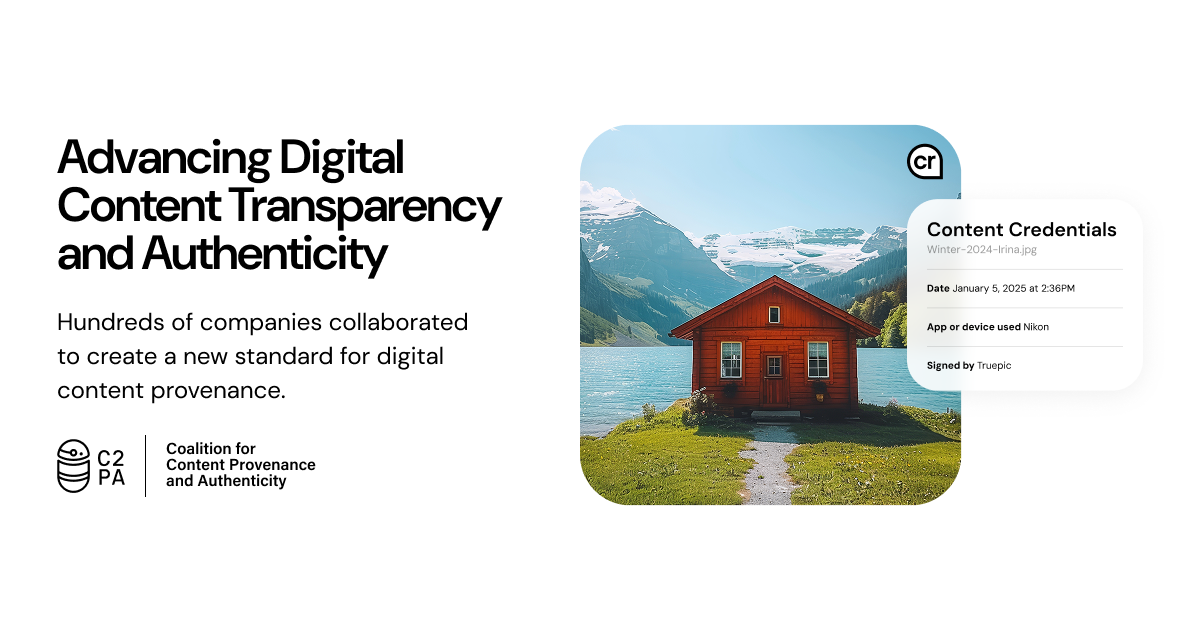
C2PA | Providing Origins of Media Content
Enhance digital safety through the use of content authenticity tools. C2PA provides a way to ensure content transparency by analyzing the origin of media.
ISO - ISO 3166 — Country Codes
Avoid confusion when referring to countries and their subdivisions with this standard.
