

Explore a problem space and formulate a robust problem statement to ensure you’re solving the right problem. Time: 45+minutes Group Size: 2+ people Level: Intermediate
The Architect of Constraints: Why Context Engineering Is the Human Skill That Matters
“If I had an hour to solve a problem, I’d spend 55 minutes defining the problem and 5 minutes solving it.” — Albert Einstein

TRIZ Prism
Use known solutions to find new solutions to difficult problems. Time: 60+minutes Group Size: 4+ people Level: Beginner
Design Sprints
A structured, time-boxed process for rapidly exploring problems, generating ideas, and validating solutions with real users.

Your Solution Doesn't Know Your Problem Exists
If your problem is structural, your approach must be radical.
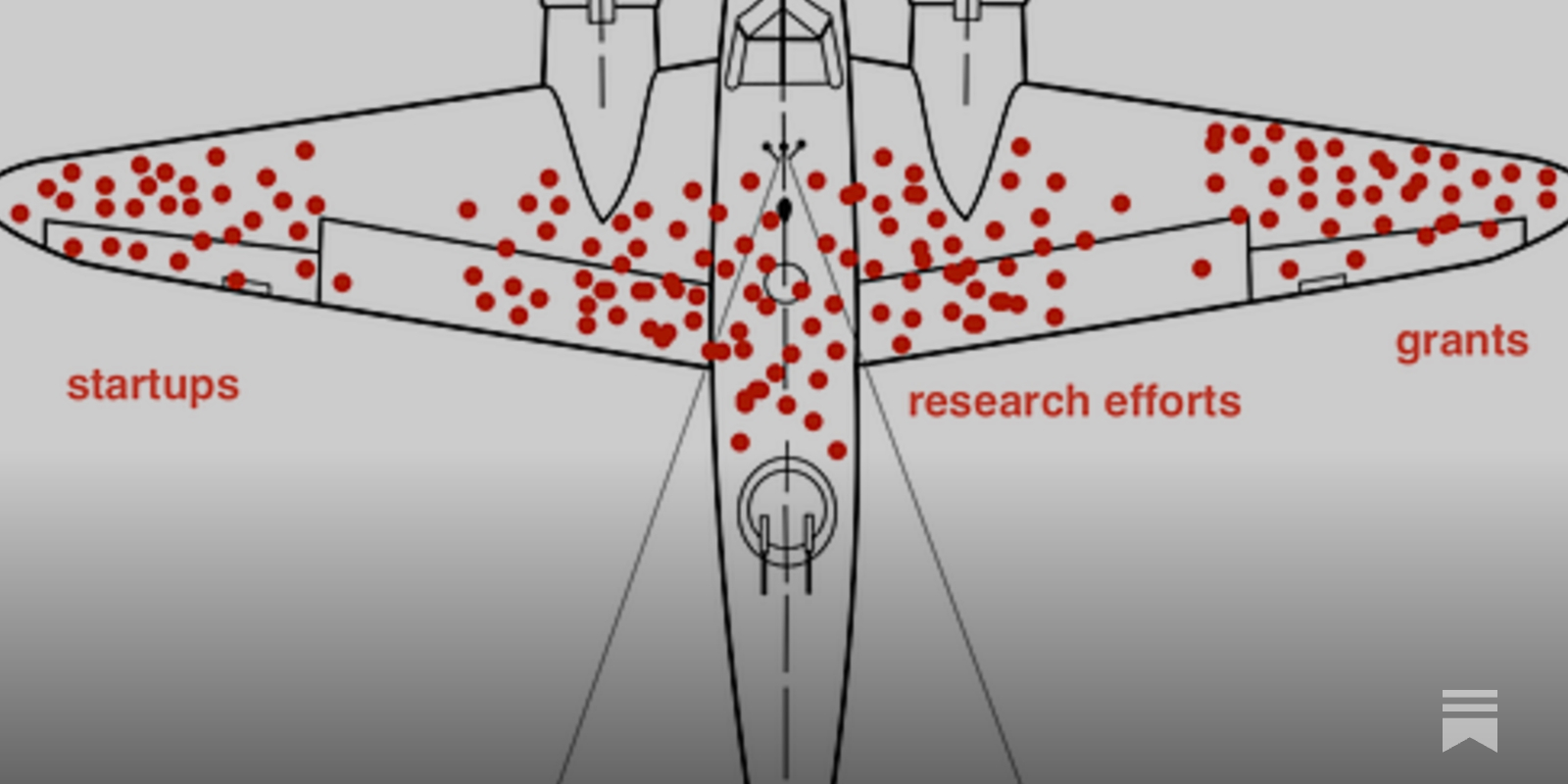
When moving fast, talking is the first thing to break
When you make speed and “moving fast” the biggest priority on a project or in an organization, the first thing to breakdown is talking to each other. Talking takes time. Consensus is expensive and slow. In a pressurized environment there’s no time to schedule calls, get input from subject matter experts, or resolve key differences of opinion. ASAP makes a big assumption that all relevant parties are already in the room.

TCS, AI, and the Adults in the Room | Rambling on Graphs
About us — Code for America
We’re people-centered problem solvers working to improve government in meaningful ways

The Task Space: An Integrative Framework for Team Research
Research on teams spans many contexts, but integrating knowledge from heterogeneous sources is challenging because studies typically examine different tasks that cannot be directly compared. Most investigations involve teams working on just one or a handful of tasks, and researchers lack principled ways to quantify how similar or different these tasks are from one another. We address this challenge by introducing the “Task Space,” a multidimensional space in which tasks—and the distances between them—can be represented formally, and use it to create a “Task Map” of 102 crowd-annotated tasks from the published experimental literature. We then demonstrate the Task Space’s utility by performing an integrative experiment that addresses a fundamental question in team research: when do interacting groups outperform individuals? Our experiment samples 20 diverse tasks from the Task Map at three complexity levels and recruits 1,231 participants to work either individually or in groups of three or six (180 experimental conditions). We find striking heterogeneity in group advantage, with groups performing anywhere from three times worse to 60% better than the best individual working alone, depending on the task context. Critically, the Task Space makes this heterogeneity predictable: it significantly outperforms traditional typologies in predicting group advantage on unseen tasks. Our models also reveal theoretically meaningful interactions between task features; for example, group advantage on creative tasks depends on whether the answers are objectively verifiable. We conclude by arguing that the Task Space enables researchers to integrate findings across different experiments, thereby building cumulative knowledge about team performance. This paper was accepted by Sameer Srivastava, organizations. Funding: The authors thank the Alfred P. Sloan Foundation [Grant #202-13924] and the MIT Wade Fund for their generous support of this research. Supplemental Material: The online appendix and data files are available at https://doi.org/10.1287/mnsc.2023.03544 .

People Spend Too Much Time On Decisions with Equally Satisfying Outcomes
The pitfalls of analysis paralysis
1-2-4-All — Liberating Structures
1-2-4-All guides groups through individual reflection, paired conversation, and whole-group discussion to generate solutions to a specific challenge.
Building a Discourse Community
Sure, anyone can set up their very own Discourse in 30 minutes or less. But how do you get people to go there?

A beautiful constraint – summary
A beautiful constraint. How to transform your limitations into advantages. By Adam Morgan & Mark Barden. Summarised by paul_arnold@me.com – Strategic facilitator, planner and trainer. Th…

An s-frame agenda for behavioral public policy research
We have previously argued thatbehavioral scientists have been testing and advocating individualistic (i-frame) solutions to policy problems that have systemic (s-frame) causes and require systemic solutions. Here, we consider the implications of adopting an s-frame approach for research. We argue that an s-frame approach will involve addressing different types of questions, which will, in turn, require a different toolbox of research methods.
Excellent @tgspodcast.bsky.social episode, finding myself pausing every minute to take notes. "What sorts of systems are going to make it through the bottlenecks of the 21st c?“ TLDR collective robustness beats individual optimization Once (if?) funders get this, atproto will see investments

The Optimization Trap: Why Too Much Efficiency Makes Us Fragile with Olivier Hamant
open.spotify.com
