


(Texto em português depois deste) One approach in solving complex problems The term “cognitive complexity” is used in psychology as the ability to process information that is not well…
Complexity Explorables
A collection of interactive explorable explanations of complex systems in biology, physics, mathematics, social sciences, epidemiology, ecology and other fields....

Why embracing complexity is the real challenge in software today
In the midst of industry discussions about productivity and automation, it’s all too easy to overlook the importance of properly reckoning with complexity.

The Compendium
A compendium of insights about complexity structured as inter-linked cards by Alex Komoroske

All you need is data and functions
It's really easy to tend towards complexity as engineers. I think on some level, we love complexity. There are obviously bad types of complexity, but I think there are other types of it that we seek out, because there's something satisfying about wrapping your head around it; and I think a lot of that kind of complexity ends up in our programming languages.
Cognitive Load Theory and its Applications for Learning - Scott H Young
What makes learning hard? How can we make it easier? Cognitive load theory explains how we learn and how to do it better.
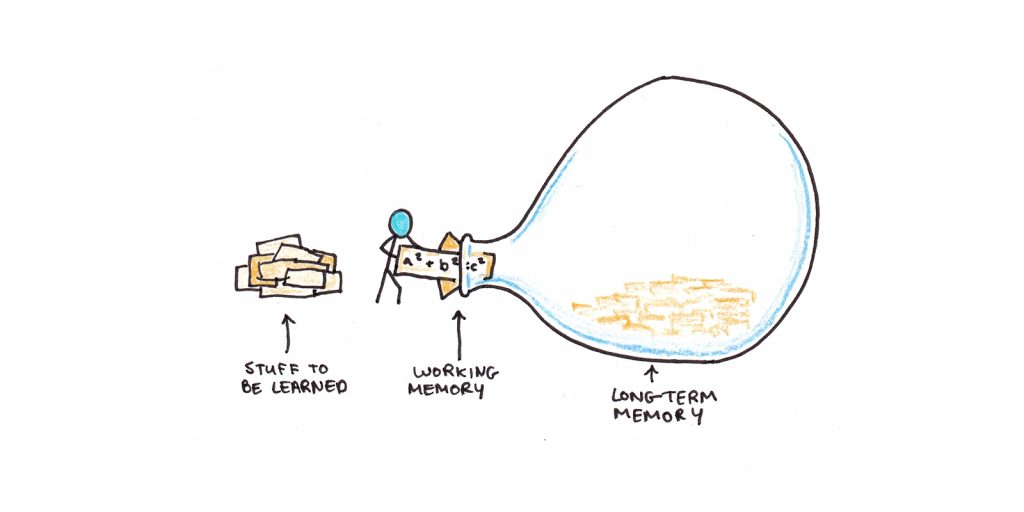
What Makes Us Smart?
Human creativity does not solely rely on our individual cognitive abilities, but instead emerges from the recombination of ideas, practices, and approaches that result from social interactions and id...

Competitive Cognitive Artifacts and the Demise of Humanity: A Philosophical Analysis
David Krakauer seems like an interesting guy. He is the president of the Santa Fe institute in New Mexico, a complexity scientist and ...

Some concerns from a researcher in this space · Issue #22 · zakirullin/cognitive-load
Hi, I do research about the cognitive factors of programming. I just completed my Ph.D. at Stanford involving studies of cognitive load in program comprehension, as detailed here: https://arxiv.org...

Thoughts on thinking | Hacker News
The process of forming expressions just is the process of conceptual and rational articulation (as per Brandom). Those who misunderstand this -- believing that concepts are ready made, then encoded and decoded from permutations of tokens, or, worse, who have no room to think of reasoning or conceptualization at all -- they will be automated away.
Cognitive engineering
Cognitive engineering is an interdisciplinary field that applies principles from cognitive psychology, cognitive neuroscience, and human factors to design and develop engineering systems that effectively support or enhance human cognitive processes.[1][2] The field emerged in the 1980s when Donald Norman and others recognized the need to better understand how humans interact with complex technological systems.[3]
You don't have to be smart if you can think clearly
When you’re on fire, problems are transparent: they’re solved simply by the act of looking at them. Even complicated layers of multiple problems can simply be…
</> htmx ~ Working With AI: A Concrete Example
In this essay, Carson Gross walks through a concrete bug fix in hyperscript to show where AI helped, where it fell short, and why keeping a knowledgeable human in the loop is what kept complexity in check.
Addressing the Precision-Breadth-Simplicity Impossible Trinity in Psychological Research: A Comprehensive Exploration Approach
Psychological research faces a fundamental challenge—the Precision-Breadth-Simplicity (PBS) impossible trinity. While experimental findings are often precise and simple, they tend to be narrow in scope. Conversely, broad-and-simple concepts frequently lack precision. Developing theories that are both precise and broad is scientifically valuable but inevitably introduces complexity, which conflicts with humans’ cognitive limitations in processing complexity. To address this impossible trinity, I propose a comprehensive exploration (CE) approach—a data-guided theory-building framework that involves: (1) designing experimental conditions in a stimulus-driven way, with minimal upfront theoretical specification; (2) conducting experiments with tens of millions of observations (e.g., 40 million responses in Huang, 2025a); (3) modeling the results through iterative improvements; and (4) producing the outcome: a moderately complex quantitative information-processing model to integrate diverse empirical findings. Inspired by similar strategies that drove breakthroughs in artificial intelligence (e.g., ImageNet’s role in advancing object recognition), the CE approach offers a promising path toward more integrative psychological theories. Initial implementations in visual working memory research demonstrate both its practicality and potential to transform how we study mental processes.

Working Minds: A Practitioner's Guide to Cognitive Task Analysis
How to collect data about cognitive processes and events, how to analyze CTA findings, and how to communicate them effectively: a handbook for managers, tr
Creativity Is Not a Scarce Commodity
“Creativity”—an original action or object—occurs frequently. Usually praised in the abstract, it’s seldom recognized or rewarded in ordinary life and in the workings of organizations. Seen in organizational contexts, it can be understood as an interesting activity whose potential value organizational constraints make it impossible to recognize for what it is.