


Or, Why Google keeps killing products
Google is its own worst enemy
In its bid to push AI, it’s destroying its products and trying to kill the web too

Google Fights Back
At Google I/O, Google was the opposite of defensive: the company set out to make the case that its approach made for better products that makes people’s lives better

Why Do the Biggest Companies Keep Getting Bigger? It’s How They Spend on Tech
The secret of success for Amazon, Google and Microsoft is how much they invest in their own technology.

Killed by Google
Killed by Google is the Google Graveyard. A full list of dead products killed by Google in the Google Cemetery.
How to not screw up your product strategy | Jade Rubick - Engineering Leadership
An overview of common mistakes people make while developing a product strategy, tips for creating a successful strategy, and how to communicate and execute on a product strategy.

‘How Google Works,’ by Eric Schmidt and Jonathan Rosenberg (Published 2014)
Two technology executives explain the business methods behind Google’s groundbreaking success.

Many Strategies Fail Because They’re Not Actually Strategies
Many strategy execution processes fail because “new strategies” are often not strategies at all. A real strategy involves a clear set of choices that define what the firm is going to do and what it’s not going to do. Many strategies fail to get implemented because they do not represent such a set of clear choices. And many so-called strategies are in fact goals. “We want to be the number one or number two in all the markets in which we operate” is one of those. It does not tell you what you are going to do; all it does is tell you what you hope the outcome will be. But you’ll still need a strategy to achieve it. Another reason why many implementation efforts fail is that executives see it as a pure top-down, two-step process: “The strategy is made; now we implement it.” That’s unlikely to work. A successful strategy execution process is seldom a one-way trickle-down cascade of decisions.

Investor money vs. public interest: did Google fail to build a non-evil platform?
Don’t be evil. That was Google’s official motto, until recently.
Google's Clever Plan to Stop Aspiring ISIS Recruits
The company's tech incubator and think tank subsidiary Jigsaw is trying the ISIS-fighting technique Google knows best: targeted advertising.

The Shareholder Supremacy
I promise you, everything that's happening makes sense. It all feels so chaotic, so utterly, offensively stupid, so disconnected from reality that it's hard to understand how Meta can run a terrible company with decaying services that's also wildly profitable, or how Meta, Microsoft and Google can

Good Product Manager/Bad Product Manager | Andreessen Horowitz
Warning: This document was written 15 years ago and is probably not relevant for today’s product managers. I present it here merely as an example of a useful training document. Good product managers know the market, the product, the product line and the competition extremely well and operate from a strong basis of knowledge and...

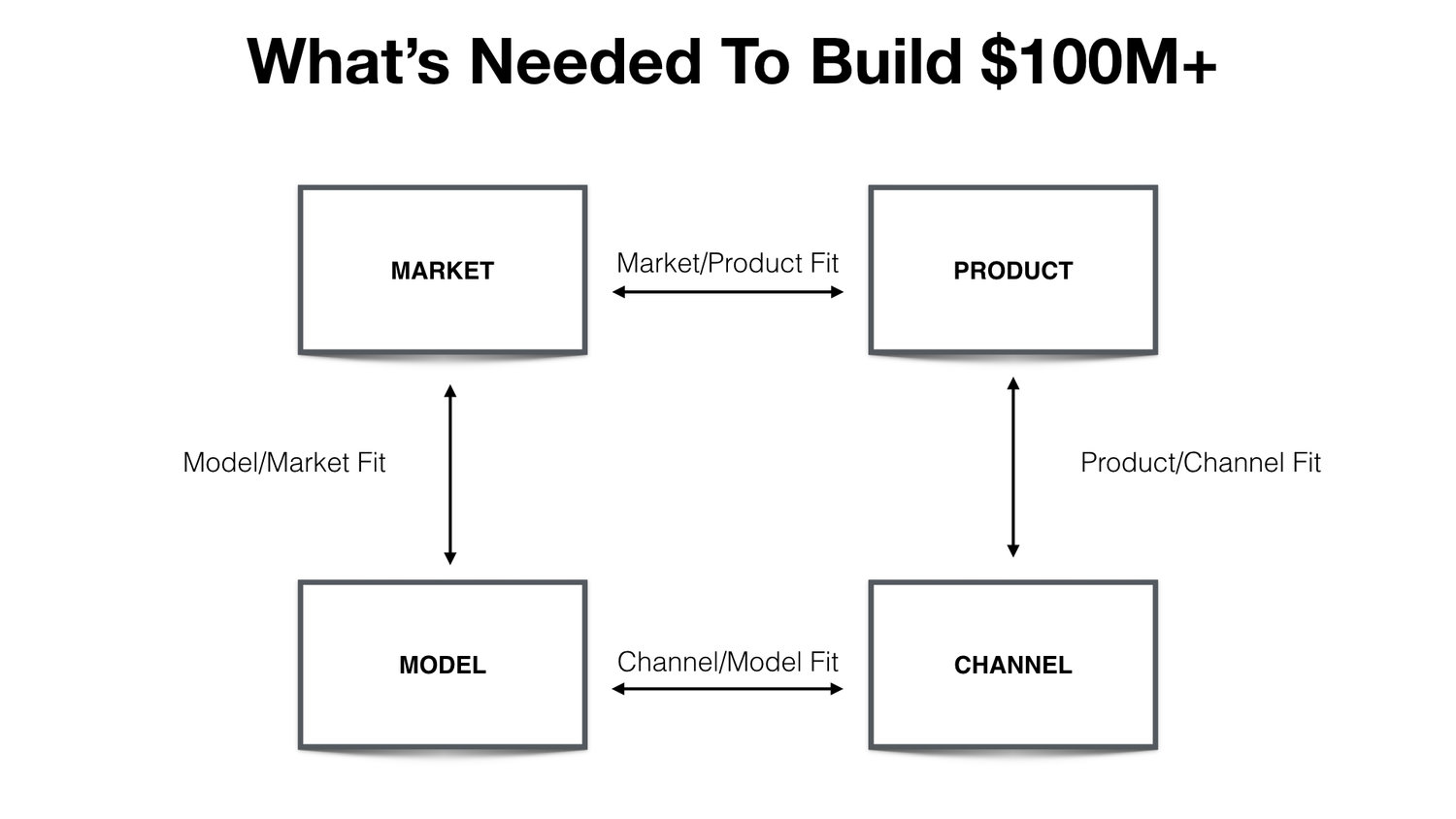
Why Product Market Fit Isn't Enough — Brian Balfour
I’ve been lucky to have been part of building, advising, or investing in 40+ tech companies in the past 10 years. Some $100M+ wins. Some, complete losses. Most end up in the middle. One of my main observations is that there are certain companies where growth seems to come easily, like gui
I Don’t Care What Google or Apple or Whoever Did
Please do not use this post as an excuse to beat up the devs at Apple or Google. If you are doing that, you have missed the point of this post and you are being unnecessarily mean to individuals who may have no control over broader organizational decisions. Do not…
Pluralistic: The worst possible antitrust outcome (03 Sep 2025) – Pluralistic: Daily links from Cory Doctorow
Last year, Google lost an antitrust case to Biden's DoJ. The DoJ lawyers beat Google like a drum, proving beyond a shadow of a doubt that Google had deliberately sought to create and maintain a monopoly over search, and that they'd used that monopoly to make search materially worse, while locking competitors out of the market.
Mektup #32: Product Shouldn't Be Left to Product Managers
Hunting timeless insights into humans and software and helping others on the way.