


The “professional managerial class” is a staple of recent cultural commentary, but there's no empirical evidence for its existence. The PMC catch-all clouds our understanding of the middle classes and the capital-labor divide.
New Capitalism II: Compositional vs income inequality
Are all class-based societies unequal?
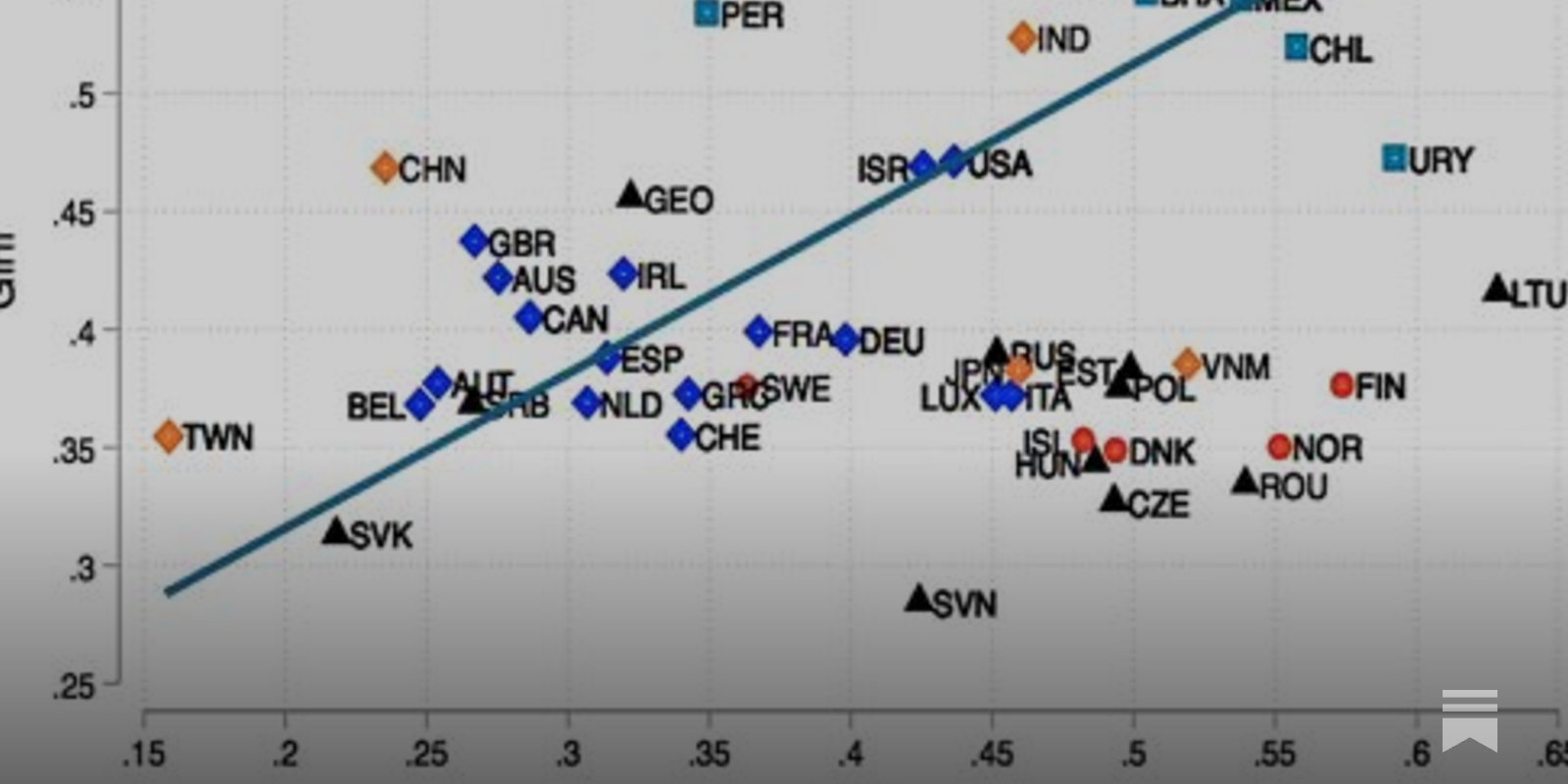
(PDF) The Precariat and Class Struggle *
PDF | The world economy is in the midst of a Global Transformation that is producing a new global class structure. A new class is emerging – the... | Find, read and cite all the research you need on ResearchGate

Le nouveau capitalisme (2/3) : inégalités compositionnelles versus inégalités de revenu
Traduction de "New capitalism II: Compositional vs income inequality. Are all class-based societies unequal?" de Branko Milanovic

The Chief People Officer as PM: Rethinking The Systems & Tools That Run the Company
Credit Karma's Colleen McCreary views her role not as the CEO of culture or happiness, but rather the product manager of the systems and tools that run the company. Here's her advice for approaching compensation, rewards and recognition, performance management, and internal comms with a fresh perspe

Preface | The World After Capital
Since publishing the previous version of The World After Capital, I have met with people across the political spectrum to discuss the ideas from the book. When I present these in person, I emphasize that the ideas are neither left nor right but forward (credit to Scott Santens who first used this phrase about Universal Basic Income). My writing, however, at times has alienated readers who identify as being more on the right. In this new edition, I am therefore making an extra effort to emphasize how both my diagnosis of where we are at and my suggestions for how to move forward do not map onto the existing political divides. Instead this is a new way of understanding our challenges and opportunities that can be the basis for movements and parties that are not trapped in Industrial Age ideology.
Post-Meritocracy – Will Scott
A defining characteristic of the industrialized world has been the promise of meritocracy: if you’re smart and work hard, you can improve your position in life. The promise has always had limits, and class mobility has often been more aspiration than reality, but the belief itself has been a driving motivation for much of society.…

Call for Papers: Karl Marx and Max Weber on the Topic of Machines Dominating Labour
Part of the Joint Conference 2026 (JC2026) The 2nd RC20 Regional Conference on Comparative SociologyThe 1st RC56 Regional Conference on Historical SociologyThe 5th RC33 Regional Conference on Social Science Methodology: Asia📍 Khon Kaen University, Thailand / Japan Women’s University, Tokyo, Japan🗓 24–28 August 2026(Online Conference) Session Organizer Dr. Noel Packard, PhDIndependent Researcher and 2023 PhD...
A 26-year-old MIT graduate is turning heads over his theory that income inequality is actually…
Wealthy tech founders and the automation of middle-class jobs are often blamed for increasingly concentrations of wealth in the 1%. But, a…

A 26-year-old MIT graduate is turning heads over his theory that income inequality is actually…
Wealthy tech founders and the automation of middle-class jobs are often blamed for increasingly concentrations of wealth in the 1%. But, a…
Where the Middle Class Is Shrinking (Published 2016)
The percentage of families earning middle-class incomes fell in nearly nine out of 10 major metro areas across the country between 2000 and 2014, according to new research by the Pew Research Center. Here we take a look at the 100 metro areas with the sharpest decline in the percentage of people in the middle class.

What the Working Class Really Believes
A new study tracks the evolution of working-class beliefs, and those of more upper classes, over the past 65 years.

Muskism, capitalism according to Elon Musk
Capitalism in Crisis Amid Slow Growth and Growing Inequality
Six years after the Lehman disaster, the industrialized world is suffering from Japan Syndrome. Growth is minimal, another crash may be brewing and the gulf between rich and poor continues to widen. Can the global economy reinvent itself?

The Tipping Point: Most Americans No Longer Are Middle Class
In the post-World War II economy, most Americans lived in middle-income homes. But that has been shifting for decades. Today, middle-income families make up less than 50 percent of all households.

We Found The Radical Solution That Could End Corporate Monopolies