

How AI Destroys Institutions
Civic institutions—like the rule of law, higher education, and a free press—are the backbone of democratic life. They are the mechanisms through which complex s

Stop the AI Build-Out, Start the Fight
Across the country, working-class communities are rising up against Big Tech’s data center boom. A moratorium isn’t the end goal — it’s the only leverage we have to force real democratic control over artificial intelligence.

What does it mean for AI to be democratic?
Some pushback on a specific fuzzy idea with some ominous implications

How AI Destroys Institutions
Civic institutions—the rule of law, universities, and a free press—are the backbone of democratic life. They are the mechanisms through which complex societies encourage cooperation and stability, while also adapting to changing circumstances. The real superpower of institutions is their ability to evolve and adapt within a hierarchy
3: Consulting the Record: AI Consistently Fails the Public - AI Now Institute
Amid the excitement over AI’s (speculative, hypothetical) potential, we have lost sight of the sobering reality of its present and recent past. AI is already intermediating critical social infrastructures, materially reshaping our institutions in ways that ratchet up inequality and concentrate power in the hands of the already powerful. It is consistently deployed in ways […]
Democratizing AI Companies — The Collective Intelligence Project
As AI reshapes society, the companies behind these technologies face a critical challenge: how to build corporate governance structures that prioritize public benefit over profit maximization;.

A Roadmap to Democratic AI — The Collective Intelligence Project
Our roadmap outlines concrete steps that can be taken in 2024 to build a more democratic AI ecosystem that is adaptive, accountable, processes decentralized information, provides public goods, and safeguards human wellbeing. We describe what the ecosystem could build, research, advocate for, and fun
Democracy x AI Cohort | Mozilla Foundation
The Democracy x AI cohort is founded on the hypothesis that, if built differently, AI could strengthen democracy rather than erode it.
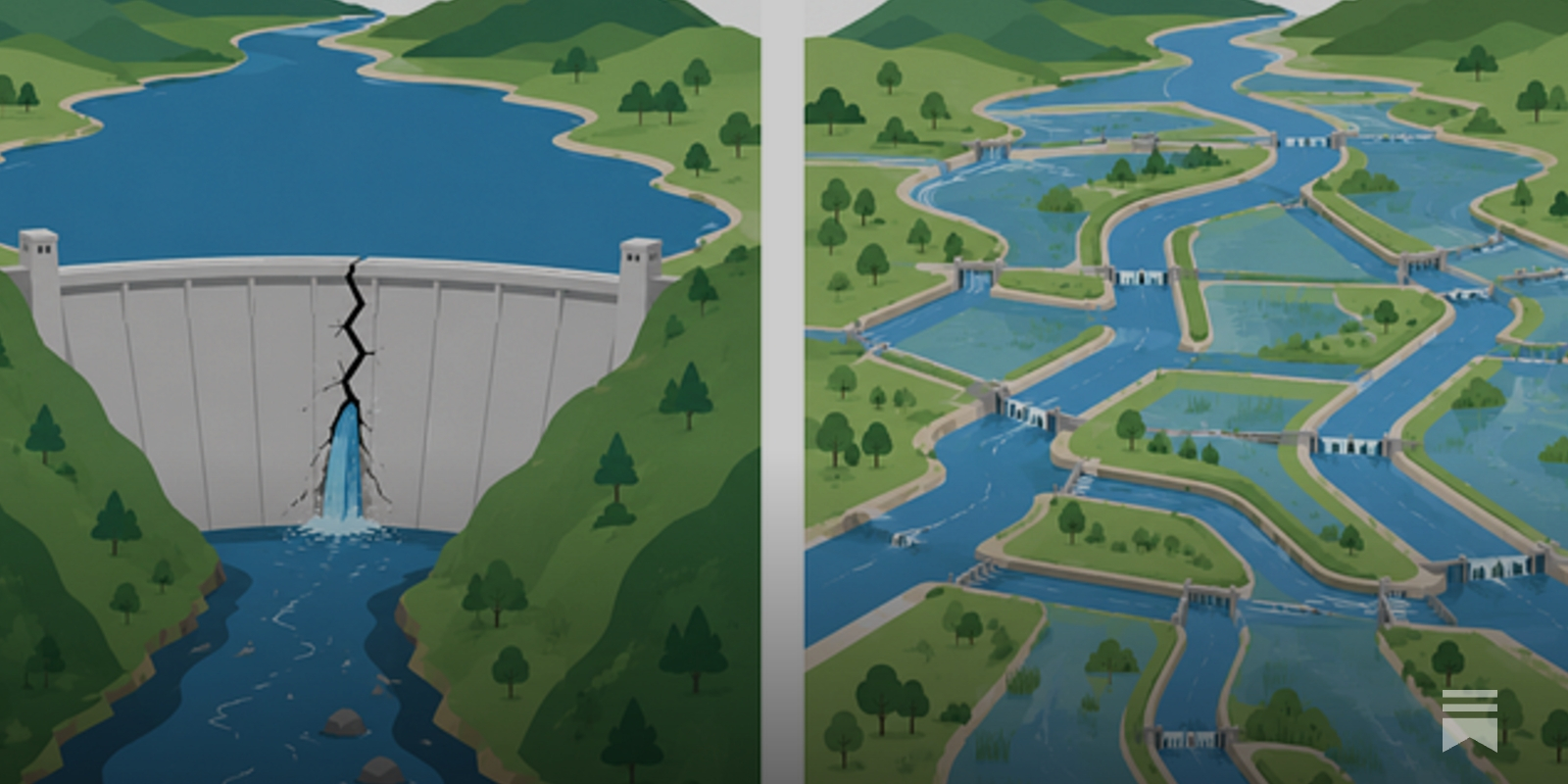
Building Political Superintelligence
Amidst fears of dystopia, a blueprint for how we use AI to reinvent the way we govern ourselves

How Shifting Responsibility for AI Harms Undermines Democratic Accountability | TechPolicy.Press
The moralization of individual AI use deflects responsibility away from powerful actors like corporations and governments, Suvradip Maitra and others write.

‘Think Everybody Dead’: How the Threat of AI Is Fueling a New Political Alliance
A billionaire-backed movement from Silicon Valley and populists like Bernie Sanders are eager to stop an AI disaster — but can they overcome their mutual distrust and work together?
Do AI Risks Require Extraordinary Government Intervention?
Let’s not skip the hard work of AI governance
Governments Can’t Agree on What AI Actually Is
Without clear definitions, governance is impossible.

From chatbots to assistants: governance is key for AI agents
AI's shift into agentic technology ushers in a new set of governance and security challenges that will mean defining to what extent they should be autonomous

Democracy Needs AI That Listens
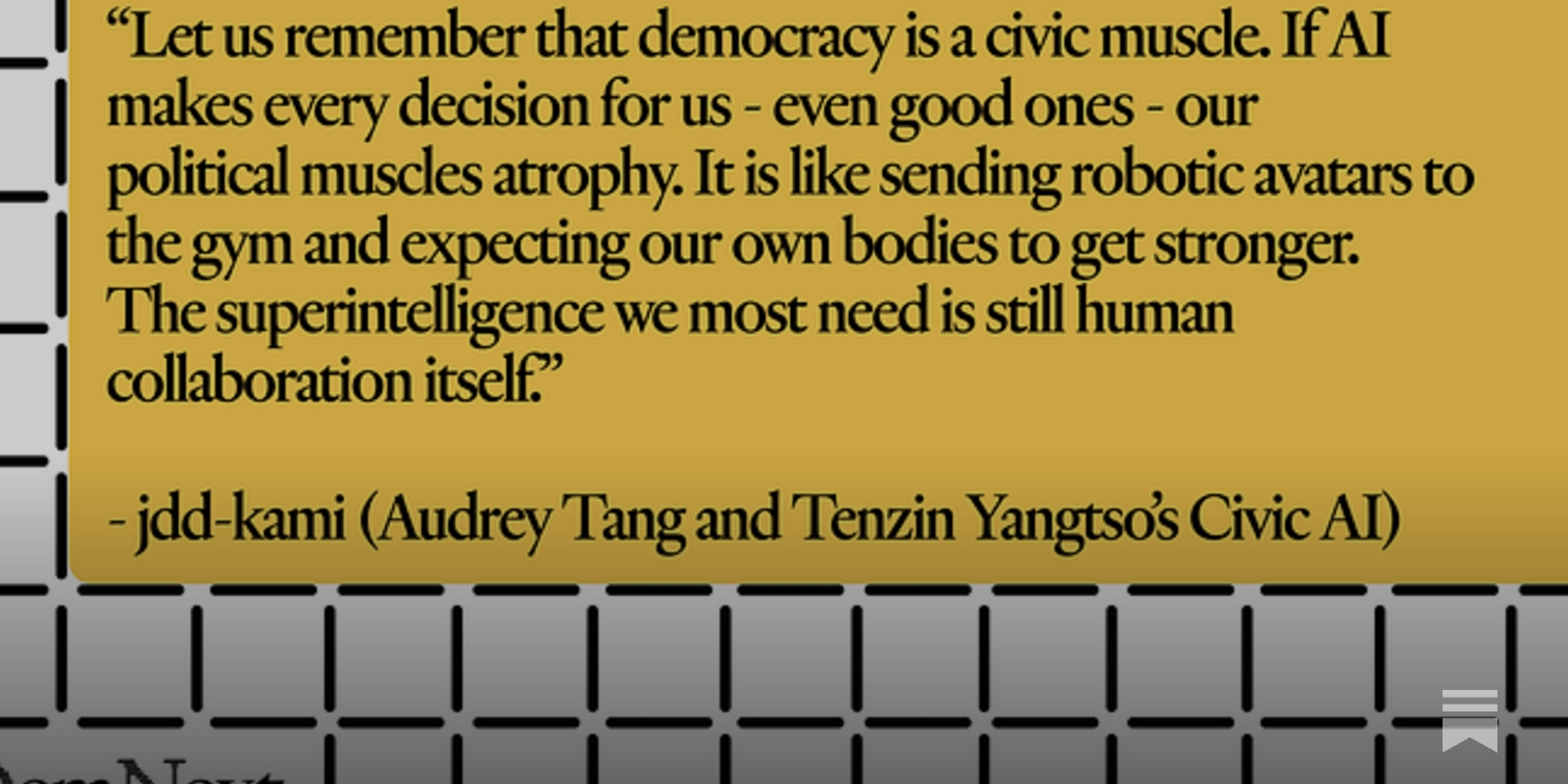
From Taiwan's deliberative experiments to our own AI policy - featuring jdd-kami, the Civic AI that fits in a carry-on
Inside the Dirty, Dystopian World of AI Data Centers
The race to power AI is already remaking the physical world.


The potential for catastrophic effects from the AI boom demands robust deliberation and real democratic governance. Localized initiatives like data center moratoria won't get us there.