


Though it’s only been a decade since Lin-Manuel Miranda’s magnum opus premiered, the hit musical Hamilton represents a bygone period in American politics.
SF's Tech Right Debates the Ideal Dictator
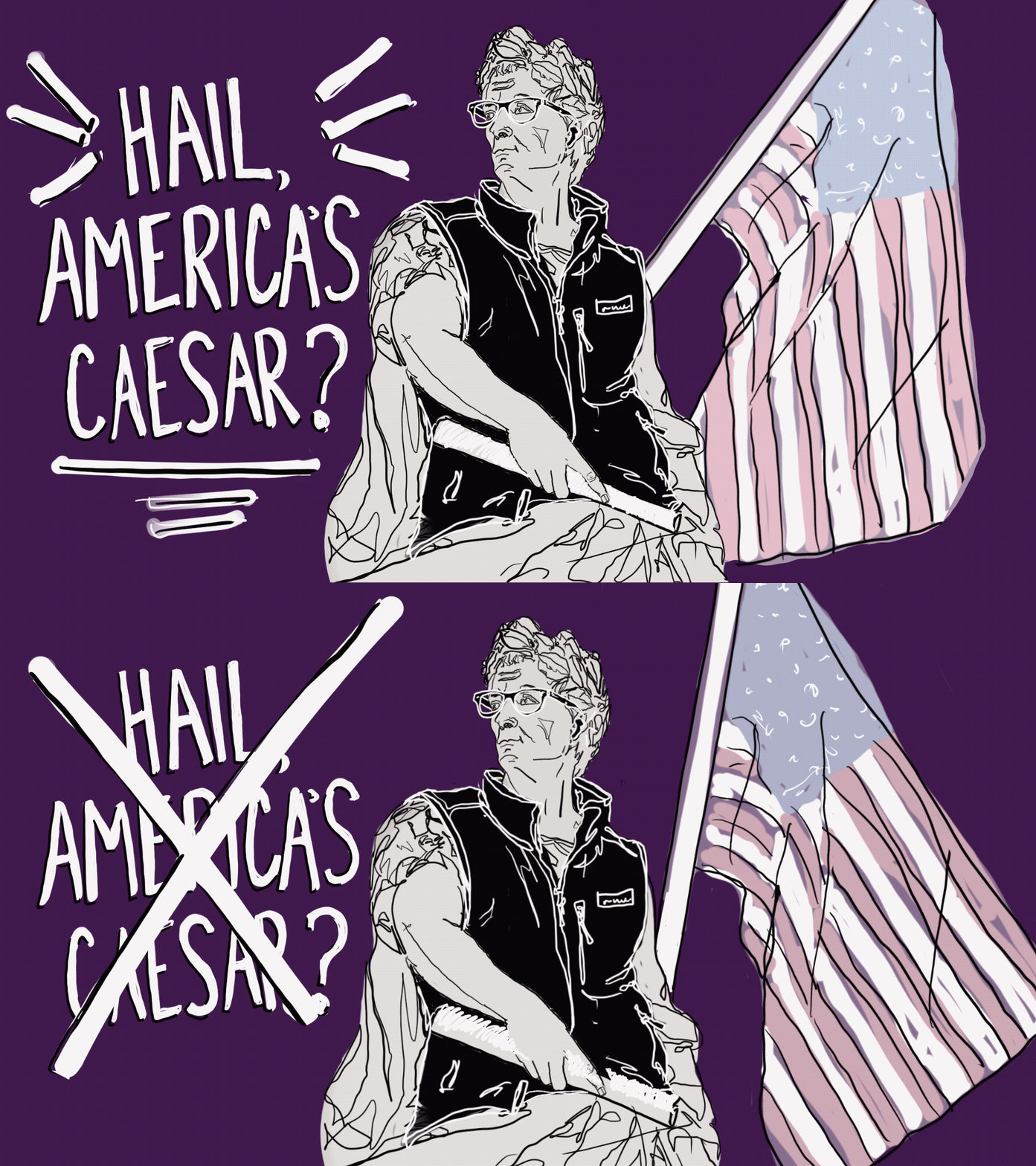
Putrid vibes reigned at SF billionaire-funded Hamilton Society debate.
Your Life is Always Just Beginning
Famously, The Sopranos ended in a way that infuriated a lot of fans. At an apparently critical moment in the story, the audio and video cut to black. After ten seconds, the credits roll. ...
» The Life and Times of Maxis, Part 1: SimEverything The Digital Antiquarian
I’m still to this day just blown away by continental drift and things like that, stuff that most people think sounds pretty boring.
Opinion: Dystopia Arrives in Columbus During Anduril Site Visit - Columbus Underground
Having sat through many similar types of media events over the past 25 years, it felt like a pretty run-of-the-mill event. And that normalcy left me uneasy.

the Long 90s are Over
The demise of the nation state
The long read: After decades of globalisation, our political system has become obsolete – and spasms of resurgent nationalism are a sign of its irreversible decline

The obsolescence of man, vol I , part 2: The world as phantom and as matrix: philosophical considerations on radio and television - Günther Anders
The first complete English translation of a remarkable 1956 essay about television from Vol. I of The Obsolescence of Man by Günther Anders, who—using phenomenological analyses, excerpts from his diaries and reflections on daily life—depicts a capitalist world that manufactures a warped “mass-man” by imposing nonparticipation, consumption of images, artificial “needs” (“drug addiction is the model for today’s needs”), separation, “conditioning”, an eternal present, commodified leisure and the dissolution of the individual in vapid mass produced roles, in a text that in many ways anticipates the theory of the “spectacle” of Guy Debord and the situationists.
Myopic memory: Capitalism's new continuity in the age of AI
This article is a commentary on the relationship between artificial intelligence (AI), capitalism, and memory. The political policies of neoliberalism have reduced the capacity of individuals and groups to reflect on and change the social world, meanwhile applications of AI and algorithmic technologies, rooted in the profit-seeking objectives of global capitalism, deepen this deficit. In these conditions, memory in individuals and across society is at risk of becoming myopic. In this article, I develop the concept of myopic memory with two core claims. Firstly, I argue that AI is a technological development that cannot be divorced from the capitalist conditions from which it comes from and is implemented in service of. To this end, I reveal capitalism and colonialism's historical and contemporary use of surveillance as a way to control the populations it oppresses, imagining their pasts to determine their futures, disempowering them in the process. My second core claim emphasises that this process of disempowerment is undergoing an acute realisation four decades into the period of neoliberalism. Neoliberal policies have restructured society on the basis of being an individual consumer, leaving little time, space, and institutional capacity for citizens to reflect on their impact or challenge their dominance. As a result, with the growing role of AI and algorithmic technologies in shaping our engagement with society along similar lines of individualism, it is my conclusion that the scope of memory is being reduced and constrained within the prism of capitalism, reducing its potential, and rendering it myopic.
Terence McKenna's Last Trip
The "altered statesman" emerged from Leary's long shadow to push a magical blend of psychedelics, technology, and revelatory rap. He had less time than he knew.
Long cycles
I have long been sympathetic to the concept of long cycles in capitalist production and accumulation. This is the idea that capitalist production moves in cycles, not just in booms and slumps every…

Jeremy Gilbert on Twitter / X
Really useful analysis of NR / neo-monarchism/ long-termism as authoritarian responses to the perception that democracy just can't get anything done (cos it's locked in to the short-termism of the popularity / electoral cycle). Free to read here: https://t.co/U4z0qmBReM https://t.co/NG4XIUM6O8— Jeremy Gilbert (@jemgilbert) September 21, 2026
Universal Music Group: Decades of Masters Lost
Last year, I wrote an article detailing how record companies have a checkered past when it comes to properly archiving their master recordings. Among some of the revelations noted (thanks to a bril…

Rethinking the Large Ensemble Paradigm: Moving Toward Epistemic Justice
In this paper, I center the epistemic dimensions of musics and musicking to consider the ways in which the band/orchestra/choir paradigm of music education prevalent in the U.S. and Canada may be implicated in epistemic injustice. Drawing in particular on the work of Fricker (Epistemic injustice: power and the ethics of knowing, Oxford University Press, New York, 2007), Dotson (Hypatia 26(2):236–257, 2011), and The Routledge Handbook of Epistemic Injustice (Kidd et al., The Routledge handbook of epistemic injustice, Routledge, New York, 2017), I explore facets of epistemic injustice and apply these ideas to music education school contexts in Canada and the U.S. I further explore aspects of school music that may amount to “testimonial smothering” (Dotson 2011) and “cognitive imperialism” (Battiste in Can J Native Educ 22:16–27, 1998). Ultimately, building on existing literature on epistemic justice (Kidd et al. 2017; Fricker 2007), I theorize an epistemically just music education for school music in alignment with culturally responsive, anti-racist, and anti-colonial teaching.
Sci-Fi Classical
Get into the orchestra Marty, we're going back to the future. Neo Tango, Neo Classical, Future Music.


The present no longer lasts long enough to be a setting. All fiction is either science fiction or historical fiction. I've been saying this for long enough that even this statement itself is no longer true. The future doesn't last long enough either. All science fiction is now retrofuturism.
