


A new study finds an alarming rise in a novel form of psychological distress. Call it “neoliberal perfectionism.”
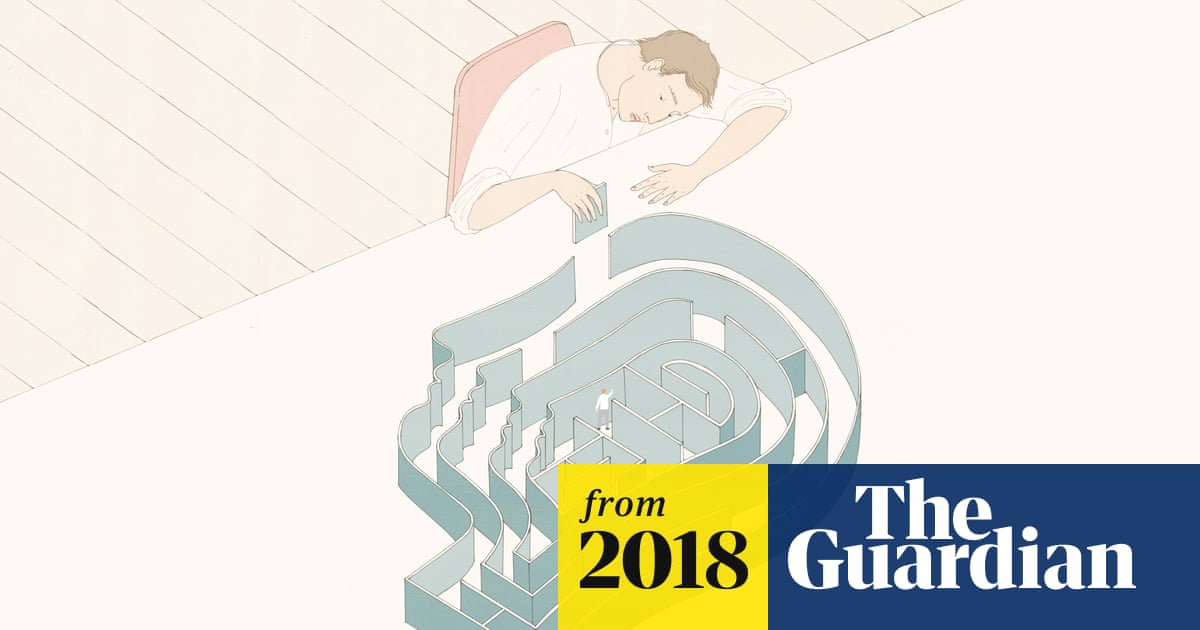
‘My brain feels like it’s been punched’: the intolerable rise of perfectionism
The pursuit of perfection, taken to extremes, can lead to OCD and depression – and the number of students reporting the problem has jumped by 33% since 1989
being too ambitious is a clever form of self-sabotage
on starting, doing, being, and becoming.

Perfectionism is a scourge on my agency
My affinity for craftsmanship consistently prevents me from finishing my works, and it sucks.

Pluralistic: The first days of Boss Politics Antitrust (24 Jan 2025) – Pluralistic: Daily links from Cory Doctorow
"Boss politics" are a feature of corrupt societies. When a society is dominated by self-dealing, corrupt institutions, strongman leaders can seize control by appealing to the public's fury and desperation. Then, the boss can selectively punish corrupt entities that oppose him, and since everyone is corrupt, these will be valid prosecutions.
Inverted totalitarianism
Inverted totalitarianism is a theoretical system where economic powers like corporations exert subtle but substantial power over a system that superficially seems democratic. Over time, this theory predicts a sense of powerlessness and political apathy, continuing a slide away from political egalitarianism.
The Nightmare of Valve’s self-organizing “utopia”
How Valve’s perfect work culture turned into a toxic bully’s yard and what it tells us about “flat hierarchy” workplaces.
The Tyranny of Structurelessness
"The Tyranny of Structurelessness" is an essay by American feminist Jo Freeman that concerns power relations within radical feminist collectives. The essay, inspired by Freeman's experiences in a 1960s women's liberation group,[1][2] reflected on the feminist movement's experiments in resisting leadership hierarchy and structured division of labor. This lack of structure, Freeman writes, disguised an informal, unacknowledged, and unaccountable leadership, and in this way ensured its malefaction by denying its existence.[3] As a solution, Freeman suggests formalizing the existing hierarchies in the group and subjecting them to democratic control.
The Liberalism to Fascism Pipeline (Neoliberalism Explained)
Neoliberal Fascism as the Endpoint of Casino Capitalism
This article explores neoliberal fascism as a distinctive political formation within the current historical moment. In doing so, it first analyzes neoliberalism as a project that has since the 1970s destroyed all the commanding institutions of democracy while consolidating power in the hands of a financial elite. In addition, it analyzes neoliberalism as a movement, that produces and legitimates massive economic inequality and suffering, privatizes public goods, dismantles essential government agencies, and individualizes all social problems. Under such circumstances, neoliberalism creates the conditions for right wing extremists to mobilize the anger of white disenfranchised working class populations by both appealing to the economic injustices they experience while simultaneously blaming and directing their frustrations towards non-white minority groups such as immigrants, blacks, and Muslims. It is precisely this merging of the social, political, and economic hardships produced by neoliberal capitalism and its appropriation of the discourse of white supremacy to divert attention from its worst excesses and failures that a neoliberal fascism is produced. Â More specifically, I argue that in the face of 40 years of neoliberalism with its production of massive inequality, a frontal attack on the welfare state, and the erosion of civic institutions and culture, there has been a resurgence of fascist discourses and a populist fascist political movement. Neoliberal fascism represents the conjoining of the most extreme elements of casino capitalism with the discourses of racial cleansing, and white nationalism. The article concludes by examining how atomization, fear, and anxiety have become the breeding grounds of fascism and what it means to revive education as a central tenet of politics so as to address the task of not simply resisting oppressive economic structures, but also what it means to engage in the massive challenge of changing individual and collective consciousness as a precondition for collective struggle and the building of new social movements. Author Biography Henry Giroux, McMaster University Chair for Scholarship in the Public Interest The Paulo Freire Distinguished Scholar in Critical Pedagogy
Opinion | The Perils of Perfection (Published 2013)
The dominant ideology of Silicon Valley today is: what could be disrupted should be disrupted — even death.

Actually, Democracy Dies in H.R.
New research sheds light on how mediocre employees help would-be authoritarians maintain power.

How Do You Become a Great Manager When You’re Not Always OK Yourself?
What happens when the person responsible for supporting everyone else is struggling themselves? A personal reflection on living with depression while leading engineering teams, the emotional cost of projecting confidence, and learning to manage self-doubt, feedback, and mistakes. It explores why effective leadership doesn't require perfection and why seeking professional help shows self-awareness rather than weakness.

This, and even more - to get super-rich almost requires *suppressing* the cultivation of a self or interiority. “Our system produces, elevates, and rewards psychopaths.” x.com/uTobian/status/20412132683884…

Levi Stahl
The empty boredom of the super-rich who never had to cultivate a self or interiority is the root cause of so many of our problems.
It can also be argued that authoritarianism is just politically superior at administering a political economy of broken promises and stagnating or falling standards of living. hup.harvard.edu/books/9780674976788

The Triumph of Broken Promises — Harvard University Press
www.hup.harvard.edu
