


The early manifestation of metabolic syndrome (MetS) in children, characterized by the premature onset of visceral obesity, elevated blood pressure, and the progression to dyslipidemia and type 2 diabetes, is associated with adult cardiovascular disease. Tackling the rising epidemic of obesity and...
Genetic Determinants of Macronutrient Intake Are Associated With Specific Food Intake in Youth: A Cohort Study Across Childhood and Adolescence
OBJECTIVE. We examined associations of polygenic scores (PS) for macronutrient intake with food intake and cardiometabolic outcomes during childhood and ad

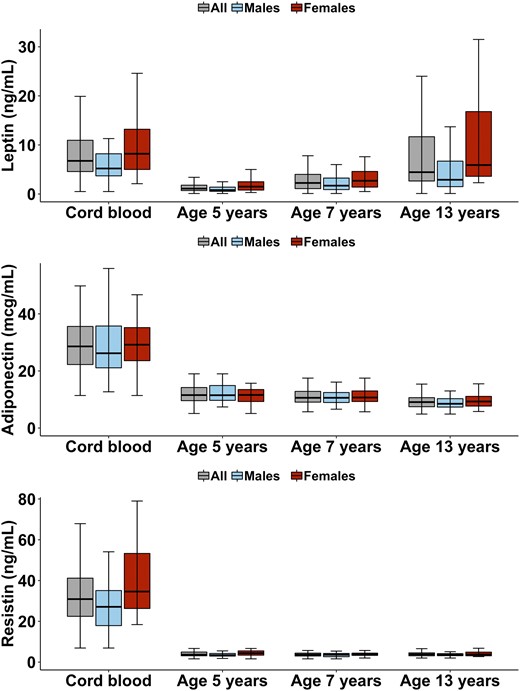
Early Life Exposures to Perfluoroalkyl Substances in Relation to Adipokine Hormone Levels at Birth and During Childhood
Prenatal and early postnatal exposures to perfluoroalkyl substances were associated with decreases in adipokine hormone levels over the childhood period in
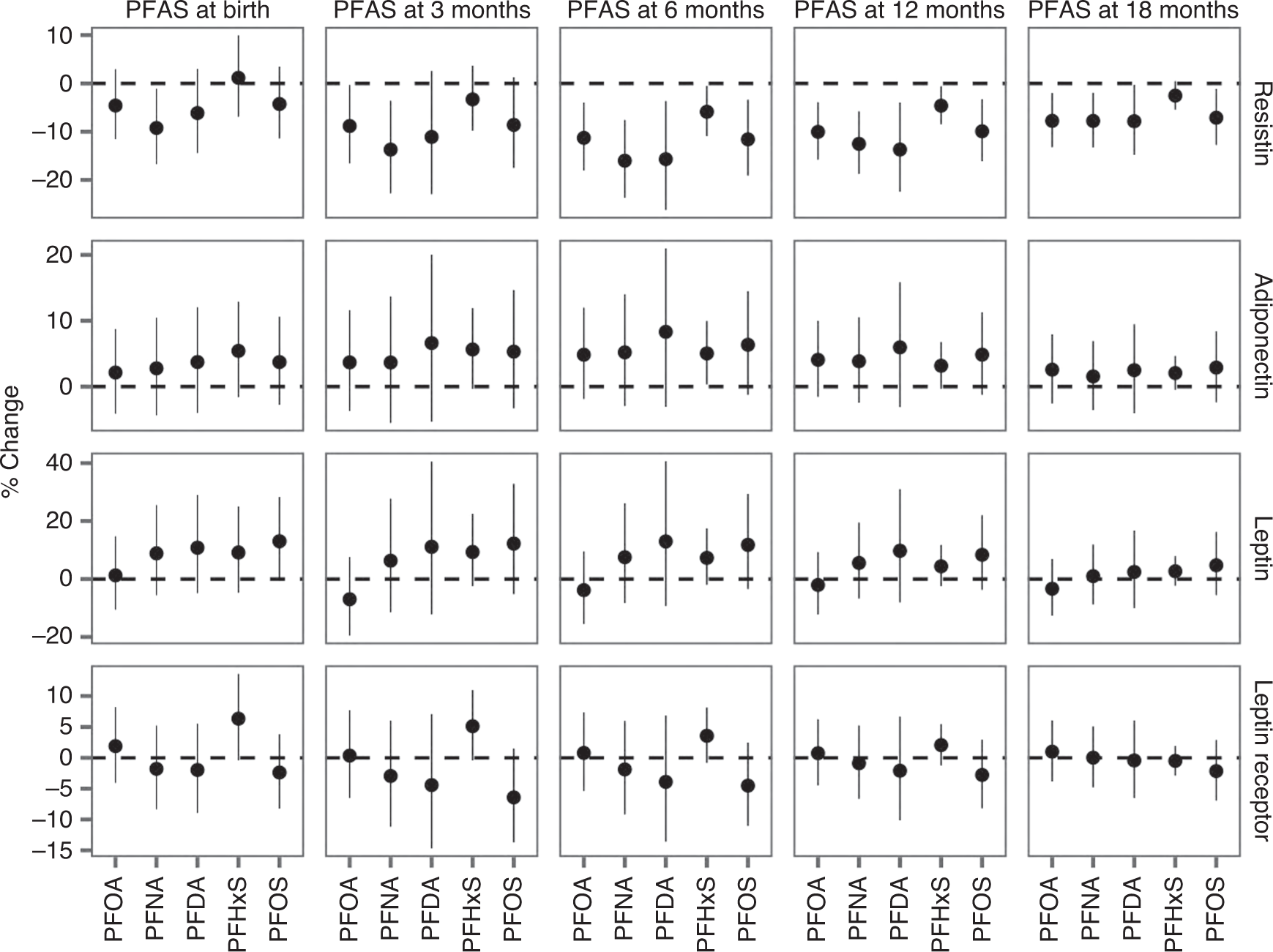
Estimated exposure to perfluoroalkyl substances during infancy and serum-adipokine concentrations in later childhood
Perfluoroalkyl substances (PFASs) are transferred through human milk and may cause elevated exposure during infancy. Given the lack of early postnatal blood samples, PFAS concentrations can be estimated to serve as predictors of subsequent metabolic toxicity.
Incident gout and weight change patterns: a retrospective cohort study of US adults
Although the relationship between obesity and incident gout has been clarified, the influence of weight changes during the transition from early adulthood to midlife and the different weight change patterns in specific age ranges on the incidence of gout in later life remain unknown. Therefore, we aimed to investigate the association between weight change patterns across adulthood and incident gout.

Hypoglycemia Associated With Hypermobile Ehlers-Danlos Syndrome
Abstract. Hypoglycemia in the absence of diabetes is often multifactorial and challenging to diagnose definitively. We present a case report and an expande
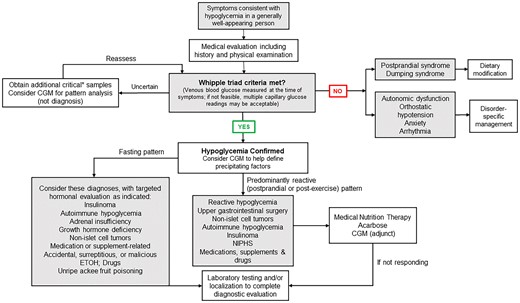
(PDF) Neuroendocrine, Autonomic and Metabolic Challenges in Hypermobile Ehlers-Danlos Syndrome- A Case Study on Hypoglycemia in a patient with Craniocervical Instability.. Medical Research Archives. [Online] 12-5
PDF | This report presents a compelling case of hypoglycemia in a 20-year-old female with craniocervical instability receiving chronic total parenteral... | Find, read and cite all the research you need on ResearchGate

Everything You Know About Obesity Is Wrong
For decades, the medical community has ignored mountains of evidence to wage a cruel and futile war on fat people, poisoning public perception and ruining millions of lives. It's time for a new paradigm.

Progesterone and plasma metabolites in women with and in those without premenstrual dysphoric disorder
BACKGROUND: The molecular mechanisms underpinning the progesterone-triggering mood symptoms in women with premenstrual dysphoric disorder (PMDD) are unknown. Cell metabolism is a potential source of variability. Very little is known about the effect of progesterone sensitivity on the metabolome. In this study, we aimed to characterize the effects of progesterone on the global metabolic profile and explore the differences between women with PMDD and controls. METHODS: Plasma was obtained from 12 women with prospectively confirmed PMDD and 25 controls under two hormone conditions: (1) gonadal suppression induced by leuprolide acetate (3.75 mg IM monthly) and (2) add-back phase with leuprolide and progesterone (200 mg twice daily by vaginal suppository). The global metabolic profile was obtained using liquid and gas chromatography followed by mass spectrometry. Differences between groups and time points were tested using repeated measures analysis of variance. The false discovery rate was calculated to account for multiple testing. RESULTS: Amino acids and their derivatives represented 78% (28/36) of the known compounds that were found in significantly lower plasma concentrations after progesterone administration than during gonadal suppression. The concentration of tyrosine was nominally significantly decreased after progesterone add-back in controls, but not in cases (P = 0.02). CONCLUSION: Plasma levels of some amino acids are decreased in response to progesterone. Albeit preliminary, evidence further suggests that progesterone has a different effect on the metabolic profiles of women with PMDD compared to controls. Further research is needed to replicate our findings in a larger sample and to identify the unknown compounds, especially those differentially expressed.

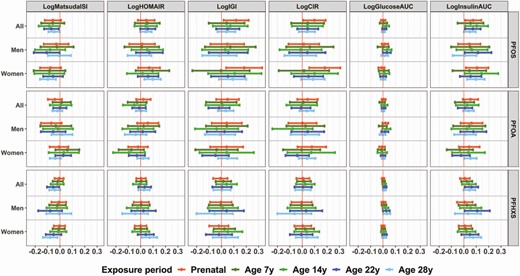
Life-course Exposure to Perfluoroalkyl Substances in Relation to Markers of Glucose Homeostasis in Early Adulthood
AbstractObjective. To investigate the prospective associations of life-course perfluoroalkyl substances (PFASs) exposure with glucose homeostasis at adulth
Nut intake and hyperuricemia risk in young adults
Objective:The relationship between dietary nut intake and hyperuricemia risk remains unclear. The aim of this study was to investigate the relationship between different nut intake and hyperuricemia risk with a cross-sectional study.Design:A semi-quantitative FFQ was adopted to collect dietary information. Biochemical and anthropometric parameters were measured by standard methods. Multivariate-adjusted logistic regression models were implemented to analyse the relationship between individual nut intake and hyperuricemia risk.Setting:Qingdao University in Shandong Province, China.Participants:During 2018–2019, a total of 14 056 undergraduates (6862 males and 7194 females) aged 15–25 years participated in the study.Results:After adjusting for multiple confounding factors, compared with the lowest quartile, the highest quartile intakes of pine nut (95 % CI (0·51, 0·98)) was significantly associated with 29 % reduction in hyperuricemia risk, the highest quartile intake of walnut (OR = 0·78; 95 % CI (0·58, 1·05)) was marginally negatively associated with hyperuricemia risk.Conclusions:The present study showed that the relationships between intakes of different nuts and hyperuricemia risk were different. Increased dietary intakes of walnut and pine nut are negatively associated with the hyperuricemia.

Navigating the Odyssey of Refractory Hypoglycemia: A Diagnostic and Therapeutic Puzzle in Ehlers-Danlos Syndrome Managed With Octreotide
Author Block: Mehwish Zeb, Michigan State University, Yarub Al-Alousi, St. Joseph University Medical Center, Syed Farasat Ali Shah, Institute of Diabetes and Endocrinology
Weight loss relapse associated with exposure to perfluorinated alkylate substances
Abstract Objective The purpose of this study was to test the hypothesis that perfluorinated alkylate substance (PFAS) exposures are associated with body weight increases in a dietary intervention study. Methods In the DioGenes trial, adults with obesity first lost at least 8% of their body weight and then completed at least 26 weeks on a specific diet. Concentrations of five major PFASs were assessed in plasma samples from study baseline. Results In 381 participants with complete data, plasma concentrations averaged 2.9 ng/mL and 1.0 ng/mL for perfluorooctanoic acid (PFOA) and perfluorohexanesulfonic acid (PFHxS), respectively. A doubling in plasma PFOA was associated with an increase in weight at 26 weeks by 1.50 kg (95% CI: 0.88–2.11), with an increase of 0.91 kg (95% CI: 0.54–1.27) for PFHxS, independent of diet groups and sex. Associations for other PFASs were in the same direction and significant, although not after adjustment for PFOA and PFHxS. Weight changes associated with elevated PFAS exposures were similar to or larger than average changes ascribed to the different diet groups. Conclusions Elevated plasma concentrations of PFOA and PFHxS were associated with increased weight gain that exceeded those related to the diets. Obesogenic PFASs may cause weight gain and thus contribute to the obesity pandemic.

MassIVE Dataset Summary
This study aimed to assess PFAS distribution and lung proteome changes in CD-1 offspring after gestational and lactational exposure to PFOS, PFOA, PFHxS, or a PFAS mix. A secondary aim was to evaluate how maternal exposure to a high fat diet (HFD) affected the latter endpoints. Pregnant CD-1 mice received PFOA, PFOS, PFHxS (1 mg/kg), a PFAS mix (1 mg/kg each), or vehicle. Dams were fed standard diet (SD) or high fat diet (HFD), and PFAS were administered from gestation day 1 to postnatal day 20. At PND 21, lung PFAS concentration was measured using LC-MS/MS, and proteomic analysis was conducted. Results from LC-MS/MS analysis showed a significant overall difference in PFOS, PFOA, and PFHxS levels and the treatment groups with PFHxS concentration were significantly higher compared to PFOS and PFOA. Proteomic analysis determined female pups exposed to maternal HFD Mix (Mix HFD female) and PFOS (PFOS HFD female) had the most differentially expressed proteins followed by PFOS SD male, Mix SD female, and Mix SD male. Canonical pathways like EIF2 signaling, mTOR signaling, and mitochondrial dysfunction were differentially modulated. This study provides insights into PFAS distribution, the molecular mechanism, biomarkers on the neonatal lung in animal models following perinatal exposure. [doi:10.25345/C5RN30J7K] [dataset license: CC0 1.0 Universal (CC0 1.0)] Keywords: Lung PFAS Mixture Prenatal exposure
Uncooked cornstarch for the prevention of hypoglycemic events
Hypoglycemia is a pathological condition characterized by a low plasma glucose concentration associated with typical autonomic and/or neuroglycopenic symptoms, and resolution of these symptoms with carbohydrate consumption. Hypoglycemia is quite common in clinical practice, particularly in insulin-treated patients with diabetes and in other inherited or acquired conditions involving the regulation of glucose metabolism. Beyond symptoms that might strongly affect the quality of life, hypoglycemia can lead to short- and long-term detrimental consequences for health. Hypoglycemia can be prevented by appropriate changes in dietary habits or by relevant modifications of the drug treatment. Several dietary approaches based on the intake of various carbohydrate foods have been tested for hypoglycemia prevention; among them uncooked cornstarch (UCS) has demonstrated a great efficacy. In this narrative review, we have summarized the current evidence on the UCS usefulness in some conditions characterized by high hypoglycemic risk, focusing on some inherited diseases -i.e. glycogen storage diseases and other rare disorders - and acquired conditions such as type 1 diabetes, postprandial hypoglycemia consequent to esophageal-gastric or bariatric surgery, and insulin autoimmune syndrome. We also considered the possible role of UCS during endurance exercise performance. Lastly, we have discussed the dose requirement, the side effects, the limitations of UCS use, and the plausible mechanisms by which UCS could prevent hypoglycemia.
Interactions between gut microbiota and skeletal muscle
The gut microbiota is now recognized as a major contributor to the host’s nutrition, metabolism, immunity, and neurological functions. Imbalanced microbiota (ie, dysbiosis) is linked to undernutrition-induced stunting, inflammatory and metabolic diseases, and cancers. Skeletal muscle also takes part in the interorgan crosstalk regulating substrate metabolism, immunity, and health. Here, we review the reciprocal influence of gut microbiota and skeletal muscle in relation to juvenile growth, performance, aging, and chronic diseases. Several routes involving the vascular system and organs such as the liver and adipose tissue connect the gut microbiota and skeletal muscle, with effects on fitness and health. Therapeutic perspectives arise from the health benefits observed with changes in gut microbiota and muscle activity, further encouraging multimodal therapeutic strategies.

The contribution of gut bacterial metabolites in the human immune signaling pathway of non-communicable diseases
The interaction disorder between gut microbiota and its host has been documented in different non-communicable diseases (NCDs) such as metabolic syndrome, neurodegenerative disease, and autoimmune ...
